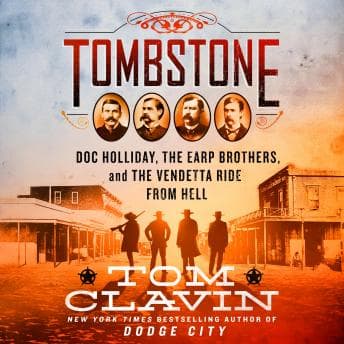

How much historical context do you actually need before the bullets fly?
That's the question I kept asking myself through the first few hours of Tom Clavin's Tombstone. I was catching a red-eye to Denver for a client engagement, and I figured a Wild West history book would keep me awake better than another strategy deck. What I got was essentially a graduate-level seminar on 1880s Arizona economics before anyone even reached for a six-shooter.
The 30 Seconds That Took 6 Hours to Reach
Look, I appreciate thorough research. My parents ran a business for thirty years without reading a single book about it—they just did the work. Clavin clearly did the work too. Silver strikes, cattle economics, Mexican border politics, the whole territorial governance mess. It's all here. But here's the thing: if you're marketing a book on the OK Corral shootout, maybe don't make readers wait until hour six to get there?
The key takeaway is worth the listen. The other 7 hours? Not so much.
What Clavin does exceptionally well is strip away the Hollywood mythology. Wyatt Earp wasn't some noble lawman—he was a complicated guy with a gambling habit and a common-law wife who happened to be on the right side of one particular gunfight. Doc Holliday was dying of tuberculosis and probably didn't care much about living. The cow-boys weren't romantic outlaws; they were basically a protection racket with horses. This is what my parents did instinctively—understanding that business is messy, people are complicated, and the "good guys" are usually just the ones who survived to tell the story.
Johnny Heller Earns His Pay
Now here's where the audiobook format actually adds value. Johnny Heller's narration is—and I don't say this lightly—a genuine upgrade over the print experience. His rough-hewn voice fits the material like a broken-in saddle. The contrast between his calm, measured Virgil Earp and his hotheaded Wyatt creates instant character differentiation without Clavin having to spell it out. When the gunfight finally arrives, Heller's dramatic delivery makes those thirty seconds feel appropriately chaotic and terrifying.
I've seen this fail at three different companies—the idea that style can substitute for substance. Heller doesn't make that mistake. He's enhancing solid research, not covering for weak material.
The Vendetta Ride: Where It Gets Good
Skip to chapter 5. Thank me later. (Okay, maybe not literally chapter 5, but you get the idea.)
The real payoff comes after the famous shootout. The vendetta ride—when Wyatt and his remaining brothers went full vigilante to hunt down the cow-boys who'd ambushed Morgan and crippled Virgil—that's where Clavin's detailed groundwork pays dividends. You understand why the Earps felt justified. You understand why the law couldn't help them. You understand why Johnny Ringo and Curly Bill Brocius had it coming.
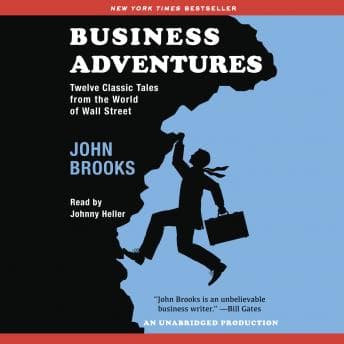
Jenny would say I'm being harsh. Jenny is right. But I've listened to enough padded business books to recognize when an author is building a case versus when they're just filling pages. Business Adventures does the same thing—meticulous case-building that respects the complexity of what actually happened. Clavin is building a case. It's just a slower build than the marketing suggests.
The ROI Calculation
Bottom line: This is a 10-hour commitment that probably should have been 7. At 1.5x speed (my usual 2.0x was too fast for the dense historical detail), you're looking at about 6.5 hours of actual listening time. The first third is a slog if you're here for the gunfight. The final third is genuinely compelling Western history.
If you loved Clavin's Dodge City or Wild Bill, this is more of the same—meticulous research, detailed context, occasional narrative payoff. If you're expecting a Western thriller, you'll be disappointed. If you want to actually understand what happened in Tombstone and why it mattered, this delivers.
Who Should Saddle Up (And Who Should Ride On)
This is for the history nerds, not the action junkies. If you want the mythology, watch the Val Kilmer movie. If you want the truth—messy, complicated, and surprisingly relevant to how power actually works in frontier situations—Clavin's your guy. Skip it if you need narrative momentum to stay engaged; the pacing will frustrate you.
Finally, a business book—wait, wrong genre. Finally, a history book that respects your intelligence enough to show its work. Even if it doesn't always respect your time.







![Steve Jobs [unabridged audiobook] audiobook cover](/_next/image?url=https%3A%2F%2Fcovers.audiobooks.com%2Fimages%2Fcovers%2Ffull%2F9788499923406.jpg&w=1920&q=75)