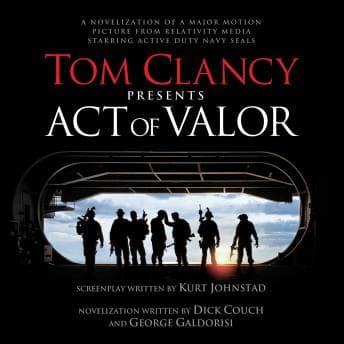

Can a book based on a movie actually hold its own, or is it just a quick cash grab? That was the question rattling around my brain when I hit play on this one. Usually, novelizations are trash—hollow characters, bad dialogue, and military details that make me want to throw my phone out the window of my truck. But then I saw the authors.
Dick Couch. The man is a legend. Former SEAL, wrote The Warrior Elite. If anyone knows how to write about guys downrange without making them sound like cartoon superheroes, it's him. So, I gave it a shot on a drive down to San Antonio for a site survey. Ranger was in the back, already asleep before we hit the highway.
When the Tactics Are Actually Right
Let me be clear: this isn't Shakespeare. It's a mission log with dialogue. And honestly? That's exactly what I wanted.
Most thriller writers have never held a rifle, let alone cleared a room. You can tell. They mess up the comms, they get the chain of command wrong, or they have guys having emotional breakdowns in the middle of a firefight. Not here. Couch and Galdorisi (a naval aviator himself) keep the tech and the tactics tight. The Bandito Platoon feels like a real unit. The banter is dry, the movements are precise, and the stakes feel heavy without being melodramatic.
There's a sequence near the border—I won't spoil the specifics—that had my blood pressure up. It felt chaotic in the way real engagements do. No slow-motion heroics. Just confusion, noise, and training taking over. I appreciated that. It's rare to find an audiobook where I'm not yelling corrections at the dashboard.
The Voice in the Headset
Steven Weber is the narrator here. Yeah, the actor. I was skeptical. I usually prefer the gritty, gravel-voiced guys for this genre—Ray Porter or Scott Brick. Weber surprised me the same way he did in It—different material, same solid execution. He has a lighter tone, more storytelling, less "voice of god."
But it works. He keeps the pace moving. I listened at my usual 1.25x, and he handled the rapid-fire military jargon without stumbling. He doesn't try to do over-the-top accents for the bad guys, which is a blessing. Nothing ruins a mood faster than a narrator doing a bad Russian accent that sounds like Count Chocula.
That said, he can be a little... clean. Sometimes, in the middle of a firefight, he sounds a bit too composed. I wanted a little more grit, a little more exhaustion in the voice. But he didn't get in the way of the story, and that's the most important thing.
The Intel Gap (Why It Lost Me)
Here's the problem. And it's a big one.
Somewhere around hour six, things felt... choppy. Jumpy. Like we skipped a chapter. I did some digging when I stopped for gas. Turns out, there are complaints that this version is abridged, even if some platforms don't clearly flag it. Or maybe the editing just sliced out the connective tissue.
It's frustrating. You get the action, sure, but you lose the buildup. Felt like reading an operations summary instead of the full after-action report. For a book that relies on tension, cutting corners on the plot development is a tactical error. Left me feeling like I missed a briefing.
Who's This For?
If you want pure, uncut action written by guys who know the difference between a magazine and a clip—this is your listen. Military thriller fans who care about accuracy will appreciate it. But if you need deep character work or you're chasing the next Hunt for Red October, keep scrolling. This is mission-first, always.
Debrief
Worth your time? For the right listener, yes. It's a solid ride. The plot stretches from Chechnya to Mexico, and the threat level feels current. Just don't expect anything beyond the mission. It's about the gear, the timing, and the breach. If you liked the movie, you'll like this.
Ranger woke up for the final shootout, so I guess the sound design was decent enough to disturb a German Shepherd's nap. That counts for something.