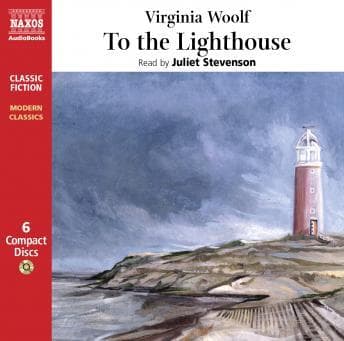

Look, I need to complain about something first. Virginia Woolf has ruined me for grading student essays. After seven hours of her sentences - those gorgeous, winding, impossibly precise sentences that somehow contain an entire consciousness in a single clause - I had to read a sophomore's five-paragraph essay on The Great Gatsby. "Gatsby was rich and sad." That's it. That was the thesis. I nearly wept.
This is why we still read the classics. And this is why I was listening to To the Lighthouse at 11 PM, red pen abandoned, wife asleep, pretending I was being productive while actually just... floating inside Woolf's prose.
The Prose Deserves to Be Heard, Not Just Read
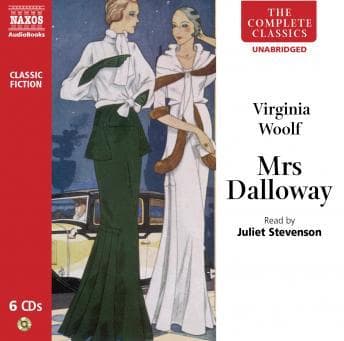
Here's what I used to get wrong about Woolf. I taught Mrs. Dalloway for years, always on the page, always fighting students through the stream-of-consciousness like we were hacking through jungle. "Just follow the thoughts," I'd say, not quite believing it myself. But Juliet Stevenson does something I couldn't do in a classroom - she makes the stream navigable.
Her voice is soft. British. Careful in a way that feels like watching someone handle antique glass. When she's voicing Lily Briscoe - the painter, the observer, the one who sees Mrs. Ramsay with that particular ache of artistic devotion - there's this sensitivity that's almost unbearable. And then she'll shift to Mr. Ramsay's boisterous self-pity, that man-child energy of a philosopher who needs constant reassurance, and you can hear the tonal shift without her announcing it.
This matters because Woolf doesn't give you quotation marks and "he said, she said" like a normal novelist. Thoughts blur into other thoughts. You're in Mrs. Ramsay's head, then suddenly you're not, and a lesser narrator would lose you completely. Stevenson doesn't. She catches every nuance - and I don't use that word lightly.
When a Lighthouse Becomes Everything
The plot is almost nothing. A family wants to visit a lighthouse. They don't. Ten years pass. War happens offstage, in brackets, like Woolf is whispering the tragedy. Then someone finally goes to the lighthouse.
But that's not what this book is about. This book is about what happens in a single afternoon when a woman reads to her son, when a painter stares at her canvas, when a marriage exists in the space between what's said and what's meant. Young James Ramsay's desire to reach that lighthouse becomes this impossible metaphor for every childhood hope that adults crush without meaning to. Mr. Ramsay says they can't go - the weather won't permit it - and James wants to kill him. Literally wants to murder his father with an axe. Woolf writes this, and Stevenson reads it, and somehow it's not melodrama. It's just... true.
The final trip to the lighthouse, years later, with James now a teenager and his father an old man - I won't spoil what happens, but I will say I had to pause the audiobook and pretend I was checking my phone because Denise walked in and I wasn't about to explain why a boat trip was making me emotional.
My Students Would Hate This. I Love It.
Let me be honest. This audiobook requires focus. Real focus. The kind where you can't also be scrolling Twitter or pretending to listen to Principal Martinez talk about budget allocations. Woolf's style is winding - some listeners find it hard to follow even with Stevenson's expert guidance. I had to rewind a few passages, and I was paying attention.
If you need plot, if you need things to happen in a traditional sense, if you're the type who asks "but what's the point?" - this isn't for you. My sophomores would revolt. They'd give it two stars and complain about the pacing being slow and boring, and they wouldn't be wrong exactly, just... missing the point entirely.
But if you've ever stared at a painting and wondered what the painter was thinking, if you've ever sat at a dinner table and felt the weight of everything unsaid, if you understand that a lighthouse can be a lighthouse and also be hope and also be death and also be art - then Stevenson's reading will carry Woolf's prose somewhere extraordinary. That's not hyperbole. That's just what happens.
Worth Pausing the Faculty Meeting For
At 7 hours and 41 minutes, this is a commitment. Not a long one by audiobook standards, but a dense one. Listen at 1.0x - the author chose those words, those pauses, those rhythms. Stevenson understands that pause is punctuation. Speeding it up would be like fast-forwarding through a symphony because you want to get to the good part.
This reminds me of what Hemingway said about prose being architecture - except Woolf's architecture is all stained glass and hidden rooms. World War Z has that same architectural quality, though it builds with voices instead of glass—each testimony a window into the collapse. You have to walk slowly or you'll miss the light.
Who should listen: Anyone who loved Mrs. Dalloway. Anyone who teaches literature and needs to remember why they started. Anyone willing to close their eyes and surrender to language.
Who should skip: Plot-driven readers. Multitaskers. My students. (Sorry, kids. You'll get here eventually. Maybe.)
I'm going back to grading essays now. Gatsby was rich and sad. God help me.