
I was walking the lakefront with Denise last Tuesday - one of those rare June evenings in Chicago where the humidity hasn't yet turned the city into a steam room - when Clarissa Dalloway's party preparations started bleeding into the joggers and cyclists around me. And I thought: this is it. This is exactly how Woolf meant this to feel. The present moment, saturated with memory, everyone carrying their own internal universe while pretending to be simply buying flowers or, in my case, pretending to exercise.
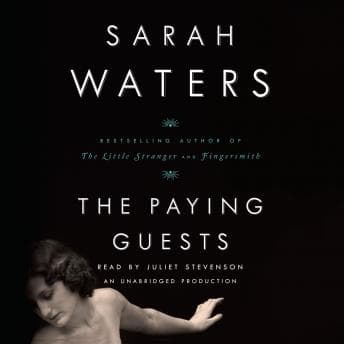
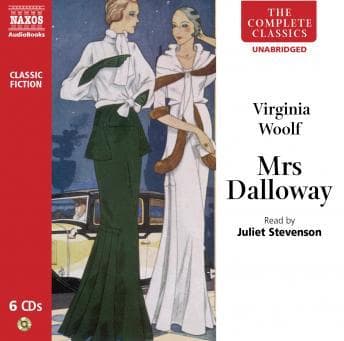
I've taught Mrs. Dalloway maybe fifteen times. I know the text. I know the stream-of-consciousness technique, the free indirect discourse, the way Woolf moves between minds like a ghost passing through walls. But listening to it? With Juliet Stevenson's voice threading through my earbuds? That's a different animal entirely.
When the Voice Becomes the Consciousness
Here's the thing about Woolf's prose - it's designed to be heard. The rhythm, the semicolons that feel like breaths, the way sentences build and crest and dissolve. Reading it on the page, you're always fighting your own internal voice, trying to find the tempo. Stevenson solves that problem. She knows exactly where the pauses live.
Her pacing is measured without being slow. Lilting without being precious. She handles the shifts between Clarissa's social consciousness and Septimus Smith's fractured mind with this subtle modulation that never announces itself. You don't notice the technique - you just suddenly realize you're inside a different head. That's craft.
Some listeners apparently find her voice "whiny." (I read that in a few reviews and honestly had to think about it.) I get what they mean - there's an upper-register quality to her delivery that could grate on certain ears. But I'd argue that's the point? Clarissa Dalloway is performing. She's performing for Peter, for Sally's memory, for London society, for herself. Stevenson captures that slightly brittle quality of a woman who has chosen her life and isn't entirely sure she chose right.
My students would probably zone out within ten minutes. The plot is - and I'm being generous here - minimal. A woman plans a party. A veteran struggles with shell shock. Their paths almost cross but don't. That's it. That's the whole thing.
But the whole thing is also everything. Woolf is doing something radical here with time and memory and the way we construct our selves moment to moment. The audiobook format actually helps with this. You can't skim. You can't jump ahead to "when something happens." You're locked into the present tense of consciousness, which is exactly where Woolf wants you.
The Septimus Problem (And Why It Works Here)
I've always found the Septimus sections the hardest to teach. Students either find them devastating or completely alienating. There's no middle ground. On the page, his fragmented thoughts can feel like work to parse. Lost World: A Novel had a similar quality—prose that demands you slow down and inhabit the disorientation.
Stevenson makes them feel like drowning.
I mean that as a compliment. She doesn't oversell his madness - doesn't do "crazy voice" or anything so obvious. She just... lets the sentences come apart slightly. The rhythm destabilizes. You feel his reality slipping before you consciously register what's happening. It's genuinely unsettling in the best way.
The shell shock material hits differently now than it did when I first read this in grad school. We have better language for trauma now, for PTSD. Woolf was writing about something her culture didn't have words for yet. Listening to Septimus's sections while walking past the lakefront - past people running, laughing, living their ordinary Tuesday - I kept thinking about all the invisible wars everyone carries. Woolf knew. She always knew.
A Note on the Ending (Minor Annoyance)
Apparently some versions end with a jarring American voice announcement that shatters the mood. I didn't get that in my version, thank god. But fair warning - if you're listening and suddenly some corporate voice breaks in after "For there she was," you have my sympathies. That's like someone's phone going off during the final movement of a symphony.
The production otherwise is clean. Nothing fancy, nothing distracting. Just Stevenson and Woolf and seven hours of consciousness flowing.
Would I Listen Again?
Already planning to. Probably next June, actually. There's something about this being a June novel - the light, the flowers, the party - that makes it feel seasonal. Like you should only experience it when the days are long and the evening stretches.
I listened at 1.0x because - and I will die on this hill - the author chose those words and Stevenson chose that pacing and who am I to rush Virginia Woolf? My students think I'm ancient for this take. They're not wrong. But some books earn their duration.
Who This Is (And Isn't) For
If you need plot, skip this. If you've bounced off Mrs. Dalloway before, try this version. Stevenson doesn't make it easy, exactly - it's still Woolf, it's still demanding - but she makes it navigable. She becomes the current you float on instead of fighting. Perfect for literary fiction lovers who want to finally crack Woolf, or anyone who's read her on the page and wants to hear how the prose was meant to sound.
Class Dismissed
This is why we still read the classics. Because someone like Stevenson can pick them up a hundred years later and make them breathe again.