
"Don't worry about the material being repetitive, it's good to hear good ideas several times."
Brian Tracy actually says this about an hour before the end. I nearly spit out my coffee on the Caltrain. Look, I appreciate meta-awareness, but when an author has to preemptively defend the repetition within the same program, that's... something.
Bottom Line: Worth your commute. Solid productivity fundamentals, but could've been a blog post. Or twelve blog posts. Which is basically what this is.
The ROI Calculation
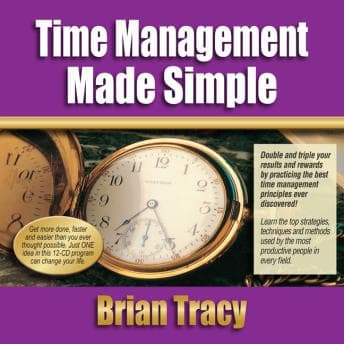
Here's the thing about Brian Tracy - the man has trained people in 56 countries across 38 languages. That's not nothing. And the content here is genuinely useful: the 80/20 principle applied to task management, the ABCDE prioritization method, the "eat that frog" concept of tackling your worst task first. These are battle-tested frameworks that actually work.
I've been debugging distributed systems for years, and honestly? Some of this maps surprisingly well to how I think about on-call priorities. The "single handling" technique - touching a task only once and completing it - is basically the engineering equivalent of not letting tickets bounce between queues forever.
The PDF workbook is a nice touch. I actually pulled it up on my phone during a particularly slow commute and sketched out my weekly priorities. First time I've used bonus content that wasn't just a glorified table of contents.
The Monotone Problem (And How to Fix It)
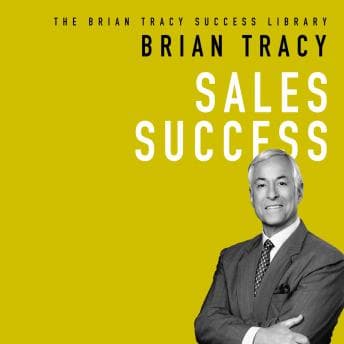
Brian Tracy narrates his own work, which gives it authenticity but creates a specific challenge: his delivery is... even. Very even. Consistently, relentlessly even. Around hour three, my brain started treating it like white noise, which is the opposite of what you want from a productivity book.
The fix? 2x speed. I'm not kidding. I usually run at 1.5x, but Tracy's measured pace actually benefits from acceleration. The content doesn't lose clarity - if anything, the faster tempo adds urgency that matches the subject matter. At 2x, this becomes a 5.5-hour listen, which is way more reasonable.
Perfect for: train, gym. Skip for: bedtime (you'll fall asleep, and not in a good way).
Twelve Lectures, Three Core Ideas
This is structured as 12 separate lectures, which sounds comprehensive until you realize it's the same handful of concepts repackaged with slightly different framing. Goal-setting appears in at least four different sections. Prioritization gets three. The "work on your highest-value activities" message is hammered home until it's less motivation and more mantra.
Is that bad? Honestly, maybe not. Kevin (my boyfriend, also an engineer) pointed out that this is basically spaced repetition for productivity concepts. And he's right - by the end, I had the ABCDE method memorized without trying. That kind of practical, no-nonsense framework reminds me of the straightforward advice in Never Chase Men Again - different domain, same "here's what works" energy.
But if you've read Eat That Frog or any of Tracy's other books, you're going to experience serious déjà vu. This feels like a greatest hits compilation rather than new material. That one-hour-before-the-end quote makes more sense now - Tracy knows his audience might be repeat customers.
Who Gets Value Here (And Who Doesn't)
Perfect fit: You're new to productivity systems and want a comprehensive overview without reading five different books. You commute and need something you can half-follow while navigating BART delays. You respond well to motivational "you can do this" energy.
Skip it if: You've already consumed Tracy's other work. You need cutting-edge research (this is principles, not neuroscience). You can't handle repetition - like, at all.
The production is clean but bare-bones. No music, no sound effects, just Tracy talking at you for eleven hours. Efficient, I guess? Matches the theme.
Final Commit
I finished this in about 6 commutes at 2x speed. The ideas stuck better than I expected - I've actually started using the "touch it once" principle for email, and my inbox is cleaner than it's been in months.
Is it revolutionary? No. Is it a standout in audio production? Definitely not. But it's solid, practical, and does exactly what it promises. Sometimes that's enough.
The ROI on this audiobook is decent if you're new to the genre, diminishing if you're already a productivity nerd. Treat it like documentation - useful reference material, not exactly thrilling reading.