
Okay, so here's the thing. I downloaded this during a particularly brutal week of on-call rotations, thinking maybe I'd pick up some dating wisdom while debugging production issues at 2AM. And honestly? It's basically a requirements doc for relationships, which - as an engineer - I can appreciate.
Bruce Bryans writes like he's explaining a system architecture. Here's the input (your behavior), here's the expected output (his interest level), here's what happens when you introduce bugs (desperation, neediness). At 2 hours and 9 minutes, this is the perfect length for a round-trip commute to Mountain View. No fluff. No padding. Just... specifications.
The ROI Breakdown
Look, I'm not the target demographic here - I've been with Kevin for three years and our biggest relationship challenge is agreeing on which sci-fi series to listen to next. But I was curious. And some of this actually makes sense from a behavioral psychology standpoint.
The core thesis is pretty straightforward: high-value behavior attracts high-value partners. Don't chase. Don't over-invest early. Let him demonstrate interest through actions, not words. It's basically the dating equivalent of "don't deploy to production on Friday" - common sense that somehow needs to be explicitly stated because people keep doing the opposite.
Bryans breaks down male psychology in a way that feels... algorithmic? Like he's reverse-engineering attraction patterns. Some of it lands. The bit about not being "always available" and maintaining your own life and interests? Solid advice for anyone, honestly. The stuff about reading behavioral signals instead of getting caught up in what someone says they want? That's just good debugging practice for relationships.
But - and this is a big but - some of it feels dated. There's this underlying assumption that all men operate on the same firmware, which... they don't. Kevin would be deeply confused if I suddenly started playing hard to get. We're way past that. The advice works best for early-stage dating, not established relationships.
Dan Culhane: The Narrator Situation
Here's where it gets complicated. Dan Culhane has a clear, natural voice. No weird audio artifacts. No distracting pronunciation issues. The production is clean - I could hear him perfectly fine on a packed Caltrain car with someone's phone playing TikToks three seats away.
But.
He reads this like documentation. Which, for a self-help book, isn't necessarily wrong? You want clarity. You want to absorb the information. But there's zero emotional modulation. It's very... monotone. Consistent. Reliable. Like a well-maintained codebase that does exactly what it's supposed to do but doesn't spark joy.
I didn't hate it. But I also found myself zoning out during the slower sections because there was nothing in the delivery to snap me back to attention. At 1.5x speed, it's fine. Maybe bump it to 1.75x if you're an experienced audiobook listener. The content isn't complex enough to require slower processing.
Who Should Listen (And Who Should Skip)
Real talk: this book is for women who keep ending up in situationships with guys who won't commit. If that's you - if you're stuck in a pattern of chasing men who give you just enough attention to keep you hooked but never actually step up - this might be useful. It's a framework for recognizing those patterns and breaking them.
Skip it if you're looking for nuanced relationship advice that accounts for different attachment styles, communication patterns, or the messiness of real human connection. It's prescriptive in a way that works for some people and will feel reductive to others.
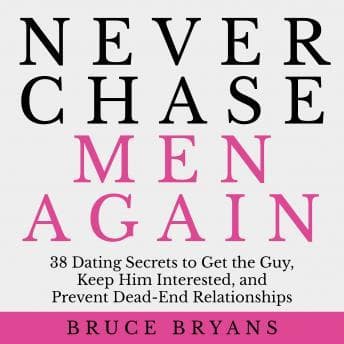
The "38 secrets" format is classic self-help structure. Some of them are genuinely insightful. Others could've been tweets. And a few made me roll my eyes so hard I almost missed my stop. (The "ego-popping phrase" thing? I'm skeptical.)
Bottom Line
It's a quick, practical listen that delivers exactly what it promises - no more, no less. The narrator won't blow you away, but he won't distract you either. Perfect for a commute when you want something light but potentially useful.
Would I recommend it to my single friends? Maybe. Depends on the friend. If you're the type who appreciates systematic approaches to messy human problems, you'll probably get something out of this. If you want emotional depth and nuance, look elsewhere.
For something with more psychological nuance, 5 Love Languages actually digs into different communication patterns instead of treating everyone like they run on the same code.
I finished this in one commute with time to spare. That's either a pro or a con depending on how you look at it.