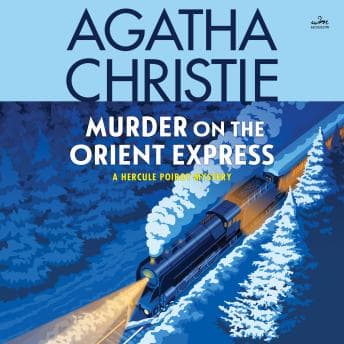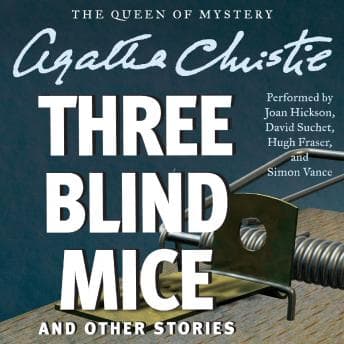

I was making my mother's rajma recipe — the one she insists I still get wrong, despite following her instructions to the letter — when Simon Vance's voice filled my kitchen with a snowstorm. Guests trapped in an isolated estate, a killer among them, the nursery rhyme "Three Blind Mice" playing on a loop like a psychological weapon. I actually stopped stirring. Which, if you know anything about rajma, is a cardinal sin.
That title novella? It's the reason to press play. And honestly, it's a fascinating case study in Christie's understanding of group psychology under threat — how strangers thrown together will form alliances, cast suspicion, and project their own guilt onto whoever seems most "other." The research actually shows that people in high-stress, confined situations develop paranoid attribution patterns within hours. Christie knew this instinctively in 1948. The woman was doing behavioral psychology before behavioral psychology was cool.
Four Narrators Walk Into a Snowstorm
Here's the thing about this collection: it's essentially four different audiobooks stitched together, and the quality swings wildly depending on who's behind the microphone.
Simon Vance handles the title story, and the man is an AudioFile Golden Voice for good reason. His pacing during the snowbound scenes is precise — he lets silence do work, which is exactly what suspense needs. You feel the isolation. You feel the walls closing in. When characters start turning on each other, his shifts in tone are subtle enough that you're tracking the psychology of each suspect rather than being distracted by vocal gymnastics.
David Suchet as Poirot and Hugh Fraser as Hastings — look, if you grew up watching the ITV adaptations like I did (Saturday afternoons, my dad's favorite), this is pure comfort food. Suchet doesn't just narrate Poirot, he is Poirot, down to the precise, fussy cadence that tells you this man irons his socks. Fraser's Hastings has that slightly bewildered English gentleman energy that makes him the perfect Watson figure — always a step behind, never quite aware of it. The Poirot stories in this collection aren't Christie's strongest plots, but the performances elevate them.
And then there's Joan Hickson.
The Miss Marple Problem
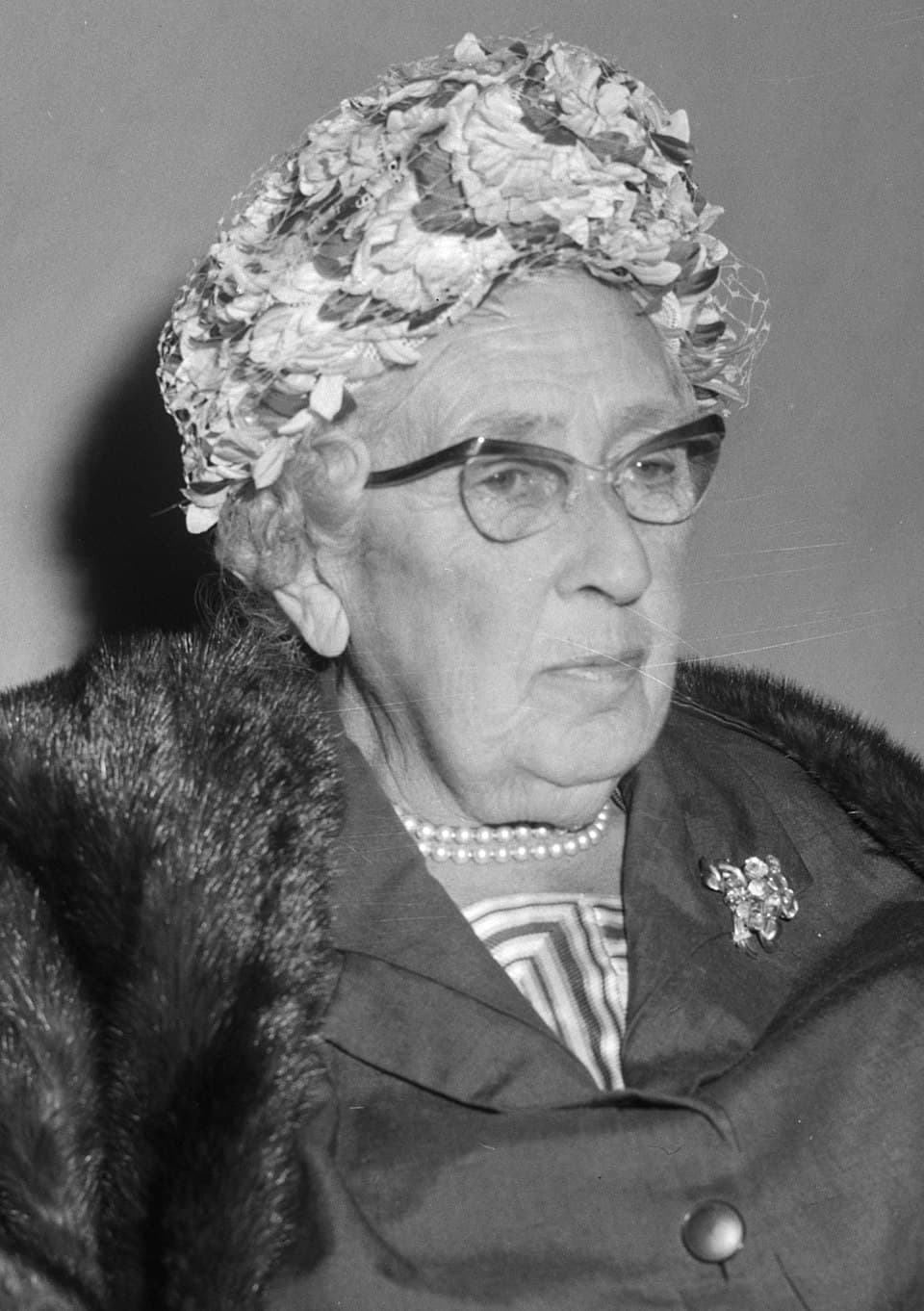
I need to be honest here because other listeners have been, and they're not wrong. Joan Hickson was a beloved Miss Marple on television. On screen, her quiet authority worked beautifully — you could see the sharp intelligence behind those gentle eyes. But audiobook narration is a different beast entirely, and what reads as "elderly village woman who notices everything" on camera becomes, in audio form, genuinely difficult to parse.
Multiple listeners describe her narration as sounding like she's "talking with marbles in her mouth." I found myself rewinding sections, sometimes twice, trying to catch dialogue. And here's the psychological problem with that: Christie's Miss Marple stories depend on you catching the quiet, offhand observations that turn out to be the whole key. If you're straining to understand the words, you lose the subtext. You lose the detection. Some people reportedly skipped her sections entirely, which — I get it, but it means you're missing a chunk of what you paid for.
Psychologically, this doesn't track as a casting decision. Hickson was cast for name recognition, clearly, but the skills that made her great on television — her physicality, her expressions, the way she'd peer over her knitting — none of that translates to pure audio. It's a mismatch between medium and performer, and the Miss Marple stories suffer for it.
Christie's Character Work (Yes, It Exists, Fight Me)
People love to dismiss Christie as a "puzzle box" writer — all plot mechanics, no psychology. I found myself asking: why does that assumption persist? Because in the title novella alone, the protagonist exhibits classic hypervigilance responses. The way suspicion shifts between characters mirrors actual group dynamics research on scapegoating. Christie understood that the real mystery isn't whodunit — it's why we're so eager to believe the worst about people we've just met. The Count of Monte Cristo does something adjacent with this — Dantès spends hundreds of pages banking on exactly that human tendency, the willingness to suspect and condemn, and Dumas milks it with the same instinctive psychological precision Christie had.
The shorter stories are more uneven. Some are clever but thin, the kind of thing you solve before the detective does if you've read enough Christie. But a few — particularly the Poirot entries — have these sharp little moments of human observation that remind you why this woman sold two billion books. She gets the petty jealousies, the small cruelties between spouses, the way people lie to themselves first and everyone else second.
My therapist would have thoughts about several of these characters. Particularly the ones who convince themselves that murder is the only logical solution to an inconvenient relationship.
Who Gets the Most Out of This
If you're a Christie completist or a Poirot TV series devotee, the Suchet/Fraser sections alone are worth your time. If you've never read the source material for The Mousetrap, the title novella with Simon Vance is genuinely excellent suspense. But if you're an audiobook-only listener with no patience for narration that requires active deciphering — be warned. The Hickson sections will test you.
At just over six hours, it's a modest commitment. But the inconsistency across narrators means you're really getting about four hours of strong material and two hours of frustration.
The Case File, Closed
This collection is Christie at her most efficient — tight puzzles, sharp character sketches, murderers hiding behind good manners. Two of the four narrators deliver performances that genuinely serve the material. One is a legend who should've stayed on screen. And Simon Vance, narrating that snowbound title story, reminded me why I fell in love with mysteries in the first place — sitting cross-legged on my childhood bedroom floor in Edison, New Jersey, turning pages past bedtime.
The rajma burned, by the way. Maa would not be pleased.