
Post-Shift Decompression, 1915 Style
Okay, so picture this: 4:47 AM, I'm finally done charting on a patient who decided tonight was the night to go into V-tach three separate times (he's fine, we're all fine, my cortisol levels are another story), and I've got 45 minutes of dark highway between me and my bed. I needed something to reset my brain. Something that wasn't going to make me think about cardiac rhythms or medication reconciliation.
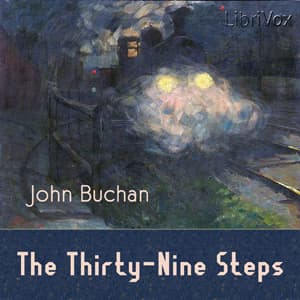
The Thirty-Nine Steps delivered. And honestly? I wasn't expecting much from a book written in 1915.
The Scottish Accent Situation
Adrian Praetzellis has this warm Scottish accent that just... works. It's not theatrical. It's not trying too hard. It's like having a really competent colleague tell you about the wildest thing that happened on their shift - steady, clear, and you trust them immediately. He's not doing full character voices for everyone (this isn't a full-cast production), but his pacing is excellent. The man knows when to speed up during a chase and when to let a moment breathe.
Here's the thing though - and I want to be honest about this - he's not a professional narrator in the traditional sense. LibriVox is volunteer-based, and you can tell. There's less vocal variety than you'd get from, say, a big Audible production. But honestly? For a 4-hour sprint of a thriller, it worked for me. His voice is easy on the ear, and at 5 AM when I'm trying not to fall asleep at the wheel, "easy on the ear" is exactly what I need.
I've had similar experiences with Adrian Praetzellis narrating Siddhartha—his steady, trustworthy delivery works beautifully whether you're dealing with espionage or existential philosophy.
(Carlos asked why I was suddenly interested in Edwardian spy novels. I told him night shift does things to a person.)
The Story Itself - Fast, Fun, and Very 1915
Richard Hannay is bored in London. A man shows up at his flat with a wild story about spies and assassination plots. That man ends up dead. Hannay runs. For like... the entire book. He runs across the Scottish moors, he hides in haystacks, he pretends to be a milkman, a politician, a roadside preacher. The man is basically the original Jason Bourne, except he's doing it in tweed and occasionally stopping to admire the countryside.
That same relentless forward momentum—the constant chase, the high stakes, the protagonist barely catching their breath—is exactly what I loved about 20th Victim, which hits many of the same notes but with a modern edge.
It's only four hours long, and it MOVES. This is not a slow burn. This is gasoline on a bonfire. I finished it in two commutes and honestly could've done it in one if I didn't have to, you know, go inside and be a mother.
Now. Fair warning. This book has some anti-Semitic dialogue that made me wince. Hard. The publisher notes that Buchan himself was actually identified by the Nazis as a "Jewish sympathiser" and was on Hitler's special search list - so the character's views aren't the author's views. But it's still there in the text, and it's uncomfortable. It's the kind of thing that reminds you this was written over a hundred years ago by someone who thought certain stereotypes were just... normal. If that's going to pull you out of the story, I get it. I really do.
Perfect for That Post-Shift Decompression
Look, I spend my nights keeping people alive. Sometimes I need a story where the stakes feel high but I don't have to think about whether the author got the medical details right. (Because there basically aren't any. Hannay gets a little banged up running around Scotland, but nobody's coding on a table while I yell at my dashboard about incorrect defibrillator usage.)
This is pure escapism. Early 20th-century escapism with a side of spy paranoia and some genuinely clever moments where Hannay talks his way out of impossible situations. The scene where he has to give a political speech while pretending to be someone else? I was fully awake for that one. Gripping.
The audio quality is clean - no weird background noise, no volume issues. At 4 hours 21 minutes, it's the perfect length for a week of commutes or one really long road trip. I listened at regular speed because Praetzellis's pacing is already pretty solid, but if you're a speed listener, 1.25x would probably work fine.
Who Should Listen (And Who Should Skip)
If you like classic spy thrillers - the ones that inspired everything from Hitchcock to James Bond - this is literally where it started. If you want something fast-paced that doesn't require a lot of mental energy to follow, this is your book. If you appreciate a good Scottish accent and don't mind narration that's more "excellent amateur" than "polished professional," you'll be fine.
Skip it if you need high drama and theatrical voice acting. Skip it if dated language and some genuinely offensive period-typical dialogue is going to ruin the experience for you. That's valid.
For me? Night shift approved. It got me home safe, it kept me entertained, and it reminded me that sometimes the old stuff became classic for a reason. Not everything needs to be complicated. Sometimes you just need a guy running across Scotland while spies try to kill him.
My mom would probably hate this. She'd say it's not "substantial" enough. But my mom also thinks I should've been a doctor, so.