
Look, I need to talk about something that's been bugging me for thirteen hours and fifty minutes. Jonathan Kellerman is a clinical psychologist. An actual one. So when Alex Delaware arrives at conclusions about a suspect's psychological profile based on - and I'm being generous here - vibes and a hunch he got while eating takeout with Milo? Sir. SIR. That is not how clinical assessment works. I was folding laundry at 2 PM trying to sleep before my shift and instead I'm whisper-yelling at my phone because Delaware just psychoanalyzed someone's entire pathology from a five-minute conversation.
I yelled at my dashboard during this one. Multiple times.
When Your Therapist Is Also Your Detective (And That's a Problem)
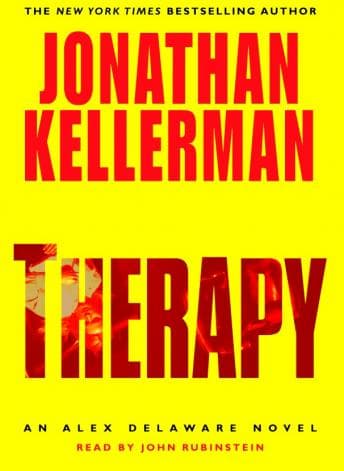
Here's the thing about Therapy - and this is book eighteen in the Alex Delaware series, so Kellerman knows exactly what he's doing. The setup is solid: young couple murdered on a lovers' lane in the LA hills, one victim impaled with a metal spike on top of the gunshot wound. That spike detail? That's the kind of overkill that actually does tell you something about the perpetrator's psychology. I'll give him that. The connection between victim Gavin Quick and his therapist Dr. Mary Lou Koppel - a celebrity psychologist who won't budge on patient confidentiality even when her client is dead - sets up a genuinely interesting ethical tension. As someone who deals with patient privacy every single shift, I was actually leaning in during those scenes.
But then the plot starts branching. And branching. And branching again. Greed, corruption, a chain of betrayal winding through the psychology profession - it sounds great on paper, but in practice it's like following a patient's chart when three different residents have been writing notes in different systems. You lose the thread. Some of Delaware's logical leaps feel less like brilliant deduction and more like the author needed to get from point A to point Q and just... jumped. I found myself rewinding sections on my drive home because I'd zone out during an exposition dump and miss a connection that apparently mattered.
The brainstorming dialogues between Delaware and Sturgis, though? Those are where this book lives and breathes. Milo saying "Been a while since I had me a nice little whodunit" and then getting increasingly frustrated as the case spirals - that felt real. That's the exhausted cop energy I see in the trauma surgeons at 4 AM. You came in thinking it was straightforward and now you're five hours deep and nothing makes sense.
Rubinstein Does the Heavy Lifting Here
John Rubinstein is doing God's work with this narration. His Alex Delaware is all calm authority - the psychologist voice that says "I'm listening" while his brain is running six analyses simultaneously. I know that voice. I use a version of it when a patient is spiraling and I need them to believe everything's under control. But his Milo Sturgis is the real star. Gruff, emotional, that veteran cop weariness that comes through in the way Rubinstein drops his register and adds this gravelly edge. When Milo's being sardonic about the case, you can practically hear the bad coffee and cheap tie.
He also nails the secondary characters in ways that surprised me - the druggy mom, the spoiled teenager, each one gets a distinct voice without veering into caricature. The women's voices are believable, which - let me tell you - is not a given with male narrators doing female characters. I've suffered through enough squeaky falsetto "female voices" in audiobooks to appreciate when someone actually puts thought into it.
No sound effects, no music, just Rubinstein and the story. Night shift approved. Clean production that doesn't fight you.
Who Gets the Prescription and Who Should Pass
If you're already deep in the Delaware series, this is solid middle-of-the-road Kellerman. Not his sharpest work, not his weakest. The psychology angle is interesting even when the conclusions feel like stretches. If you're new to the series - honestly, maybe don't start here. The plot asks a lot of patience and the payoff is more intellectual than visceral.
People who need tight, propulsive pacing are going to struggle. This is 13+ hours and it feels like it. I had the opposite problem with Paris Apartment - the pacing was relentless but the psychological depth that makes Delaware cases worth the slow burn just wasn't there. But if you like watching two smart guys talk through a case, picking apart motives and connections over bad diner food, and you've got a long commute or a quiet night shift ahead of you? It works.
Carlos asked why I looked annoyed when I got home. I told him a fictional psychologist was making questionable diagnostic leaps. He nodded like that was completely normal. Fifteen years married to a night shift nurse will do that to a person.
Chart Note: Stable But Not Critical
The medical details are accurate. Finally. Well - the psychological ones are mostly accurate, with some creative license that made me twitch. But Kellerman's background shows in the way he handles the therapy world, the ethics, the professional politics. He gets the institutional stuff right even when the mystery mechanics wobble. Rubinstein's performance elevates material that could've dragged, and the Delaware-Sturgis dynamic remains one of the best partnerships in crime fiction. Just... manage your expectations on pacing and prepare to rewind at least twice.