
How far does a character have to fall before you stop rooting for them?
I was three hours into this thing at 2 AM, my thesis document open on one monitor and totally untouched, Emily Woo Zeller's voice filling my apartment through my crappy desk speakers while I stared at the ceiling. My board game shelf was casting shadows across the room. The Stormlight Archive backlog was calling me. And I could not stop listening to this absolute descent into hell.
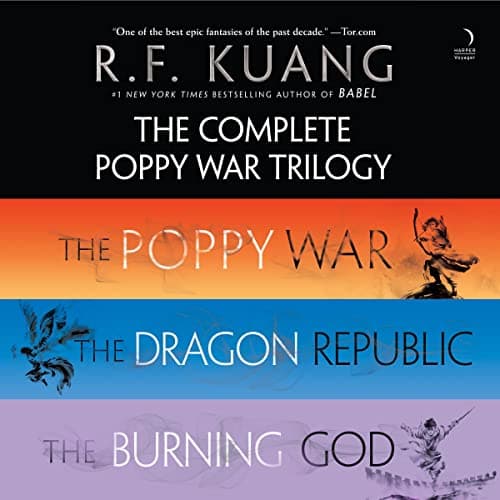
Let me be clear: The Poppy War Trilogy is not comfort fantasy. This is not your cozy Legends & Lattes hangout session. This is 66 and a half hours of watching a war orphan claw her way into a military academy, discover she can channel a literal fire god, and then spend the next two books making increasingly horrifying choices while the narrative asks you - genuinely asks you - whether she's wrong. If you're coming in expecting a standard progression fantasy where Rin levels up and gets cool powers and everything works out? Oh buddy.
The Magic System Is Chef's Kiss (And Then It Burns Your Hands Off)
Kuang's shamanic system is one of the most compelling I've encountered in fantasy, and I say that as someone who has explained Allomancy to strangers at bus stops. The gods in this world aren't benevolent patron deities handing out power-ups. They're primal, alien forces that erode your sanity the more you channel them. The Phoenix doesn't just give Rin fire - it wants to burn everything, always, and the tension between Rin's desperate need for power and the cost of accessing it is the engine driving all three books.
What Kuang does that Sanderson wouldn't is refuse to systematize it cleanly. There are no neat rules, no Ars Arcanum in the back. Sanderson's earlier work in Elantris shows exactly what that kind of systematic tidiness looks like by contrast - which makes Kuang's deliberate refusal to give you the same satisfaction feel even more pointed. The shamanism is messy and psychological and tied directly to trauma and drug use. Rin's relationship with opium isn't metaphorical window dressing - it's the mechanism by which she accesses and suppresses her connection to the Phoenix. That's dark. That's also genuinely interesting world-building rooted in real Chinese history, not invented whole cloth.
Zeller Carries 66 Hours on Her Back
Emily Woo Zeller won an Audie and AudioFile Earphones Award for The Poppy War narration, and look - she earned it. Her Rin is sharp and desperate in the first book, fractured and furious in the second, and something approaching terrifying in the third. She handles the tonal shift from scrappy underdog military academy story to full-blown war atrocity narrative without it feeling like whiplash, which is a feat because tonally these books go from Harry Potter to The Rape of Nanking (which is, uh, literally one of Kuang's historical parallels).
Now. I've seen the complaint that Zeller "makes the whining worse," and I get where those people are coming from. Rin is not a likeable protagonist for large stretches of books two and three. She's angry, she's self-destructive, she makes decisions that are strategically stupid because she's emotionally compromised. Zeller leans INTO that rather than softening it. If you already find Rin grating on the page, the audio version will not save you - Zeller delivers every tantrum, every self-justification, every moment of rage with full commitment. I think that's the right choice. Some people think it's exhausting. Both things can be true.
She doesn't do wildly distinct voices for the supporting cast - this isn't Steven Pacey territory where every character has their own vocal signature. (Steven Pacey walked so other narrators could run, but that's an unfair standard for anyone.) Zeller differentiates through tone and cadence rather than accent work, which works well enough across 66 hours that I never lost track of who was speaking.
The Progression Is Satisfying (If You Define "Progression" Loosely)
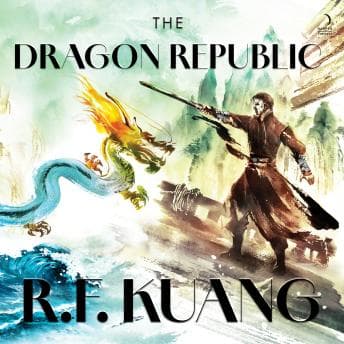
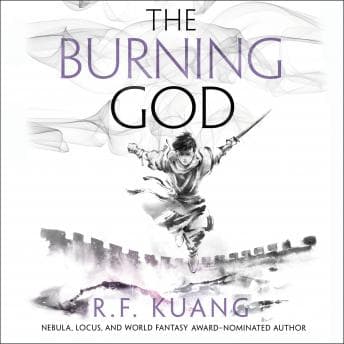
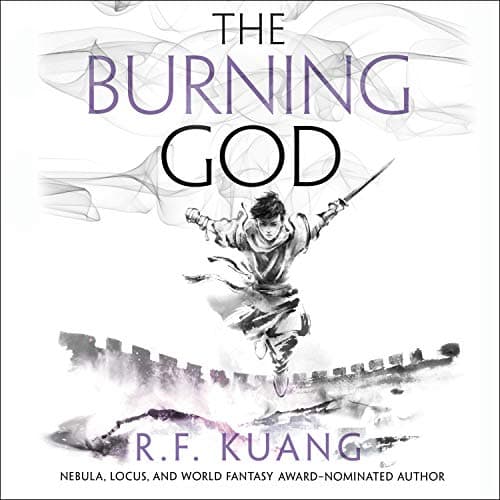
Here's where I think a lot of fantasy readers bounce off: this trilogy progresses, but not upward. Rin doesn't become a better person. She becomes more powerful and more broken simultaneously. Each book escalates the stakes and the moral compromise. The Dragon Republic drops Rin into political maneuvering between factions where nobody is trustworthy, and The Burning God turns her into - well, something between a revolutionary icon and a war criminal.
I listened to this instead of writing my thesis. All three books. That's 66 hours I will never get back and that Dr. Patel will never forgive me for. But the way Kuang parallels twentieth-century Chinese history - the warlord era, the opium trade, colonial intervention, the human cost of revolution - while keeping it grounded in character rather than lecture? This is Sanderson-level world-building, except replace the physics-based magic with historical trauma.
If you don't like info-dumps, this isn't for you (but you're wrong). Kuang front-loads the academy sections of book one with lore and history that pays off catastrophically later. The slow build is the point.
Who Should Listen (And Who Should Skip)
Pick this up if you want military fantasy that doesn't flinch. If you loved The Fifth Season's willingness to break its protagonist and its world simultaneously, this scratches that same itch. If your D&D campaigns tend toward moral gray areas and party members arguing about whether burning down the village was justified - yeah, my D&D group would love this.
Skip it if you need to like your protagonist, or if you're looking for something you can half-listen to while grocery shopping. This demands your attention. There's heavy content here - graphic violence, sexual assault, drug addiction, genocide parallels that are not subtle because the history they're based on wasn't subtle.
Yes, it's 66 hours. Yes, it's worth it.
Quest Complete: My Advisor Would Say I'm Procrastinating. My Advisor Would Be Right.
Three books, one narrator, one of the bleakest and most ambitious fantasy trilogies of the last decade. It's not perfect - book two sags in the middle, and Rin's emotional beats do get repetitive when you're listening to all three back-to-back. But the sheer ambition of what Kuang pulls off here, grounding a fantasy epic in real historical atrocity and refusing to give you easy answers about power and vengeance? That's rare. Zeller's narration is the right vehicle for it - committed, emotionally raw, and willing to make you uncomfortable.
I started my thesis outline today. I wrote one sentence. Then I came here to write this review instead. Correlation unclear.