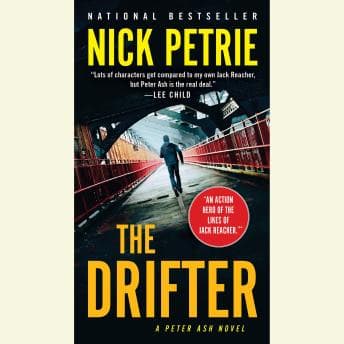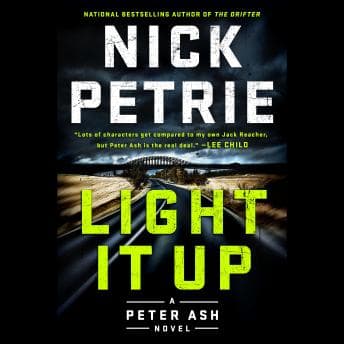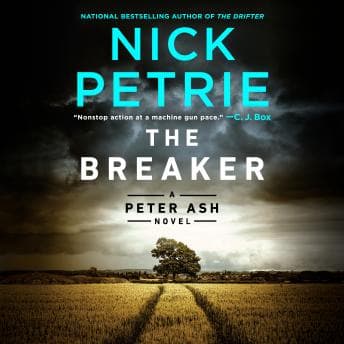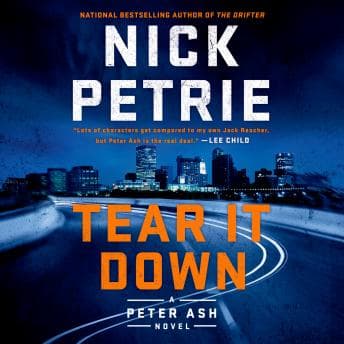

So I'm sitting in my apartment at like 1 AM, half-heartedly staring at my thesis outline on procedural terrain generation, and I realize I've been "listening to research material" for the last four hours — except it's not research material, it's a guy named Peter Ash getting his beloved '68 Chevy pickup stolen at gunpoint by a teenage musician holding a bag of stolen Rolexes. Dr. Patel would be so proud.
Here's the thing about Nick Petrie's Tear It Down — it scratches that very specific itch for readers who want their action heroes competent but damaged, in settings that feel lived-in rather than set-dressed. Peter Ash isn't some invincible operator. He's got claustrophobia-adjacent PTSD that Petrie calls "the white static" — this buzzing, climbing anxiety that spikes whenever Ash is in enclosed spaces. It's not just character flavor. It actively shapes how he approaches problems, which buildings he'll enter, how long he can stay. That kind of mechanical constraint on a character? That's the stuff I live for. It's like building a D&D character with a real flaw, not just "I'm too loyal" — an actual limitation that changes your tactical decisions.
Memphis Isn't Just a Backdrop, It's a Character Sheet
Petrie clearly did his homework on Memphis. The city isn't generic Urban America™ — you get the Beale Street blues culture, the specific tension of North Memphis neighborhoods, the way gentrification and poverty sit right next to each other. When someone drives a dump truck through Wanda Wyatt's living room (which, by the way, happens basically immediately and is a hell of an opening move), the question of why ties directly into Memphis real estate politics and the kind of neighborhood-level power struggles that feel uncomfortably real.
The dual-plotline structure is where things get interesting. You've got Ash investigating who's threatening Wanda — a war photographer who's seen worse than Memphis can throw at her — and simultaneously this street kid named Eli who stumbles into a jewelry heist gone sideways. The two threads weave together in ways that feel organic rather than contrived. Eli's storyline especially surprised me. He's not just a plot device to get Ash's truck stolen. The kid has his own arc, his own music, his own reasons for being where he is. I kept expecting him to fade into the background, but Petrie gives him real weight.
And then there's the Mississippi ex-con and his hog-butcher brother hunting for a Civil War-era family artifact. That third thread adds this layer of historical ugliness that grounds the whole story. It's not just gangsters and guns — there's actual generational trauma and buried history driving people to violence. My D&D group would love this setup, honestly. Multiple factions with competing objectives, a ticking clock, and a protagonist who keeps getting pulled deeper into other people's messes.
Stephen Mendel Does the Work
Stephen Mendel's been narrating the Peter Ash series consistently, and you can tell he knows these characters. His pacing during action scenes is tight — he doesn't rush the gunfights or the car chases, but he doesn't drag them either. There's a precision to his delivery that keeps the tension ratcheted up when it needs to be. He's not doing Steven Pacey-level character transformations (nobody is, let's be honest — Steven Pacey walked so other narrators could run), but his read is clean and controlled. You always know who's talking, and his Ash voice has this steady, slightly flat quality that works for a guy who's always running threat assessments in his head.
Where Mendel really earns it is in the quieter moments — when Ash is fighting the white static, or when Eli is alone and scared. He doesn't oversell the emotion. He lets the writing carry it, which is exactly the right call for this kind of thriller.
Who's Rolling Initiative on This One
If you like Lee Child's Reacher but wish he had more psychological texture, Peter Ash is your guy. If you need hard magic systems and 200-page appendices, this isn't your genre — but you knew that. This is for the person who wants a well-plotted, fast-moving thriller with a protagonist who feels like a real human being managing real damage. Two Truths and a Lie is another one I'd point to for that same combination of plot momentum and characters carrying actual psychological weight — though it landed slightly softer for me than Petrie does here. The dual-timeline structure means you need to pay attention, so maybe don't put this on while you're trying to debug your procedural generation algorithm. (I may have missed a plot connection because I was fixing a Perlin noise implementation. Not my finest multitasking.)
At 11 hours, it's a perfect road trip listen or a solid two-day binge. The progression is satisfying — Petrie knows how to escalate without jumping the shark.
Save Point: Would I Spend the Credit Again?
Yeah. This isn't going to redefine the genre, but it's a rock-solid entry in a series that consistently delivers. Petrie's got the thriller mechanics down cold, the Memphis setting adds genuine texture, and the Eli subplot elevates what could've been a straightforward action novel into something with more heart. I read this instead of writing my thesis, and I regret nothing.