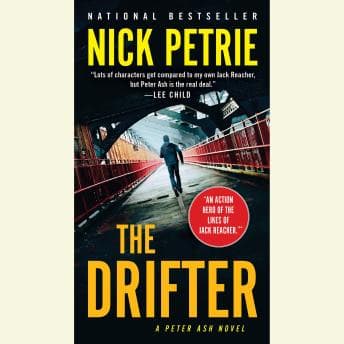

"The white static rises in his head like the sound of a thousand bees."
That line hit me around the two-hour mark, driving home after a brutal shift in the ER. I had to pull over for a second. Because that's exactly what unmanaged anxiety sounds like—not the Hollywood version with dramatic flashbacks, but that constant electrical hum that makes every enclosed space feel like a coffin. Nick Petrie gets it. As someone who's watched plenty of trauma responses in clinical settings, I can tell you most thriller writers treat PTSD like a convenient backstory. Petrie treats it like the chronic condition it actually is.
Peter Ash can't stay inside buildings. Not won't—can't. The claustrophobia isn't a quirk he overcomes by chapter three. It's the thing that shapes every decision he makes, every space he enters, every relationship he tries to maintain. When he's helping his dead friend's widow fix up her house and finds a suitcase stuffed with cash and explosives under the porch, he's already fighting a war inside his own skull. Stephen Mendel's narration captures that internal pressure perfectly. You can hear Ash's breathing change when walls close in.
Look, I don't have patience for books that waste my time. Twelve hours on my feet, the last thing I need is filler. This one moves. A listener called the pacing "like a sniper round"—fast and precise—and yeah, that tracks. Petrie doesn't pad scenes. He doesn't over-explain. The conspiracy spirals out from that porch in Milwaukee to something much bigger, but he never loses the thread. Outsider handles psychological isolation differently, but both books understand that broken people make the most interesting protagonists.
Mendel's narration is the reason this works as an audiobook instead of just a good thriller you could read. I've suffered through plenty of military fiction where every character sounds like the same gruff dude doing slightly different accents. Mendel actually differentiates people. The widow Dinah sounds like a real woman dealing with real grief, not a man pitching his voice up. The veterans sound like veterans—not Hollywood's idea of veterans. Even the dog, Jimmy, this massive traumatized mutt, becomes a character you care about through how Mendel handles the scenes describing him.
The technical stuff checks out too. Petrie did his homework on explosives, tactical approaches, the way combat veterans actually move through the world. Some reviewers nitpicked the bomb construction details, but honestly? Close enough for fiction, and way more accurate than most. What matters is that it feels authentic. Sycamore Row builds tension through legal maneuvering instead of tactical combat, but both books share that same attention to getting the details right.
Here's what I appreciated most after a long shift: the quiet moments land as hard as the action. Mendel knows when to pull back, when to let silence do the work. The scenes where Ash is alone with his demons—trying to sleep, trying to breathe, trying to remember why he came back from the war at all—those require a narrator who understands pacing on a molecular level. The production is clean, no weird audio jumps or level changes, which matters when you're exhausted and any technical glitch would make you bail.
The supporting cast doesn't get shortchanged either. Dinah has agency. She's not waiting around to be rescued. The bad guys are threatening without being cartoon villains. The conspiracy, when it unfolds, stretches credibility in a few spots—some connections feel too convenient—but Petrie moves fast enough that you're past those moments before they stick. The emotional core keeps everything grounded. Ash trying to reconnect with humanity after years of combat and self-imposed isolation? That's the real story. The explosives are just the mechanism.
This won the ITW Thriller Award and the Barry Award for Best First Novel, and those weren't pity votes. Petrie has an MFA, and you can feel the literary ambition underneath the genre machinery. He's not just writing action sequences. He's writing about what happens to people when their nervous systems get rewired by trauma, and how hard it is to find your way back.
Who's This For (And Who Should Skip)
Perfect for the drive home when you're too wired to sleep but too tired for anything demanding. The chapters break well for traffic. Mendel's clarity means you won't miss plot points while changing lanes. Skip if you need bedtime listening—you'll be up until 3 AM. But post-shift decompression? Ideal. If you're sensitive to violence, war trauma, or heavy language, this isn't your pick. But if you want a protagonist who feels genuinely damaged instead of conveniently troubled, Peter Ash is worth your time.
Clocking Out
Lee Child said Petrie's "the real deal" compared to Reacher, and after nine hours with this book, I'm not arguing.