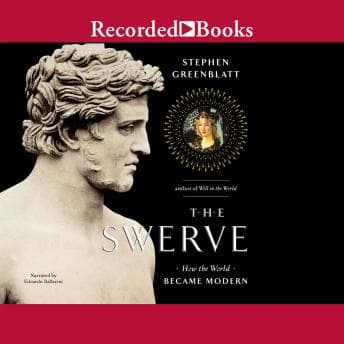

"The things that are, are made of things that were." Lucretius wrote that about 60 years before Christ, and some guy in a German monastery almost let it disappear forever. I caught that line somewhere around hour three, sitting on my back porch at 0600 with coffee going cold, Ranger sprawled across my boots, and I just stopped. Set the mug down. Because that single idea - atoms rearranging, nothing created from nothing - basically threatened to unravel the entire medieval worldview. And one obsessive Italian book hunter brought it back from the dead.
Let me cut to the chase: this is a history book disguised as a heist story, and it works way better than it has any right to.
A 15th-Century Book Hunter You Didn't Know You Needed
The star here isn't Lucretius. It's Poggio Bracciolini, a papal secretary with beautiful handwriting and an addiction to finding lost classical manuscripts. Greenblatt spends serious time building this guy's world - the corrupt papal court, the political knife-fighting of the Western Schism, the sheer physical danger of traveling through medieval Europe to raid monastery libraries. Poggio wasn't some dusty academic. He was a hustler, a gossip, and a survivor who watched his boss (the antipope John XXIII) get deposed and still landed on his feet. That same portrait of a brilliant operator surviving inside a corrupt institution — watching his back, playing the long game — is exactly what made The Spy and the Traitor hit me just as hard, even though it's set five centuries later.
Now, some listeners have griped that Greenblatt lingers too long on Poggio's life before getting to the main event - the 1417 discovery of Lucretius's "On the Nature of Things" in a remote German monastery. I get that criticism. There are stretches in the middle where the pacing feels like a convoy stuck behind a broken-down LMTV. But here's the thing: the context matters. You need to understand how precarious book survival was, how monks would scrape ancient texts off parchment to reuse it for prayer books. Every classical work that survived was basically a miracle of luck and stubbornness.
Where Epicurus Meets Jefferson (And It Actually Tracks)
The back third of the book is where Greenblatt makes his big swing. He traces Lucretius's atomic theory and Epicurean philosophy - the pursuit of pleasure, the denial of an afterlife, the idea that the universe operates without divine intervention - forward through the Renaissance, through Galileo's troubles with the Church, through Montaigne, and straight into Thomas Jefferson's desk drawer. Jefferson owned at least five Latin copies of "On the Nature of Things" and, Greenblatt argues, the "pursuit of happiness" in the Declaration of Independence is basically Epicurean philosophy in American clothing.
Is that thesis a little neat? Yeah, probably. Greenblatt's connecting some dots across 2,000 years and not every line he draws is equally convincing. But the core argument - that one rescued poem helped crack open the medieval mind and accelerate the shift toward modern secular thinking - that's a genuinely interesting idea, and he backs it up with enough scholarship that I bought it more than I didn't.
I've read plenty of military history where authors draw straight causal lines between events separated by centuries. Sometimes it works, sometimes it's wishful thinking. Greenblatt lands somewhere in the solid middle. The Lucretius-to-Jefferson connection feels earned. The Lucretius-to-Einstein bit in the final chapters feels like he's stretching a little.
Ballerini Earned His Earphones Award
Edoardo Ballerini narrating a book about Italian book hunters during the Renaissance is pretty much perfect casting. His delivery has this crisp, slightly formal quality that matches the scholarly tone without ever feeling like a lecture. When he's reading passages from Lucretius's actual poem - the stuff about atoms falling through the void, the "swerve" that creates all matter - his voice drops into this almost reverent register that gave me actual chills. And the Italian names and Latin phrases? They roll off his tongue like he's ordering dinner in Rome, not performing for a microphone.
No sound effects, no music, just clean narration. Exactly right for this kind of material. At 1.25x he hit my sweet spot perfectly - enough momentum to keep the denser philosophical passages from bogging down, but slow enough that the poetry still landed.
Who Gets the Green Light
If you're the kind of person who gets excited about the history of ideas - how a single text can ripple across centuries - this is your book. History and philosophy buffs, you're in good hands. If you need action every chapter, this isn't your mission. The "heist" is really more of a careful library visit. But the stakes are real, even if they're intellectual rather than physical.
Worth your time? Here's the debrief: Greenblatt turned a 2,000-year-old poem about atoms into a genuinely absorbing 9-hour listen about how dangerous ideas survive. The pacing sags in spots, the thesis occasionally overreaches, but the scholarship is solid and Ballerini's performance elevates every page. Ranger slept through the monastery chapters but perked up for the Inquisition bits. Smart dog.
Mission accomplished - with minor delays en route.




![Steve Jobs [unabridged audiobook] audiobook cover](/_next/image?url=https%3A%2F%2Fcovers.audiobooks.com%2Fimages%2Fcovers%2Ffull%2F9788499923406.jpg&w=1920&q=75)