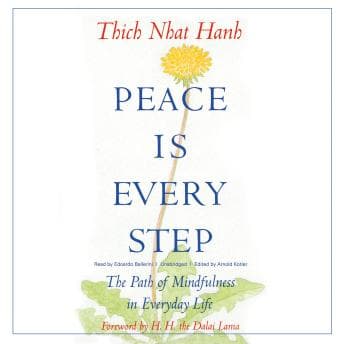

I was chopping onions for a dal that was going to take way too long when Thich Nhat Hanh's voice—well, Edoardo Ballerini's voice channeling Thich Nhat Hanh—told me to notice my breathing. And I did. And then I noticed I was crying, but that was probably the onions. Probably.
Here's the thing about mindfulness books: they're either written by people who seem to have never experienced actual stress, or they're written by someone like Thich Nhat Hanh, who survived war, exile, and decades of activism, and still managed to find peace in washing dishes. The man's credibility is not in question.
The Psychology of Presence (And Why It Actually Works)
As someone who spends her days studying why humans do what they do, I found myself underlining—mentally, since audiobook—so many passages here. Thich Nhat Hanh doesn't just tell you to be mindful. He explains the mechanism. The telephone rings, and instead of Pavlovian anxiety response, you use it as a bell of mindfulness. Red lights become meditation opportunities. This is classic behavioral reframing, but delivered with such gentle authority that it bypasses all your intellectual defenses.
What makes this compelling from a psychological standpoint is the accessibility. He's not asking you to retreat to a monastery. He's meeting you in your car, in traffic, probably running late, definitely stressed. The exercises are small. Breathable. Three conscious breaths. That's it. The research actually shows that micro-interventions like this can interrupt the stress response cycle more effectively than hour-long meditation sessions that most people will never actually do. (Don't tell my meditation app I said that.)
The book is organized into these tiny chapters—some just a page or two—which works beautifully in audio format. You can absorb one idea, sit with it, come back. It doesn't demand your sustained attention the way some self-help books do, which is ironic for a book about attention, but also kind of perfect?
Ballerini's Voice: Soothing or Sedating?
Okay, so. Edoardo Ballerini. He's an Audie Award winner, Golden Voice narrator, objectively skilled. His voice here is warm, clear, paced like a slow exhale. For mindfulness content, this is exactly right. You don't want someone narrating breathing exercises with the energy of a true crime podcast host.
But I'll be honest—around the two-hour mark, I had to switch to 1.25x speed. Not because he was bad, but because the combination of his measured delivery and the inherently calm content created this... lulling effect. I was folding laundry and nearly folded myself into the basket. Some listeners have reported similar fatigue, and I get it. If you're someone who needs vocal variety to stay engaged, you might struggle here.
That said? For bedtime listening, or those moments when you actually want to slow down, he's perfect. It's about matching the narration to your context. Morning commute when you need to stay alert? Maybe not ideal. Evening wind-down? Spot on.
Where the Practice Meets Reality
What I appreciate most—and this is the psychologist in me talking—is that Thich Nhat Hanh doesn't pretend mindfulness is a cure-all. He draws on his experiences as a peace activist, the suffering he's witnessed, the injustices he's fought against. This isn't escapist spirituality. It's engaged presence. He's saying: be aware of the world's pain AND your own capacity for peace. Hold both.
The personal anecdotes are what elevate this beyond generic meditation guidance. When he talks about the boat people, about war, about loss—and then returns to the breath—you understand that this practice was forged in actual difficulty. It's not theory. It's survival.
My therapist would probably say this book is doing a lot of what therapy does: teaching you to pause between stimulus and response, to observe your reactions without being controlled by them. That same principle—observing without reacting—is central to Siblings Without Rivalry, though applied to the chaos of parenting instead of personal peace. The difference is Thich Nhat Hanh charges you once for the audiobook instead of weekly copays. (I'm kidding. Mostly. Keep going to therapy.)
Your Prescription (Or Not)
This is ideal for: anyone curious about mindfulness who wants an accessible entry point, commuters who could use those red lights as breathing reminders, people who respond to gentle authority rather than aggressive self-improvement energy. Skip if you need high energy to stay engaged, you're looking for structured how-to guidance rather than philosophy-with-practice, or measured narration genuinely puts you to sleep.
At three and a half hours, it's a short commitment. I listened over three days of cooking, walking through Cambridge, and one very peaceful Sunday morning with coffee. It didn't change my life—I'm still anxious, still overthinking, still buying too many books—but it gave me a few tools I've actually used since. The breathing at red lights thing? I do it now. It helps.
Peace isn't somewhere else. That's the whole point. It's in the onions, the traffic, the dirty dishes. Thich Nhat Hanh made me believe it, and Ballerini's voice made me feel it. Even if I did need to speed him up a little.