
What does it mean when the scariest thing isn't a monster, isn't a ghost, isn't even a murder — it's a dead man in the back seat of a roller coaster car, and nobody noticed until the ride was already moving?
I was cataloging returns at the branch on a slow Tuesday afternoon when I put this on. Twenty-nine minutes. I figured it'd be a quick palette cleanser between longer listens. Instead I stood frozen next to the book cart for the entire runtime, a copy of Pet Sematary held mid-air in my hand, completely forgotten.
That's the thing about Golden Age radio drama. It understood something that a lot of modern horror has lost: dread is architectural. You build it with small, wrong details. A man who doesn't move. A crowd that doesn't notice. A private eye who starts asking questions and immediately wishes he hadn't.
When a Dead Man Rides the Coaster With You
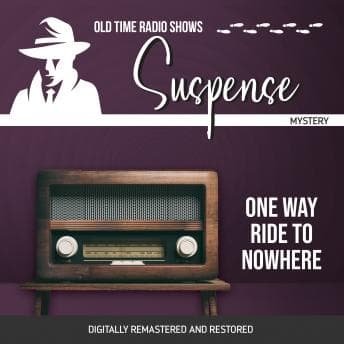
The setup is almost absurdly simple. A Chicago private eye. A carnival. A body discovered mid-ride that nobody saw coming — including the audience. Robert L. Richards wrote this for the original Suspense broadcast in 1944, and the economy of storytelling is genuinely impressive. No wasted seconds. No throat-clearing. The premise lands fast and hard, and then the tension just... doesn't let go.
The roller coaster scene specifically — the moment the protagonist registers that the man slumped beside him isn't asleep — is staged with a restraint that modern horror would've completely blown by adding a sting cue and a jump scare. Here, it's the absence of fanfare that makes it land. The discovery happens in the middle of crowd noise and mechanical clatter, which somehow makes it worse. This understands that horror isn't about gore — it's about dread.
At twenty-nine minutes, there's no room for a single false note, and the script doesn't take one.
The Cast Commits (And Alan Ladd Is Doing a Lot of Heavy Lifting)
Full cast productions live or die on whether everyone in the room is operating at the same level of commitment. Mismatched energy is immediately audible — one actor phoning it in can collapse the whole atmosphere. This cast doesn't have that problem.
Alan Ladd leads, and his voice has this particular quality — controlled, slightly guarded — that works perfectly for a private eye who's used to seeing ugly things but hasn't quite gotten used to this ugly thing. Cathy Lewis and John McIntire round out the ensemble, and the character differentiation is clean without being theatrical. These aren't radio actors performing characters; they're actors who happen to be doing radio.
The narrator commits. That's rare, even now — and in 1944, getting a full cast to maintain tension across a twenty-nine-minute runtime without the benefit of visual cues was a genuine craft achievement. Director William Spier clearly understood that silence and timing were as important as dialogue.
If you've never listened to old-time radio drama as an audiobook format, this is actually a fascinating entry point. It's not a narrator reading prose. It's closer to an audio play — and the distinction matters, because your brain processes it differently. More active. More participatory. You're filling in the visual gaps yourself, which means the horror lives in your imagination, not someone else's rendering of it.
Who This Is For — And Who Should Probably Just Skip It
If you want something long and immersive, this isn't it. Twenty-nine minutes is a short story, not a novel. Treat it accordingly.
But if you're a horror or mystery listener who's never spent time with the Suspense radio series — this is a legitimate piece of genre history, and it holds up in ways that should embarrass some contemporary thrillers. The structural efficiency alone is worth studying. My podcast listeners are going to love this, particularly the ones who've been skeptical about whether pre-television genre storytelling still has teeth.
It does. Very much so. Last Call at the Nightingale gave me that same feeling — a mystery that understands atmosphere is doing half the narrative work before a single clue drops.
Final note: I listened in the dark after my shift ended. Mistake? Maybe. Worth it? Absolutely. Shirley (my cat) was unimpressed. I was, briefly, unsettled in the best possible way by a dead man on a carnival ride who'd been sitting there the whole time, waiting to be found.