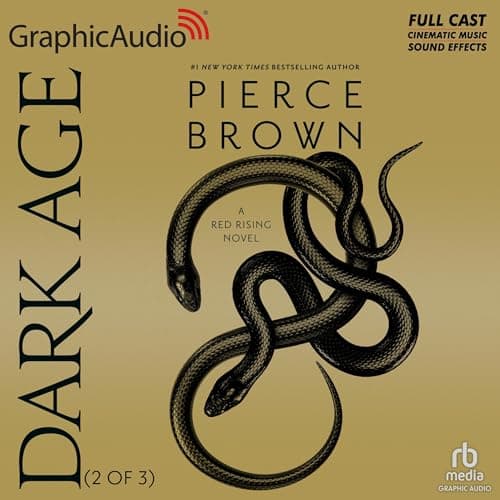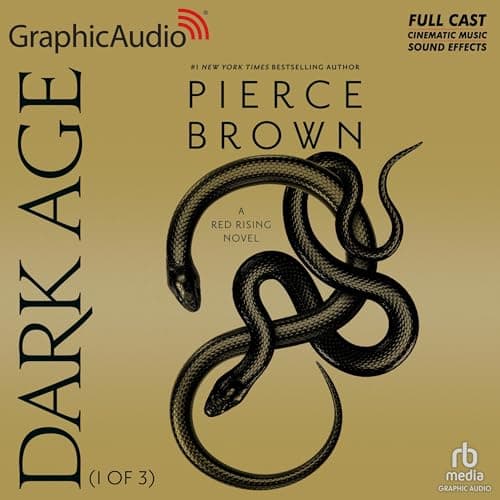

"He broke the chains. Then he broke the world."
That line hit me somewhere around 2:47 AM, Malik's cough medicine alarm going off on my phone while I'm steering a pallet jack through aisle 14. I paused the forklift, checked my phone, and just sat there in the dark warehouse with that sentence ringing in my ears. Because that's what this book does to you - it doesn't let you breathe.
The Caste System Hits Different When You Actually Work For A Living
Look, I've been riding with Darrow since Red Rising, and Pierce Brown has always understood something most sci-fi authors don't - the people at the bottom aren't props. They're the engine. Dark Age takes that and cranks it to a place that genuinely made me uncomfortable. Darrow's out here on Mercury, outnumbered, running a guerrilla war with half his people dead, and Brown doesn't flinch from what that costs. The Reds and Grays doing the actual fighting and dying while Golds argue about legacy and birthright? Man, that's not science fiction. That's Tuesday.
What got me was Ephraim's storyline - this burned-out Gray thief stuck protecting Pax, a kid he has zero reason to care about. The way Stewart Crank plays Darrow's desperation versus how the cast handles Ephraim's bitter, dry exhaustion - you can hear the difference between a man fighting for a cause and a man just trying to survive another shift. Real blue-collar shit right here. Brown gets that not every hero chose to be one. Some of them just couldn't walk away.
This Ain't Your Regular Audiobook - It's A Whole Production Floor
I've listened to plenty of full-cast productions that feel like a middle school play with good microphones. This is not that. The dramatized format here is the real deal - when the Iron Rain drops on Mercury, you hear the razors singing, the ships cracking atmosphere, boots hitting ground. The sound design during the battle sequences had me checking my mirrors on I-94 because my brain was convinced something was actually happening behind me.
Jenna Sharpe as Virginia carries this political weight that's separate from the action - her scenes on Luna sound different, quieter, more claustrophobic. The music shifts. The ambient sound pulls back. And then you cut to Darrow on Mercury and it's chaos and thunder. That contrast between the war front and the political front isn't just storytelling - the production actually makes you feel the distance between these characters.
But here's what separates it from a good movie soundtrack slapped over some narration: the actors are acting against each other. You hear dialogue land and react in real time. When Lysander - and Christopher Tester gives this kid an aristocratic chill that made my jaw tight - when he talks about reuniting the Golds, you can hear the entitlement dripping off every word. Compared to how the Reds and lowColors sound? Brown and this cast built a class war you can literally hear.
The Part Where It Gets Heavy
I'm not gonna sugarcoat this - Dark Age is brutal. There's violence here that goes past action-movie fun and into something that sits with you. Brown doesn't write war like it's exciting. He writes it like it breaks people. And splitting this into Part 1 of 3 means you're getting setup, escalation, and a cliffhanger that had me swearing out loud in the warehouse parking lot at 6 AM.
At 11 hours and change, this is a commitment. And because it's dramatized with sound effects and score, you can't really zone out - this demands your ears. I usually run at 1.6x but I dropped to 1.25 because the production is dense enough that speeding through it means missing layers. That's rare for me. The clock is always ticking but this one earned the extra time.
Lysander's return as a POV character is going to split people. Half the listeners will hate him because he represents everything the Rising fought against. I hated him - but the way you hate a foreman who's never touched a box telling you how to stack pallets. You hate him because he believes he's right, and Brown writes him well enough that you understand why. That's harder to deal with than a cartoon villain.
Clocking Out On This One
Five POV characters, a full cast that actually earns the "dramatized" label, and a story that treats its working-class characters like human beings instead of set dressing. Jamal and Malik would call this fake as hell if the Golds were the only ones who mattered - but Brown never forgets the Reds. Part 1 ends with enough threads dangling that you'll be queuing up Part 2 before the credits finish rolling. The Fragile Threads of Power scratched some of that same itch for me - political weight, multiple POVs, and a world that doesn't forget who's actually holding it together. From the warehouse floor straight to you - this is how you do epic sci-fi without losing the people who make the world turn.