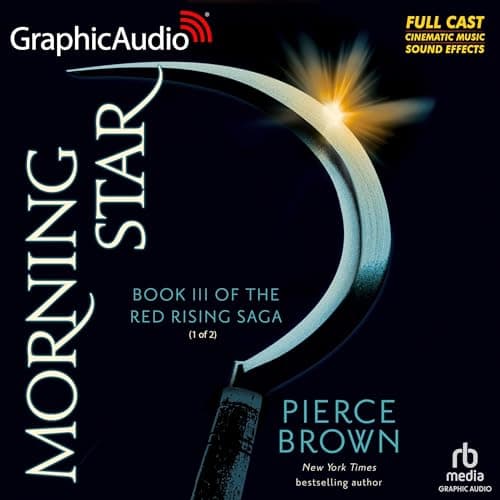

So look, everyone told me the GraphicAudio dramatized adaptations of Red Rising were good. "Tom, you'll love it." "Tom, it's like a movie in your ears." And I kept putting it off because I'm protective of this series. I listened to Tim Gerard Reynolds' narration of the original trilogy and it felt like canon in my brain. Changing that felt wrong. Like recasting Aragorn halfway through The Two Towers.
I was wrong. I was so, so wrong.
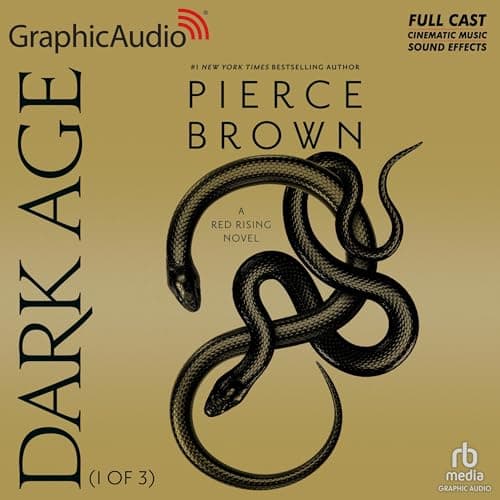
I cracked this open at 2 AM because I couldn't sleep — thesis guilt was doing its thing, Dr. Patel's last email sitting unread in my inbox like a passive-aggressive landmine — and by the time Darrow clawed his way out of his opening predicament, sleep wasn't even on the table anymore. I finished the entire 9 hours and 46 minutes across two days and I'm genuinely angry this is only Part 1 of 2.
This Isn't an Audiobook, It's a Damn War Room Briefing
Let me be clear about what you're getting here. This is not a narrator reading you Pierce Brown's prose. This is a full dramatic production — dozens of actors, sound effects for every razorwhip crack and shuttle launch, cinematic scoring that swells during the rebellion scenes like someone hired a film composer. When Sevro speaks, it's not one narrator doing a gruff voice. It's a completely different actor being Sevro, unhinged energy and all. And whoever they cast for Sevro absolutely nailed the feral goblin energy that character demands. That manic loyalty, the crude humor covering genuine pain — it hits different when it's a dedicated performer rather than one narrator switching registers.
The cast is absurdly deep. We're talking 30+ actors listed. And in a story like Morning Star where the Color hierarchy defines literally everything about society, having distinct real voices for Golds versus Reds versus Obsidians does something a single narrator can't replicate. You feel the class divide. When a Gold speaks, there's weight and entitlement baked into the performance. When a Red speaks, you hear a different world entirely. The magic system here isn't magic — it's social engineering and genetic modification — but the world-building is Sanderson-level in its internal consistency, and this production format actually surfaces details I glossed over in the original narration.
Where the Dramatization Earns Its Keep
Here's where I'll do the comparison thing honestly: Tim Gerard Reynolds' solo narration of Morning Star is excellent. The man can act. But there are scenes in this dramatized version — specifically the moments where Darrow is rallying broken people to fight an empire that has crushed them for centuries — where the full-cast format creates something Reynolds simply couldn't alone. You hear the crowd. You hear the hesitation, then the roar. The sound design during space battle sequences puts you inside a ship that's falling apart. It's not subtle. It's not trying to be.
The ending scenes of this Part 1 — and I won't spoil where they split the book — gave me actual chills. Not "oh that was cool" chills. Physical, hair-on-arms chills. At 2 AM. In my apartment surrounded by board games and shame.
Now — is it perfect? The cinematic music occasionally steps on dialogue. There were two or three moments where I had to rewind because the score was doing Epic Movie Trailer things while a character was delivering plot-critical information. And because this is Part 1 of 2, you're getting an incomplete story. Pierce Brown wrote Morning Star as one book with one arc, and splitting it means you hit a stopping point that doesn't feel like a natural ending. It feels like someone pressed pause. If that drives you crazy, just know going in: you will need Part 2.
Who Should Listen (And Who Should Skip)
If you've read or listened to Red Rising and Golden Son and you're wondering whether the dramatized format is worth revisiting a story you already know — yes. Unequivocally. It's a different enough experience that familiar scenes feel fresh. My D&D group would love this as background during a session set in a dystopian sci-fi campaign.
But if you haven't consumed the first two books? Do not start here. This is book three. Pierce Brown does not hold your hand. You will be drowning in Color politics, character relationships built over two previous books, and references to events you haven't experienced. Go back. Start at Red Rising.
And if you mostly listen while distracted — doing dishes, half-paying attention on a walk — skip this format. The sound design is so layered that passive listening means missing things. This is a sit-down-and-lock-in experience.
I Listened to This Instead of Writing My Thesis (Worth It)
Yes, it's only Part 1. Yes, that's frustrating. Yes, it's worth it anyway. The production quality here sets a bar I didn't know audiobooks could reach, and Pierce Brown's story about revolution, sacrifice, and the cost of freedom hits harder when you can literally hear an army at Darrow's back. The progression is satisfying even incomplete — you feel the pieces moving, the alliances shifting, the impossible odds getting slightly less impossible. The only other series I've reviewed lately where I felt that same relentless momentum pulling me through impossible political stakes was A Court of Thorns and Roses — different genre entirely, but that same sensation of an underdog alliance being forged in real time.
Sevro alone is worth the listen. That casting choice? Chef's kiss.
Now if you'll excuse me, I have a thesis to not write and a Part 2 to acquire.