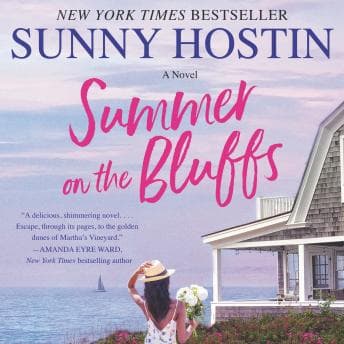

Look, I'll be honest - I picked this up expecting beach read fluff. Something light for grading season. What I got was way more interesting, and I'm still sorting through how I feel about it.
Sunny Hostin has done something here that I don't see often in contemporary fiction: she's written a book about Black wealth and legacy that doesn't apologize for itself. Oak Bluffs as a setting isn't just backdrop - it's practically a character. The history she works in about this community, Black families owning property since the 1800s, the cultural weight of that - this is the stuff I wish more of my students understood about American history. The parts that don't make it into the textbooks.
The World Hostin Built
I listened to most of this during my morning walks along the lakefront, which felt oddly appropriate. There's something about water and generational stories that just fits. Hostin clearly knows this world intimately - the social codes, the unspoken hierarchies, the way old money moves differently than new money even within the same community. She's not just describing Oak Bluffs; she's translating it for outsiders while honoring insiders.
The three goddaughters - Perry, Olivia, and Billie - each represent different paths through Black professional success. Perry's the guarded lawyer, Olivia's the brilliant analyst, Billie's the free-spirited scientist. On paper, this sounds like it could veer into stereotype territory. It doesn't, mostly. Hostin gives each woman enough internal contradiction to feel real. Perry's walls aren't just personality - they're protection. Billie's rule-breaking isn't rebellion for its own sake.
Now, is the plot predictable? Somewhat. You can see certain revelations coming from a distance. But here's the thing - predictability isn't always a flaw. Sometimes you're reading (or listening) for the journey, not the destination. This reminds me of what I tell my students about Jane Austen: we know Elizabeth and Darcy end up together. That's not the point. The point is watching how they get there.
January LaVoy Knows What She's Doing
The narration here is solid. January LaVoy has this warm quality to her voice that makes you feel like you're being let in on family secrets. She differentiates the characters well enough that I never got lost in dialogue scenes - which, at nearly ten hours, matters more than you'd think.
There were moments where her pacing felt perfect for the material. The slower sections where Ama reflects on her past, the building tension as secrets start surfacing. LaVoy understands that pause is punctuation. She doesn't rush the emotional beats.
I've seen some folks mention a Southern accent being occasionally grating, but honestly? It didn't bother me. Maybe because I was too busy trying not to trip over uneven sidewalk pavement while listening. (Denise keeps telling me to watch where I'm walking. She's right. I don't listen.)
Where It Dragged, Where It Flew
The middle section tested my patience a bit. There's a lot of setup - relationship dynamics, backstory, the mechanics of who wants what and why. Necessary, but I found my attention wandering during a particularly long faculty meeting. (Sorry, Principal Martinez. Still wasn't listening to your budget presentation.)
But when the secrets start coming out? Time flew. The last third had me walking an extra mile just to keep listening. Hostin knows how to layer revelations. Just when you think you've figured out Ama's game, there's another card she hasn't played.
The ending is... satisfying? I think that's the right word. It doesn't wrap everything in a bow, but it doesn't leave you hanging either. There's resolution with room to breathe. Given this is the first in a series, that balance is harder to achieve than it sounds.
Who Should Listen (And Who Should Skip)
If you loved The Vanishing Half or Such a Fun Age, this is in that neighborhood - though less literary in its ambitions. I'd also throw Bend in the Road into that mix - similar warmth, similar focus on family dynamics without the heavy literary lifting. It's not trying to be Toni Morrison (and shouldn't be). It's trying to be a smart, engaging summer novel about women, legacy, and the complicated inheritance of family - biological or chosen.
Skip this if you need constant plot momentum or want something experimental. My students would probably find the pacing slow - they want everything at 2x speed. But the prose here deserves to be savored. The details about Oak Bluffs, the food, the social rituals - Hostin is painting a world, and rushing through it defeats the purpose.
Worth pausing the faculty meeting for? Absolutely. Worth ten hours of your summer? If you're in the mood for something warm with a little edge, yes. Just don't expect it to reinvent the wheel. Sometimes a wheel that works is enough.