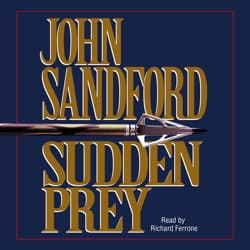

Look, I've got a bone to pick with Dick LaChaise. Not because he's a murderous psychopath hell-bent on destroying Lucas Davenport's family—that's actually solid villain motivation. No, my problem is that this guy kept me white-knuckling my steering wheel on I-35 during rush hour when I should've been focused on the idiots merging without signals. Twelve and a half hours of revenge-fueled mayhem, and Sandford doesn't let you breathe for a second.
When the Hunter Becomes the Hunted
Sandford flips the script here in a way that actually works. Davenport spends most of the series being the predator—the guy who outthinks and outmaneuvers criminals until they're cornered. But when LaChaise decides the way to hurt a cop is through his loved ones? Suddenly our man Lucas is playing defense, and it's uncomfortable in the best way.
I've seen this scenario play out in real life—not the bank robbery part, but the targeted retaliation against families. It's the coward's playbook, and Sandford gets the psychology right. Secrets in the Cellar explores that same twisted psychology—the way rage and control can warp someone into something monstrous. LaChaise isn't some criminal mastermind. He's a grief-stricken, rage-fueled man with nothing left to lose, and that makes him infinitely more dangerous than any calculating villain.
The author clearly did their homework on how law enforcement handles credible threats against their own. The scramble to protect Weather and Jennifer feels authentic—the jurisdictional headaches, the resource allocation, the sheer terror of knowing you can't be everywhere at once.
Ferrone IS Davenport
Let me cut to the chase on the narration: Richard Ferrone owns this character. After listening to him voice Lucas across multiple books, hearing anyone else would feel wrong. His voice has this hard-edged, masculine quality that fits a guy who's equal parts detective and barely-contained violence.
What impressed me most was his restraint. Ferrone doesn't do theatrical voice changes for every character—instead, he uses subtle vocal inflections that somehow make each person distinct without ever feeling like a performance. LaChaise gets this low, dangerous rumble. The cops sound like cops. Weather sounds like a woman trying to hold it together while her world's falling apart. It's the difference between a narrator who's showing off and one who's serving the story.
Some folks have complained the pacing runs hot—that Ferrone reads too fast. I listen at 1.25x anyway, so maybe I'm not the right judge, but I didn't notice any issues. If anything, the relentless pace matches the book's tempo. This isn't a slow-burn procedural. It's a sprint. Vanishing Hour operates at a similar breakneck pace—no time to catch your breath before the next twist hits.
Where It Lost Me (Briefly)
My one gripe—and it's minor—is that some of the secondary villains feel a bit thin. LaChaise is compelling, but his accomplices occasionally blur together. Sandford's so focused on the cat-and-mouse between LaChaise and Davenport that the supporting cast gets shortchanged. Not a dealbreaker, but I found myself occasionally losing track of who was who among the bad guys.
Also, this is book eight in the Prey series. You can absolutely jump in here—Sandford gives you enough context—but you'll get more out of the emotional stakes if you've spent time with Davenport before. The threat to his family lands harder when you've watched him build those relationships.
Who Needs This in Their Queue (And Who Should Stand Down)
If you want a thriller that actually thrills—not one of those slow-build literary crime novels where everyone sits around discussing their feelings—this delivers. Fans of Lee Child's Reacher books will find familiar territory here, though Davenport's more emotionally complicated than Reacher ever gets.
Skip it if you need your heroes squeaky clean. Davenport operates in moral gray zones, and Sandford doesn't apologize for it. Also skip if you're looking for background listening—this demands attention. I tried having it on while cleaning my Glock and nearly missed a crucial plot point. Ranger gave me a look.
Mission Complete
Sandford delivers a tight, propulsive thriller with genuine stakes, and Ferrone's narration elevates already solid material. The revenge premise is simple but executed with precision. No wasted scenes, no filler chapters, just relentless forward momentum toward a confrontation you know is coming but can't predict.
Ranger approved this one. He perked up during the action sequences, which is more than I can say for most of what I've listened to lately. At 12.5 hours, it's a solid week of commute listening or one very intense road trip. Just don't blame me if you miss your exit.