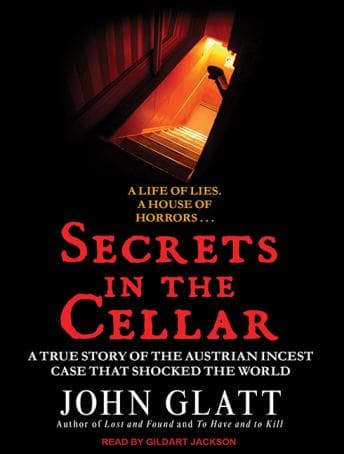

Look, I can handle dungeons. I can handle the absolute worst of humanity—it's kind of my job description at this point. I eat Stephen King for breakfast and chase it with Shirley Jackson. But if you're a professional narrator and you cannot pronounce the name of the main victim? We have a problem.
It's "Elisabeth." There's an 'H' in there. Every time Gildart Jackson said it—and he says it a lot—my left eye twitched. Pulled me right out of the nightmare. And trust me, with the Fritzl case, you almost want to be pulled out, but not like that. Jackson does better work in Revelations, where at least the pronunciation doesn't make you want to throw your headphones. It's a distraction in a story that demands your full, horrified attention.
The Voice of Clinical Dread
Okay, ignoring the pronunciation thing (which is hard, but I tried), Jackson actually brings a weirdly perfect energy to this. He sounds... detached. Clinical. Almost like a news anchor reading the end of the world.
(Shirley, my cat, slept through most of it, which is usually a sign that the narrator isn't doing enough, but here it worked.)
Because the subject matter? It's radioactively toxic. We're talking about a father imprisoning his daughter for twenty-four years. If the narrator had tried to "act" this—if he'd added emotional flourishes or dramatic pauses—it would've been unlistenable. Too gross. Instead, Jackson reads the details of the dungeon's construction—the soundproofing, the electric codes—like he's reading a manual for a dishwasher. That contrast? That's where the real horror lives. Made the hair on my arms stand up. It makes the evil feel mundane, which is exactly what Hannah Arendt warned us about.
When The Horror Loops
Here's the thing I realized about halfway through, somewhere around hour four while I was reorganizing my horror VHS collection. The book loops.
I kept checking my phone to see if I'd accidentally hit the "skip back" button. I hadn't. Glatt just... repeats things. We get the same details about the cellar door, the same timeline facts, sometimes phrased almost exactly the same way.
It feels padded. The story itself—the raw facts—is only enough for maybe four hours of tight narrative. Nowhere to Run manages to keep the tension wound tight without padding—that's how you do true crime. Stretching it to seven means we're circling the drain. For a true crime junkie, it gets frustrating. I want the dread to build, not stall. It stopped feeling like an investigation and started feeling like a lecture where the professor forgot he already covered slide 14.
The Fritzl Problem
Also—and this is just me being a librarian who cares about sources—it feels light on the victim's perspective. It's very Fritzl-centric. We spend a lot of time in his head, or at least in the mechanics of his world. I get why (he's the one who talked), but it leaves a bad taste.
Who Should Descend Into This Cellar
If you have a stomach of iron and a curiosity about the darkest corners of human psychology, yes. The engineering of the crime is fascinating in a sick way. But if repetitive structure drives you nuts, or you need victim-centered true crime, skip this one. Keep your finger near the 1.5x speed button to get through the padding. And maybe try not to scream every time he says "Elisabeth."