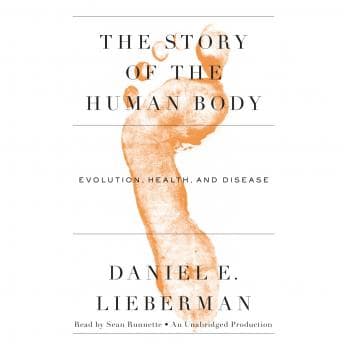

Look, I have a bone to pick with Daniel Lieberman. I was perfectly happy not knowing that my lower back pain is basically a design flaw from when my ancestors decided walking upright was a good idea 6 million years ago. I was blissfully ignorant that my impacted wisdom teeth exist because my jaw shrunk when we started cooking food. Now I can't sit at my desk debugging a flaky RPC without thinking about how my body is running legacy code that hasn't been patched since the Pleistocene.
Thanks, Harvard. Really helpful at 6:17 AM on Caltrain.
Your Body Is Technical Debt, and Nobody's Filing the Tickets
The core thesis here is what Lieberman calls "dysevolution" — and honestly, as someone who works in distributed systems, this concept clicked immediately. It's basically this: evolution optimized us for a specific environment (hunter-gatherer life on the African savanna), and then we radically changed the environment without updating the hardware. We treat the symptoms of the mismatch — glasses for myopia, orthotics for flat feet, insulin for type 2 diabetes — but never address the root cause. We're patching production instead of fixing the bug. The symptoms get managed, so there's no selective pressure to actually adapt, and the cycle continues.
Lieberman walks you through the full evolutionary timeline: bipedalism, the shift away from fruit-heavy diets, the development of endurance running (this section is fascinating — humans are basically the best long-distance runners on the planet, which I find hilarious given the state of my cardio), the explosion of brain size, and then the Agricultural and Industrial Revolutions that broke everything. The progression is logical and builds well. Each chapter layers on the previous one, so by the time he gets to modern mismatch diseases — obesity, heart disease, certain cancers, even depression — you understand why from an evolutionary standpoint, not just what.
The bit that stuck with me: Lieberman argues that our feet evolved for barefoot running on natural terrain, and that modern cushioned shoes actually weaken the arch muscles and change our gait in ways that cause more injuries. He's not some barefoot-running evangelist being preachy about it — he lays out the biomechanics, the fossil evidence, the comparative anatomy. The science actually holds up. It's the kind of argument that makes you look at your $150 running shoes differently. That same blend of obsessive detail and surprising narrative pull reminded me of The Feather Thief, which turns natural history into something you genuinely can't put down — though the stakes there are Victorian bird feathers instead of your metatarsals.
Sean Runnette Is the Narrator This Book Needed
So here's the thing — this is a 15-hour science book. That's a commitment. You need a narrator who can handle dense material without putting you to sleep OR making it feel like a lecture. Sean Runnette threads that needle well. His delivery is low-key and clear — not dramatic, not monotone, just... steady. He lets Lieberman's occasional dry humor land without overselling it. There's this passage where Lieberman describes how our ancestors' shift to meat-eating basically gave us the caloric budget to grow bigger brains, and Runnette delivers it with just enough wry energy that you catch the "we literally ate our way to intelligence" implication.
He's no Ray Porter (sorry, I have to compare everyone to Ray Porter, it's a condition), but he's exactly right for this material. Clear diction on the anatomical terminology, good pacing through the data-heavy sections. No stumbles on genus names that I caught, which — given how many times he says "Australopithecus" — is legitimately impressive.
One thing to flag: there are charts and line drawings referenced throughout. Obviously you can't see those on audio. For the most part, Lieberman's writing is descriptive enough that you don't feel lost, but there were two or three moments where I wished I could glance at a diagram. Not a dealbreaker, but worth knowing.
Who Should Queue This Up (And Who Shouldn't)
Perfect for: train, gym, long walks. The pacing is even enough that you can zone out for 30 seconds and pick the thread back up. I finished this across about 6 commutes at 1.5x speed, and it held my attention through the morning zombie hours.
This is basically "Why We Sleep" but for your entire body's evolutionary history. If you liked Sapiens but wanted more biology and less anthropological hand-waving, this is your book. If you're into running, there's a substantial chunk that'll genuinely change how you think about human locomotion.
Skip if: you want prescriptive health advice. Lieberman is frustratingly measured about solutions — he spends 12 hours building an airtight case for why modern life is wrecking our bodies, then gets a bit vague on the "so what do we do about it" part. The last few chapters feel rushed compared to the meticulous buildup. He gestures at government intervention and environmental design but doesn't go deep. It's the classic academic move — diagnose brilliantly, prescribe cautiously.
Also skip if dense evolutionary biology isn't your thing. This isn't a light listen. It rewards attention.
The ROI on 15 Hours of Evolutionary Biology
The ROI on this audiobook is high if you're the kind of person who wants to understand the why behind health recommendations, not just follow them blindly. I genuinely think about Lieberman's dysevolution framework now when I read health news. That's the mark of a book that actually changed how I process information, not just entertained me for a week.
Kevin asked me what I was listening to and I explained dysevolution to him for 20 minutes over dinner. He did not ask again. But he also started standing at his desk more, so. Mission accomplished.





![Steve Jobs [unabridged audiobook] audiobook cover](/_next/image?url=https%3A%2F%2Fcovers.audiobooks.com%2Fimages%2Fcovers%2Ffull%2F9788499923406.jpg&w=1920&q=75)