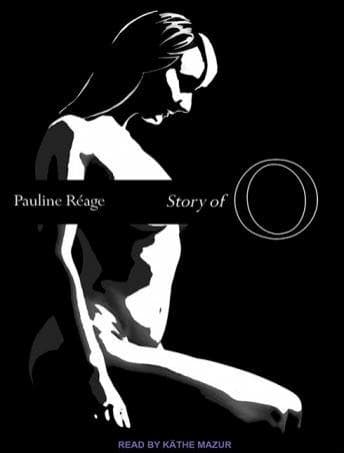

I started Story of O at 2 AM when I couldn't sleep, which - in retrospect - was either the perfect or the absolute worst decision I've ever made. I was lying in the dark with Diego curled on my chest, and within twenty minutes I was staring at my ceiling fan wondering what Anne Desclos (writing as Pauline Réage) was actually trying to do to me. Not in a bad way. In a way that made my brain itch.
Here's what I knew going in: 1950s Paris, erotic classic, controversial. Here's what I didn't know: that I'd spend the next 7 hours and 33 minutes feeling like I was reading someone's most private, most dangerous dream - and not entirely sure I was supposed to be there.
The Dream That Doesn't Apologize For Being a Dream
This book is not trying to be your friend. O isn't a character you root for in the conventional sense - she's more like a figure in a painting, moving through a world of châteaux and leather and ceremony with this strange, absolute stillness at her center. Réage wrote this as a series of fantasy letters to her lover, and you feel that in every sentence. It's not plotting toward something. It's circling something. The desire isn't incidental to the story - it IS the story, and the story is asking you to sit with it without flinching.
What hit me hardest wasn't the explicit content (and yes, it is explicit, and yes, the BDSM is not metaphorical - content warnings are real here, please read them). What hit me was the prose itself - this cool, precise, almost clinical voice describing things that should feel chaotic. There's a scene early on at the château where O is being prepared, essentially, and the language is so deliberate and formal that it creates this vertigo. You're not sure if you're reading about surrender or erasure. Réage never tells you which. That ambiguity is either the book's greatest achievement or its most troubling quality, depending on who you are. I sat with a similar unresolved tension reading Dispossessed: A Novel — that same feeling of a book refusing to hand you a verdict, just holding the question open until you have to make your own peace with it.
Abuela would have clutched her rosary so hard it would've left marks. And then she probably would've asked me what happened next.
Käthe Mazur, Doing Something I Didn't Expect
Okay. OKAY. I need to talk about this narration because it's doing something genuinely specific that I haven't heard before.
Mazur reads O not as a woman in crisis, not as a victim, not as an object - she reads her like a naturalist observing a rare phenomenon. Herself. There's this quality of detached witnessing in her voice, like O is both inside the experience and somehow floating slightly above it, documenting it. It sounds strange to describe, but once you hear it, you understand that it's the only way this book could work as audio. Any narrator who played the emotion too hot would've broken the spell. Mazur keeps it cool and luminous and somehow that makes it more affecting, not less.
The lushness of Réage's prose - and it IS lush, all those precise French sentences about light and fabric and the specific geometry of rooms - Mazur lets it breathe at exactly the right pace. I listened at 1.0x, obviously (I am not an animal), and the rhythm of it felt like something between poetry and hypnosis.
My one note: if you're hoping for distinct character voices - René, Sir Stephen, the various figures who move through O's world - you won't get that here. This is O's interiority, rendered in one continuous voice. That's a choice, and I think it's the right one, but know what you're getting.
Who This Is For (And Who Should Absolutely Skip It)
If you need your protagonists to fight back, advocate for themselves, or arrive at a conventional sense of self-actualization - this is not your book. If explicit BDSM content is a hard no for you - this is not your book. If you want plot mechanics that resolve cleanly - definitely not your book.
But if you're the kind of reader who can sit with a text that asks uncomfortable questions about desire and will and identity without answering them? If you're curious about why this book has been shocking and debated and translated and banned for seventy years? If you want to hear what it sounds like when someone writes their most private fantasy and it accidentally becomes literature?
This book felt like standing at the edge of something very deep and looking down. Mazur's voice is the only thing keeping you from losing your footing entirely.
I didn't cry. I'm not sure this book is designed to make you cry. It's designed to make you quiet. I was quiet for a long time after it ended, lying in the dark with Diego still on my chest, thinking about what surrender means when someone chooses it. I still don't have an answer. I think that's the point.