
This book wrecked me in ways I wasn't prepared for.
I started listening at 2 AM because insomnia hit hard, and Diego was being his usual judgmental self from the foot of my bed. By 4 AM, I was openly sobbing into my pillow, trying not to wake up Frida, who had migrated to my chest like she always does when she senses emotional distress. These cats, I swear.
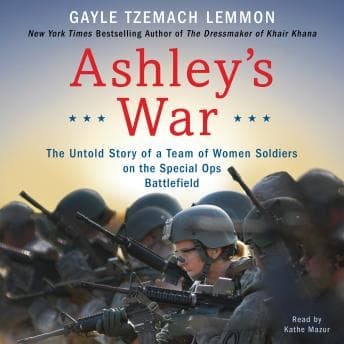
Gayle Tzemach Lemmon tells the story of the Cultural Support Teams—women soldiers who were basically doing combat missions before women were officially allowed in combat roles. And at the center of it all is Ashley White, a soldier who bonded with her teammates over *Glee* and video games while also being one of the most effective operators on the battlefield. That juxtaposition? The watching-Glee-together energy mixed with the very real danger of nighttime raids in Afghanistan? It felt like being punched in the chest repeatedly by someone who also wanted to give me a hug.
When Sisterhood Is Forged in Fire (Literally)
What got me—what really, truly got me—was the friendship. These women found each other through this impossible pilot program, proved themselves to Special Ops soldiers who were skeptical at best, and became each other's only people who *understood*. Lemmon captures the specific texture of female friendship under extreme pressure, and it's nothing like the sanitized version you see in movies. It's messy and competitive and fierce and tender.
The women of CST-2 couldn't talk about their work with anyone outside their unit. Their families didn't fully know what they did. Their friends back home couldn't comprehend it. So they had each other, and Lemmon makes you feel the weight of that isolation alongside the pride they carried.
My abuela would have loved this one. She always said women hold up half the sky—she got that from somewhere, probably a telenovela—but she would have been so proud of these women. Strong and soft at the same time. Capable of violence and gentleness in the same breath.
Kathe Mazur's Steady Hand
The narration is solid. Mazur doesn't try to do anything flashy—no dramatic voice changes, no theatrical moments. She reads this like what it is: journalism about real people who deserve respect. Her delivery is warm but controlled, which works perfectly for material this heavy. When the emotional moments hit, she doesn't oversell them. She trusts the story to do the work.
I listened at my usual 1.0x because this isn't a book you rush through. The pacing matches the story—deliberate, building toward something you know is coming but can't quite prepare for. At ten hours, it's a commitment, but it never dragged for me. Every section felt necessary.
The Crying Spreadsheet Update
Three crying sessions. The chapter where Ashley's story reaches its end—ugly crying, the kind where you have to pause and just breathe for a minute. The aftermath sections with her teammates—quieter tears, the kind that just leak out while you're trying to keep listening. And the epilogue—that one hit different because it's about legacy and memory and how we carry the people we've lost.
This isn't a sad book, though. That's what surprised me. It's a book about women being extraordinary, about friendship that transcends circumstance, about service and sacrifice and the specific kind of love that develops when you trust someone with your life. The sadness is part of it, but it's not the whole story.
Who Needs This (and Who Should Brace Themselves)
If you want a book that makes you feel something real about war—not the politics of it, but the human cost and the human connections—this is it. If you're interested in women's military history, this is essential listening. If you think you know what women in combat looks like based on movies, prepare to have your assumptions challenged.
Content warning: there's violence, there's PTSD, there's loss. This is a combat narrative. But Lemmon handles it with such care, such respect for her subjects, that it never feels exploitative.
Skip this if you need something light. This is not a background listen. This is a sit-with-it, feel-it, probably-cry-about-it book.
My Heart. MY HEART.
I finished this at 6 AM, both cats finally asleep, the sun coming up over Austin, and I just sat there. Sometimes a book changes how you think about something fundamental—in this case, what service means, what sisterhood means, what it costs to be a pioneer in a space that wasn't built for you. Churchill's Band of Brothers gave me that same gut-punch about the cost of service, though in a completely different war and with men instead of women.
Ashley White and the women of CST-2 deserved to have their story told. Gayle Tzemach Lemmon told it with grace and precision. Kathe Mazur delivered it with the respect it deserved.
I'm adding this to my permanent collection. Some stories you need to be able to return to.