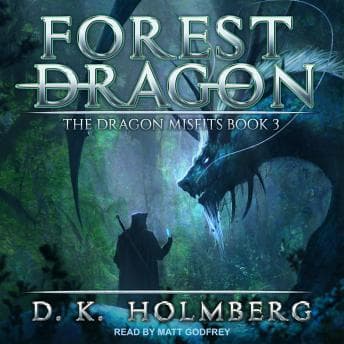
I picked this up between episodes of my own podcast, which probably says something about my inability to turn off the horror-and-fantasy part of my brain even when I'm technically off the clock. I was shelving returns at the library during my lunch break, earbuds in, half-listening while alphabetizing a cart of large-print mysteries. By the time I got back to my desk, I'd missed three patron questions because I was too deep in Dragon Haven to notice the line at the reference desk. So. That's where we're starting.
When the Misfits Are the Point
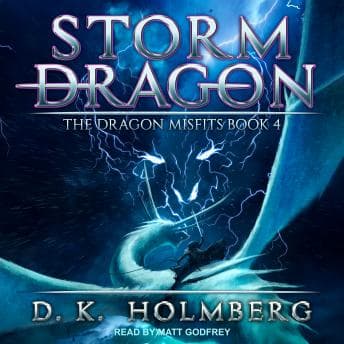
Here's what I wasn't expecting from Storm Dragon: the emotional weight of the misfit dragons themselves. Holmberg has built this whole mythology around dragons that don't fit - the ones Lorach wants destroyed precisely because they're anomalies - and this installment leans into that with more urgency than I'd anticipated from a mid-series entry. Jason's drive to find and protect them feels less like a plot obligation and more like a compulsion, and that distinction matters. That specific ache for the creature that doesn't belong — I've chased it across genres, and it's the same thing that wrecked me in Into the Drowning Deep, where the horror works precisely because the creatures refuse to be what anyone expected them to be. The problem is that the book also knows it has a rebellion to service, and those two threads don't always pull in the same direction. There's a stretch in the middle where the political maneuvering around the Dragon Guard investigation starts to crowd out the misfit storyline, and I found myself genuinely impatient - not bored, but wanting the book to get back to the thing it's actually good at.
The twist structure is where I have to be honest with you: there's a moment - and listeners who've flagged this in reviews are not wrong - where a revelation lands as if it's new information, but it isn't. Jason reacts with the shock of someone encountering something for the first time, except he's encountered it before. It's the kind of continuity slip that an editor should've caught, and it's jarring specifically because the rest of the book is building toward genuine stakes. When you're invested and then the text itself breaks the spell, that's a problem. Not a dealbreaker, but a real friction point.
Matt Godfrey Doesn't Phone It In
The narrator commits. That's rare. Godfrey has a quality I look for in fantasy narration specifically: he doesn't flatten the emotional temperature of scenes to keep things moving. When Jason is scared, Godfrey lets the fear sit in the voice instead of rushing past it. When there's tension in a confrontation with Lorach forces, the pacing of his delivery actually slows down slightly - which is counterintuitive but correct, because dread isn't fast. It's heavy.
The dragon communication sequences - the moments where the misfits and Jason are connecting across whatever bond Holmberg has established - Godfrey handles these with a kind of careful stillness that works better than I expected. He doesn't oversell the mystical register. He just... gets quieter. And that choice is smart.
There's also a parasitic phrase issue that crops up throughout the book - listeners have noticed it, I noticed it, it's real. Certain constructions repeat in ways that suggest the manuscript needed one more pass. Godfrey can only do so much with that; he reads what's there. But it does create a rhythm problem in places where the prose starts to echo itself.
Who This Is For (And Who Should Skip)
If you're already in the Dragon Misfit series, you're here, you're reading this, you probably already know whether you're continuing. This is a series book doing series book things - it advances the rebellion arc, it deepens the misfit mythology, it sets up what's coming next. It's not a standalone entry point and it doesn't pretend to be.
If you're new to Holmberg and thinking about starting here: don't. Go back to the beginning. The emotional stakes only land if you've watched Jason build these relationships across prior entries.
If you're a fantasy listener who specifically cares about narration quality - and you should, because bad narration ruins good books and I will die on that hill - Godfrey is a genuine reason to choose the audio version over print. He's doing real interpretive work here, not just reading words at a consistent pace.
My podcast listeners are going to love this if they're already Holmberg fans. For everyone else: borrow it first, see if the world clicks for you, then decide if you want to own it.