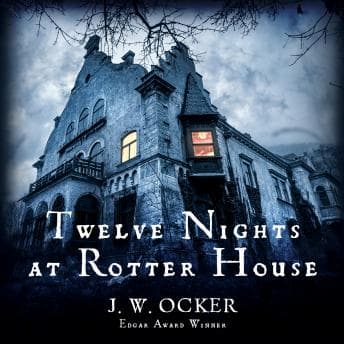

Look, I need to vent about something first: Felix Allsey is kind of insufferable. And I say this as someone who just spent three commutes locked in a haunted house with him. The guy's a paranormal travel writer who sets up these elaborate self-imposed rules—no leaving, no outside contact, sleep during the day—and then proceeds to be the most pretentious narrator of his own experience. But here's the thing. J.W. Ocker knows exactly what he's doing. This is basically The Shining but for true crime podcast bros, and I mean that as a compliment.
The Slow Burn That Almost Lost Me
Bottom line: the middle of this book drags. Like, really drags. I was somewhere around hour four, squeezed between a guy with a massive backpack and someone's emotional support water bottle on the southbound train, genuinely wondering if anything scary was actually going to happen. Felix and Thomas spend what feels like entire chapters trading horror movie references and dancing around some unspoken beef in their friendship. The conversations are realistic in the worst way—the way real conversations are often boring and circular and don't go anywhere.
But then I realized that's the point. Ocker's building something. The mundane back-and-forth, the movie trivia, the way these two grown men can't just say what's wrong between them—it's all setup for when things go sideways. And when they do go sideways, you've been so lulled by the rhythm of their banter that the screams from upstairs hit different.
Matt Godfrey Gets It
The narrator saves this from being a slog. Godfrey does this subtle thing where his tone for Felix is just slightly more smug than for Thomas—not a full character voice change, but enough that you can track who's talking without the "he said" tags. It's the kind of performance that rewards attention. His timing on the dark humor is chef's kiss—there's this dry delivery on the horror movie references that made me actually snort-laugh on the quiet car. (Sorry not sorry to the guy trying to sleep across from me.)
The creepy moments land too. When figures start appearing in thresholds and the basement reveals more than it should, Godfrey doesn't oversell it. He lets the horror breathe. No melodramatic whispers, no cheap vocal tricks. Just this measured escalation that makes you realize you've been holding your breath.
About That Ending
I won't spoil the climax, but the "who's haunting who" twist is... look, I saw it coming. Sort of. The pieces are there if you're paying attention, but Ocker plants them so naturally in all that meandering conversation that you might miss them. It's the kind of ending that makes you want to immediately relisten to catch what you missed—which is high praise for a seven-hour audiobook.
What I didn't expect was how much the resolution depends on understanding Felix and Thomas's broken friendship. All those tedious conversations about horror movies and old grudges? They're doing double duty. By the time the house shows its hand, you actually care about these two idiots.
The Uncomfortable Bits
I need to flag something: there are racist undertones in the story content that made me uncomfortable. It's not the narration—Godfrey's performance is clean—but Felix as a character says and thinks some things that... yeah. I'm not sure if Ocker intended this as character critique or if it's just baked into the narrative, but it pulled me out of the story more than once. Your mileage will vary, but fair warning.
Also, Felix is genuinely unlikable for long stretches. If you need to root for your protagonist, this might not be your book. I found myself more invested in Thomas, who feels like the more human of the two.
Who Should Check In (And Who Should Keep Driving)
This is a focused listening book. Don't try it while coding or debugging—you'll miss the slow-build details that make the payoff work. I finished it across three commutes and one late-night insomnia session after a particularly frustrating deploy, and that actually worked well. The pacing rewards attention but doesn't punish you for zoning out for a minute. Clock Strikes Thirteen has a similar slow-burn structure that demands focus but ultimately pays off.
Skip if: you want constant scares, you need likable protagonists, or you're sensitive to the content warnings above.
The ROI Calculation
At just under eight hours, this is a reasonable investment for what you get. The narrator elevates middling material into something genuinely atmospheric, and the ending delivers enough to justify the slow middle. It's not going to be anyone's favorite horror novel, but it's a solid Halloween listen that does something interesting with the haunted house format.
I wouldn't spend a full credit on it. Wait for a sale or grab it on a streaming service. But if you're in the mood for horror that's more psychological than jump-scare, and you can tolerate a protagonist who thinks he's smarter than he is, Rotter House is worth checking in to.