So I'm sitting in the CS lab at 2 AM, pretending to debug my procedural generation code while actually listening to this, and I realize I've been staring at the same line of Python for twenty minutes because I'm completely absorbed in what's essentially a radio drama about a giant robot hand. My thesis advisor would be so disappointed. Worth it.
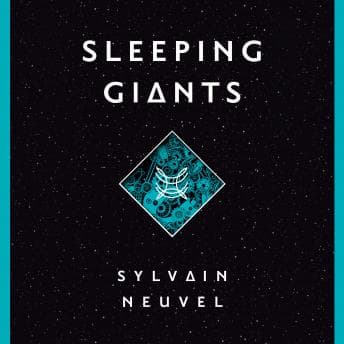
Here's the thing about Sleeping Giants - it's told entirely through interview transcripts, journal entries, and mission logs. No traditional narration. Just conversations between characters and this mysterious unnamed interrogator who may or may not be pulling all the strings. If you've read World War Z, you know the format. That same interview-driven structure works brilliantly in Beneath a Scarlet Sky, though there it's more memoir than mystery. But where Max Brooks had to make you imagine the voices, Sylvain Neuvel basically handed the audiobook producers a gift-wrapped present.
Why Full Cast Was the Only Way
This is one of those rare cases where I'd argue the audiobook isn't just as good as the book - it's the definitive version. The format demands it. You've got Andy Secombe, Eric Meyers, Laurel Lefkow, and like six other voice actors each taking a character, and suddenly you're not reading transcripts. You're eavesdropping on classified government conversations. It's like someone took the X-Files, smashed it together with Pacific Rim, and turned it into a podcast you're not supposed to have access to.
The voice differentiation is clean. Really clean. You always know who's talking, which sounds basic but matters when you're juggling military personnel, scientists, and pilots across multiple countries. The mysterious interrogator - played with this unsettling calm that made me deeply uncomfortable in the best way - carries so much of the tension. Every time he showed up, I'd stop pretending to code and just... listen.
The Slow Burn That Actually Pays Off
Okay, confession time. The first hour? I wasn't sure. The interview format creates this distance between you and the characters. You're always one step removed, watching through a glass wall. My D&D group would probably call it "too much exposition, not enough combat." And yeah, there are stretches where you're waiting for something to happen.
But then it clicks. Around hour two, I got it. The format isn't a limitation - it's the point. You're piecing together the mystery the same way Rose Franklin is. Giant robot parts scattered across the globe. Carbon dating that says this thing is older than human civilization. Governments trying to weaponize something they don't understand. The slow reveal is genuinely satisfying if you're the type who likes info-dumps (and I am absolutely that type).
The world-building here isn't Sanderson-level deep, but it's smart. Neuvel clearly thought through the geopolitics of "what if countries fought over pieces of an alien robot." The science feels grounded enough. The conspiracy elements work. And the progression - finding piece after piece, figuring out how they connect - scratches that same itch as a good LitRPG level-up sequence.
Where It Gets Frustrating
I gotta be honest. This book ends with a lot of unanswered questions. Like, a lot. It's clearly setting up sequels (there are two more in the Themis Files series), and if you're the type who needs closure, you might throw your headphones across the room. I didn't mind because I immediately downloaded book two, but fair warning.
The interview format also means you never really get inside anyone's head. You know what characters say, not always what they think. Some people find that cold. I found it kind of refreshing - made me work harder to understand motivations, like reading between the lines of an NPC's dialogue in a well-written RPG. The pacing does drag in spots, with a few interviews that feel like they could've been cut. But the production quality stays solid throughout - clean audio, subtle sound effects that add atmosphere without being distracting.
Roll for Initiative (Or Just Hit Play)
Sleeping Giants is basically what happens when someone writes a novel specifically designed to be an audiobook. The full cast transforms what could've been a gimmicky format into something genuinely immersive. It's not perfect - the emotional distance is real, and you need patience for the setup. But if you're into sci-fi mysteries, conspiracy thrillers, or just want something different from the usual third-person narration, this hits.
Who should listen: Anyone who loved the found-document style of World War Z, fans of conspiracy thrillers with actual science in them, or people who want an audiobook that feels like a prestige podcast. Skip it if: you need deep POV character access or can't handle a book that ends on a cliffhanger.
My D&D group would love the mystery-box plotting. My advisor would hate that I listened to this instead of working on my thesis. I regret nothing. Perfect for long drives or coding sessions where you need your brain engaged but your hands free. I burned through this in two days and immediately started book two. Yes, it's 8+ hours. Yes, it's worth it.