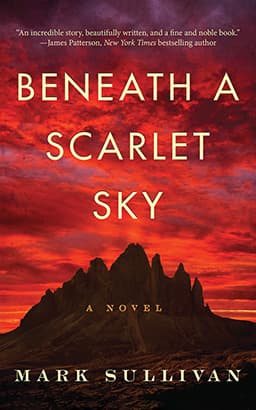

Look, I'll be honest - I almost didn't finish this one. Not because it's bad. Because it's 17 hours and 47 minutes, and at 2.0x speed that's still almost 9 hours of my life. But here's the thing: I finished it. On a Tuesday. While meal prepping for the week. And I burned the chicken because I couldn't pause during the final chapters.
Bottom line: This is the real deal. A true story about an 18-year-old Italian kid who ended up driving for one of Hitler's top commanders while secretly spying for the Allies. You can't make this stuff up. And Mark Sullivan didn't - Pino Lella is a real person, and his story is genuinely insane.
So here's what got me. Pino starts as this typical teenager - obsessed with music, girls, food. My parents would've recognized him immediately. That kid who doesn't want to work at the family business, who thinks the world owes him something easier. Then the bombs start falling on Milan, and suddenly he's smuggling Jews over the Alps. At seventeen. While my biggest concern at seventeen was getting into a good college.
The key takeaway is worth the listen. The other 7 hours? Actually, most of them are too. Sullivan doesn't pad this thing the way business authors do. There's genuine tension throughout - will Pino get caught? Will the Resistance trust him? What happens to Anna? (Don't get me started on Anna. Jenny would've been crying. I was... focused. Very focused.)
Will Damron's narration - okay, this guy gets it. He nails the Italian names and accents in a way that didn't make me cringe, which is harder than it sounds. I've listened to audiobooks where the narrator butchers every non-English word like they're reading a menu at Olive Garden. Damron actually sounds like he's been to Italy. His Pino is earnest without being annoying, and he shifts between Pino-the-lover and Pino-the-soldier in ways that feel natural.
Damron brings that same range to Bad Blood, where he has to navigate an equally complex protagonist—though Elizabeth Holmes faced boardrooms instead of Nazis.
His female voices? Look, they made me smile a couple times. But honestly, who cares. The emotional beats land. When things get dark - and they get dark - Damron doesn't oversell it. He lets the horror speak for itself. That restraint is worth more than perfect voice matching.
Here's where my consultant brain kicks in: this book is basically a crash course in adaptability. Pino goes from ski guide to German soldier to spy to... well, I won't spoil it. But the kid pivots harder than any startup I've ever worked with. And he does it without a board of advisors or a strategic plan. Just survival instinct and moral clarity.
This is what my parents did instinctively. Now it has a TED talk. Except Pino's version involved Nazis and the Alps instead of a dry cleaning business in Koreatown. But the core is the same - you do what you have to do. You protect the people who matter. You don't complain about 14-hour days because the alternative is death.
The pacing drags a bit in the middle - there's some repetitive back-and-forth with General Leyers that could've been tightened. Skip to chapter 5? No, actually don't. The early chapters set up why we should care about Pino, and Sullivan earns that investment. But around the 60% mark, I found myself checking how much time was left. Then the last quarter hits and suddenly I'm burning chicken.
Who should listen (and who should skip): Anyone who loved All the Light We Cannot See or The Nightingale. Long commuters - this is perfect for a week of driving. People who want historical fiction that actually teaches you something about human nature under pressure. Skip it if you need action every five minutes - this is slow-burn tension, the kind where you're waiting for the other shoe to drop for hours. Also skip if you're sensitive to war violence and death. There's some rough stuff here. Not gratuitous, but real.
Jenny would say I'm being harsh about the pacing. Jenny is right. But she'd also say this is exactly the kind of story that reminds you what actual problems look like. And she'd be right about that too.
Final thought: I've read a lot of business biographies about "resilience" and "leadership under pressure." Most of them are written by CEOs who faced a tough quarter. Pino Lella was eighteen, watching people die, lying to Nazis every day, and falling in love with a woman he might never see again. That's pressure. That's resilience.
Most business books I review talk about resilience in abstract terms—Bad Blood at least shows what happens when someone fakes it under real scrutiny.
My 2.0x speed couldn't save this one - because I didn't want it to. Some stories deserve the full runtime.