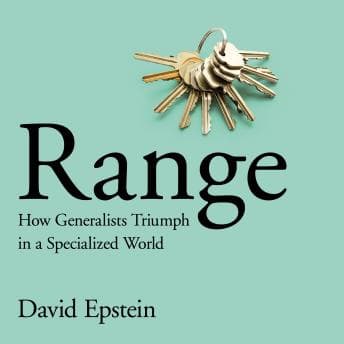

I'm standing over a pot of Rogan Josh, waiting for the onions to caramelize—a process you can't rush—while David Epstein tells me that the foundational myth of my entire academic career is, well, wrong. In the psychology department at BU, we're conditioned to pick a niche before we can legally drink. Specialize early, publish often, don't deviate. But here comes Epstein, arguing that the "10,000-hour rule" is actually a trap for anyone not playing golf or chess.
It's vindicating. Really. My mother still asks when I'm going to stop reading murder mysteries and focus on "real" science, but Epstein's research into 'match quality'—the idea that sampling different fields leads to better long-term fit—suggests my weird diet of Agatha Christie and cognitive behavioral therapy is actually a superpower.
## A Love Letter to Late BloomersThe section on Vincent van Gogh hit me hard. We think of him as this divine genius, but Epstein lays out the reality: the man was a spectacular failure at five different careers before he picked up a paintbrush. He succeeded *because* he sampled widely, not despite it. As someone who studies narrative identity, this reframing is crucial. We tell ourselves stories about being "behind" in life because we didn't peak at 20. Epstein uses data to dismantle that anxiety.
His earlier book The Sports Gene does something similar for athletic performance—same rigorous dismantling of a comfortable myth, this time the one that says talent is either innate or it isn't. ## Will Damron Sounds Like Your Favorite Office-Hours ProfessorHe doesn't try to perform the text; he delivers it with the steady, reassuring cadence of that one adjunct professor who actually holds office hours because he likes the debate. He handles the shift from historical anecdote to hard data without making me zone out, which is rare. When he details the NASA astronaut selection process, his pacing slows just enough to let the complexity of the organizational psychology sink in. Damron brings that same unhurried authority to Bad Blood, where the organizational dysfunction is just as layered and he never lets the pacing collapse under the weight of it. It aids the "cognitive absorption"—my fancy way of saying I didn't have to rewind ten times while chopping cilantro.
## Where the Research Brain Gets TwitchyThe researcher in me got a little restless around the halfway mark. Epstein loves his examples. He *really* loves them. Once he established the concept of 'match quality' in Chapter 4, I was sold. I didn't necessarily need three more chapters of anecdotes to prove the same point. It's a common issue in pop-psychology books—the thesis is brilliant, but the evidence feels padded to hit a page count.
## Who Gets Permission to Quit (And Who Should Skip)If you've ever felt guilty for pivoting careers, changing majors, or having hobbies that don't monetize, this is required listening. It's dense, yes, but it's the kind of density that makes you feel smarter rather than exhausted. Skip it if you're already a committed specialist who finds career-change stories irrelevant—or if repetitive examples make you impatient.
## Sending This to My MotherMy therapist says I need to stop looking for validation in research papers, but she's wrong about this one. I'm sending a copy to my mother. Maybe she'll finally understand why I didn't go to med school.