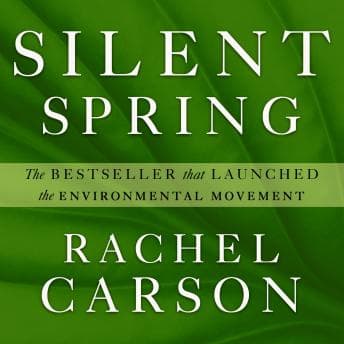

How do you explain to someone that a book written in 1962 about pesticides kept you wide awake on the 6:47 AM Caltrain when you'd gotten maybe four hours of sleep?
I started this one skeptical. Look, I work in tech. I'm surrounded by people who think they're saving the world with apps. So when someone says "this book changed everything," my BS detector goes off. But Silent Spring is the rare case where the hype is... actually justified? Carson basically invented modern environmentalism. She looked at DDT—this miracle chemical everyone was spraying on literally everything—and said "hey, maybe we should check if this is killing all the birds first." Revolutionary concept, apparently.
The Original Bug Report Nobody Wanted to Read
Carson spent six years documenting this. Six years. That's longer than most startups survive. And she wasn't just collecting anecdotes—she was building a case with the methodical precision of someone debugging a production system. The book opens with this haunting fictional town where spring arrives but no birds sing. It's basically a horror story, except everything she describes was actually happening.
What got me was the specificity. She doesn't just say "pesticides are bad." She traces the exact biological pathways—how DDT accumulates in fatty tissue, how it moves up the food chain, how a robin eating earthworms from a sprayed lawn is basically ingesting concentrated poison. The science actually holds up, which is wild for something written before we landed on the moon.
(Side note: Kennedy read this during the summer of 1962. Imagine a president reading a 10-hour science book and then actually doing something about it. Different times.)
Susie Berneis Gets It
Here's the thing about narrating science writing—you can either sound like a Wikipedia article or you can make people care. Berneis lands firmly in the "make people care" camp. Her pacing through the technical sections is excellent; she doesn't rush the complex biology, but she also doesn't let it drag. When Carson gets angry about chemical companies dismissing evidence, you hear that fury in Berneis's delivery. When she's describing the silence of a poisoned spring, there's genuine sadness there.
The flow is clean enough that I could follow along while half-asleep surrounded by other commuters, which is my gold standard for non-fiction. No weird pronunciation stumbles on the chemical names that I noticed. She handles Carson's shifts between scientific precision and poetic observation really well—the book swings between "here's the molecular structure of chlordane" and "imagine a world without birdsong" and Berneis makes both feel natural.
Debugging Ecosystems Before "Systems Thinking" Was Cool
I kept thinking about distributed systems while listening. Carson's core argument is essentially: you can't just change one thing in a complex system and expect no side effects. Spray DDT to kill mosquitoes, and you also kill the fish that eat mosquito larvae, and the birds that eat the fish, and suddenly you have more mosquitoes than before because you eliminated their predators. It's cascading failures. It's exactly what happens when someone pushes a "quick fix" to production without understanding the dependencies.
The book is 60+ years old and we're still making the same mistakes. Different chemicals, same hubris. Carson's argument that citizens should be able to question what governments allow into the environment feels painfully relevant. That same fight for transparency in government dealings is exactly what Secret Empires exposes in modern political corruption. She was basically advocating for transparency and accountability before those became corporate buzzwords.
Who Should Queue This Up (And Who Shouldn't)
This isn't a podcast-while-coding situation. The science requires actual attention. But for a dedicated commute listen? The ROI on this audiobook is high. I finished it in about 5 commutes, and I came away understanding why this book matters beyond "DDT bad."
If you're into science history, environmental policy, or just want to understand why we have an EPA—this is essential. If you want something light and uplifting... maybe try The Martian instead. Carson is not here to make you feel good. She's here to make you pay attention.
Commit Message: Worth Merging Into Your Queue
I finished this at 1.5x and it worked fine—Berneis's pacing is measured enough that speeding up doesn't lose clarity. At 10 hours 44 minutes, it's a commitment, but it's the kind of book that makes you feel smarter for having listened to it. Not in a pretentious way. In a "I actually understand something important about how the world works" way.
Carson died two years after publication, before she could see how much she changed. But every time someone questions whether a new chemical is safe before we spray it everywhere, that's her legacy. Pretty good debugging for someone who never wrote a line of code.








![Steve Jobs [unabridged audiobook] audiobook cover](/_next/image?url=https%3A%2F%2Fcovers.audiobooks.com%2Fimages%2Fcovers%2Ffull%2F9788499923406.jpg&w=1920&q=75)