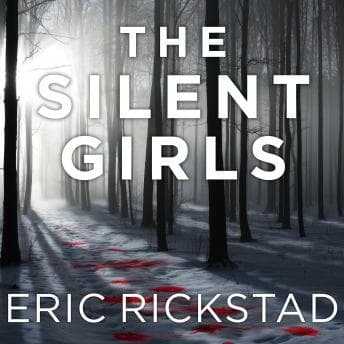

What is it about small-town evil that feels so much more unsettling than big-city crime?
I've been thinking about this a lot since finishing Silent Girls. There's something about the proximity—the idea that the monster could be your neighbor, your kid's teacher, the guy who fixes your car—that taps into a primal fear. Rickstad gets this. He really, really gets this.
I listened to most of this during my morning runs through Cambridge, which in retrospect was maybe not the smartest choice. Nothing like jogging past quiet suburban houses while R. C. Bray is describing the darkest corners of rural Vermont in your ears. (My pace definitely picked up during certain chapters. Cardio bonus, I guess.)
The Psychology of a Broken Detective
Frank Rath is the kind of protagonist I could write a case study on. Former detective, now PI, raising his teenage daughter alone after—well, that's part of the backstory that unfolds. The man is a walking example of unresolved trauma manifesting as hypervigilance. He sees threats everywhere because he's seen things. And Rickstad doesn't spell this out with heavy-handed exposition. You just... feel it. The way Rath interacts with his daughter, the way he approaches the case, the constant undercurrent of dread he carries.
What makes this character compelling is that his paranoia isn't unfounded. That's the cruel trick of the book. The world really is as dangerous as Rath fears. Trauma survivors often develop heightened threat detection—sometimes it's maladaptive, but sometimes it's exactly what keeps them alive. Rath exists in that uncomfortable space.
The missing girl case starts simple enough. Abandoned car. Beautiful teenager vanished. But then the pattern emerges. Other girls. Other disappearances. And suddenly you're not reading a mystery—you're reading something darker. Something that feels less like fiction and more like those true crime cases that keep me up at night.
R. C. Bray Knows What He's Doing
Okay, so Bray. I've heard him narrate sci-fi and action stuff before, but this was different. His voice has this weathered quality that works perfectly for Rath—like a man who's smoked too many cigarettes and seen too much death. He doesn't oversell the horror. He lets it breathe.
The character differentiation is solid. You can tell who's speaking without constant dialogue tags, which is basically my minimum requirement for a thriller audiobook. Some reviewers mentioned his New England accent gets distracting—honestly, I didn't find that. It felt appropriate for the setting. Vermont isn't Boston, but there's a regional authenticity there that grounded the story.
The pacing is where things get interesting. This is a slow burn. Like, genuinely slow. I know some people bounced off it for that reason, and I get it. There are stretches where the investigation crawls. But here's the thing—that slowness serves a purpose. It builds dread. It makes you sit with the discomfort. My therapist would have thoughts about why I find that compelling rather than frustrating, but that's a conversation for another day.
When Small Towns Hide Big Secrets
The atmosphere in this book is suffocating in the best way. Rickstad writes rural New England like it's a character—the isolation, the cold, the way everyone knows everyone's business except for the secrets that actually matter. It reminded me a bit of The Silent Patient in terms of that creeping psychological tension, though Rickstad's approach is grittier, less polished. Cruel and Unusual explores similar territory with that same unflinching look at human darkness.
What I found myself asking: why does this particular setting breed this particular kind of evil? The book doesn't give easy answers. The perpetrator—when you finally understand what's happening—exhibits classic patterns of predatory behavior that would make any criminal psychologist nod grimly. It's not supernatural horror. It's human horror. The kind that's harder to shake because you know it exists.
I will say—and this is important—the content is dark. Really dark. There are implications about what happens to these girls that made me pause my run more than once. If you're sensitive to violence against women, proceed with caution. Rickstad doesn't exploit it gratuitously, but he doesn't shy away either.
Who This Is (and Isn't) For
If you're into rural noir, if you like your detectives damaged and your mysteries genuinely unsettling, this delivers. Odd Hours scratches a similar itch, though with a slightly different flavor of atmospheric dread. But if slow-burn pacing frustrates you, or if dark content involving violence against women is a hard no, skip this one.
The production quality is clean—no weird audio issues on my end, despite what some reviews mentioned. Maybe they fixed that. The bonus epilogue is worth sticking around for if you need a bit more closure.
Case Closed (But It'll Linger)
Would I listen again? Probably not. And that's not a criticism—it's just that kind of book. The impact comes from not knowing where it's going. Once you know, the dread dissipates. But would I recommend it? Absolutely.
Just maybe don't listen alone in the dark. Or do. I'm not your mother.