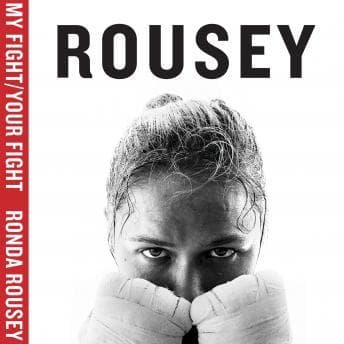

What happens when an author reads their own memoir and you can literally hear the catch in their throat?
I've assigned plenty of autobiographies to my students over the years. Most of them are polished, ghostwritten affairs where the celebrity's "voice" sounds suspiciously like a PR team. This is not that. Ronda Rousey reading her own words while R.C. Bray handles the connecting tissue creates something I wasn't expecting—raw vulnerability mixed with professional narration that actually works.
The Dual-Narrator Gamble
Look, author narration is always a risk. Some authors sound like they're reading a grocery list. Others over-emote to the point of embarrassment. Rousey lands somewhere I didn't anticipate—she sounds like someone telling you her story at 2 AM, voice breaking in places, fierce in others. When she talks about losing her father at eight years old, you're not hearing an actress perform grief. You're hearing someone who lived it.
R.C. Bray—and the man has more Audie credentials than I have ungraded essays on my desk—handles the structural narration with his usual clarity. He's the steady hand that keeps the audiobook from becoming too emotionally overwhelming. It's a smart production choice. Bray knows when to step back and let Rousey carry the weight.
Why This Hit Different Than Expected
I'll be honest. I picked this up because Denise made a comment about Rousey during one of our lakefront walks, and I realized I knew almost nothing about her beyond "UFC fighter" and "was in some movies." I expected a sports memoir—training montages, fight statistics, the usual.
What I got was a meditation on loss, obsession, and what it costs to become the best at something. That same ruthless focus on mastery shows up in 48 Laws of Power, though Greene's approach is more calculated, less personal. (My students would probably zone out during the judo training sections. I found them fascinating.) Rousey doesn't sanitize her story. She talks about being homeless, about relationships that imploded, about the specific kind of madness required to dedicate your entire existence to a single goal.
The pacing moves well. Eight and a half hours sounds long, but the narrative shifts between childhood trauma, Olympic training, and UFC dominance keep things from dragging. I finished it over three grading sessions—and honestly, the grading suffered because I kept getting pulled into her story instead of marking comma splices.
The Voice Behind the Fighter
Here's what surprised me most: Rousey can write. Or at least, she can tell a story in a way that feels authentic rather than manufactured. There's a barbed wit running through the whole thing—she's self-aware about her intensity, about how she comes across, about the contradictions in her own personality.
When she reads passages about her mother's training methods (brutal, by the way—the woman would wake young Ronda up by putting her in armbars), you hear both the child who resented it and the adult who understands it. That's the kind of complexity you don't get from a ghostwritten memoir read by a voice actor.
The production quality is clean throughout. No weird audio transitions between narrators, no jarring volume shifts. Someone knew what they were doing in the editing room.
Who This Is (and Isn't) For
This isn't just for MMA fans. If you've ever been obsessed with mastering something—anything—there's something here for you. If you've experienced loss and had to rebuild yourself around it, Rousey's honesty about her father's death and its aftermath might hit close to home. Fair warning: she doesn't pull punches emotionally. The content around loss and personal struggles is intense.
If you prefer your memoirs polished and comfortable, skip this one. Rousey is many things. Comfortable isn't one of them.
I listened at 1.0x because—and I say this every time—the author chose those words and that rhythm. Speeding it up would lose something, especially in the sections where Rousey's voice catches or pauses. Those silences are part of the story.
Mr. Williams's Final Grade
Would I assign this to my students? Maybe the juniors. They'd complain about it not being fiction, but they'd remember it. That's more than I can say for half the curriculum I'm required to teach.






![Steve Jobs [unabridged audiobook] audiobook cover](/_next/image?url=https%3A%2F%2Fcovers.audiobooks.com%2Fimages%2Fcovers%2Ffull%2F9788499923406.jpg&w=1920&q=75)