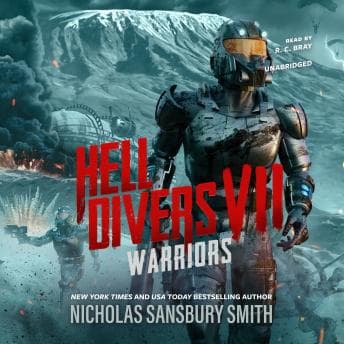

How many times can one man almost die before you stop caring?
Seriously, I'm asking. Because King Xavier Rodriguez has been on death's door so many times across this series that my heart should be completely numb by now. And yet here I am, 3 AM on a Tuesday, lying awake after finishing book seven because I genuinely didn't know if he'd make it through this infection arc. Nicholas Sansbury Smith, you absolute monster.
The ROI on Book Seven
Bottom Line: This is basically The Walking Dead meets Waterworld, but seven books deep and somehow still finding new ways to make you anxious about characters you've followed for thousands of pages. Worth your commute? Absolutely—I burned through this in about four train rides plus one very long "I'm taking the scenic route home" drive that Kevin still doesn't know about.
Let me break down what you're getting for 16+ hours of commitment. You've got three concurrent threat vectors: Horn and his skinwalker crew coming for revenge after Rio, the machines potentially discovering the Vanguard Islands, and Xavier fighting an infection that's basically a ticking clock on the entire political stability of the kingdom. It's a lot of plates spinning, and Smith keeps them all airborne without dropping into chaos. Dune juggles similar political complexity across its factions, though Herbert's desert planet trades radiation for sandworms.
The pacing here is different from earlier books. Less diving, more political maneuvering and siege preparation. If you came for the adrenaline rush of Hell Diver jumps into irradiated hellscapes, you'll get some of that, but this installment is heavier on the "what happens when the warriors have to become rulers" question. Which, honestly? More interesting than I expected.
R.C. Bray: The Debate Continues
Okay, I need to address the elephant in the room. R.C. Bray is basically the narrator for military sci-fi at this point. The man has an Audie Award. He's been with this series from the beginning. And yet—and I say this with love—his character differentiation is... not his strongest suit.
Here's the thing: his voice works perfectly for the grizzled military types. Xavier, Magnolia, the divers—they all sound exactly like you'd expect post-apocalyptic soldiers to sound. Gravel and determination. Where it gets murky is when you've got multiple characters of similar backgrounds in the same scene. I found myself occasionally rewinding to figure out who was speaking.
BUT. And this is a big but. His emotional delivery during the infection sequences? The moments where Xavier is delirious and the narrative gets fragmented? Actually kind of brilliant. He captures that fever-dream quality in a way that made my 6 AM commute feel genuinely unsettling. The bleakness of the surface world, the constant tension of the skinwalker threat—Bray's dramatic style suits this material. Some people find him too theatrical. I think post-apocalyptic warfare kind of demands theatrical.
Who's This For (And Who Should Bail)
Perfect for: Long commutes, road trips, gym sessions where you need something to distract you from leg day. This is not background listening material—too much plot, too many factions to track. You need at least 60% of your brain available.
Skip if: You're looking for bedtime listening (you will not sleep), casual background audio, or you haven't read books 1-6. This is absolutely not a standalone. You'll be completely lost on who Horn is, why the machines matter, and why anyone cares about King Xavier's political situation.
If you bounced off earlier books because of the diving mechanics, this one might actually work better for you—less technical jargon about suits and radiation, more character drama and military strategy.
Does Book Seven Earn Its Runtime?
I'll be honest—I was worried going into book seven. Series this long tend to either repeat themselves or jump the shark. Warriors does neither, which is genuinely impressive. The skinwalker threat feels like a natural evolution rather than a "we need a new villain" desperation move. The political complications of actually building a society after years of just surviving? That's the kind of complexity that keeps a series fresh.
The machines remain terrifying in that background-radiation way (pun intended). That kind of lurking existential dread reminds me of the slow-burn tension in Orb of Binding, where the real threat isn't always the one you're actively fighting. They're not the main focus here, but their presence hangs over everything. You never forget the existential threat even when you're focused on the immediate human conflicts.
Final System Check
I finished this in about a week of commutes, which for a 16-hour audiobook means I was actively seeking out reasons to stay in the car longer. That's the highest compliment I can give. The science mostly holds up (post-apocalyptic handwaving aside), the action sequences translate well to audio, and R.C. Bray—voice differentiation complaints aside—knows exactly how to pace a battle scene.
Is it the best in the series? Some people say yes. I'd put it in the top three, personally. It's definitely not the place to start, but if you're already invested in these characters, Warriors delivers exactly what you want: stakes, survival, and the constant question of whether humanity deserves to make it.
Now if you'll excuse me, I need to start book eight. Sleep is for people who don't have skinwalkers to worry about.