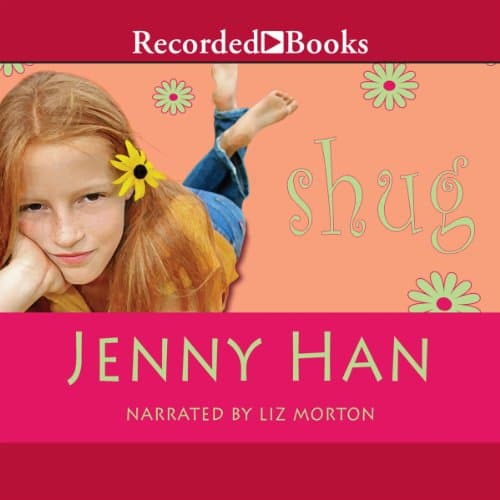

I was three hours into a logo redesign for a local bakery — you know the kind, where the client wants "rustic but modern but also playful but also serious" — and I had Shug playing through my studio monitors because both cats were asleep and I could let the sound fill the room. And somewhere between Annemarie Wilcox getting frozen out by her best friend and realizing her mama's drinking is more than just "a glass of wine with dinner," I stopped adjusting kerning and just... sat there. Hands on the keyboard, doing nothing. Because Jenny Han wrote a twelve-year-old girl's loneliness so quietly and so precisely that it snuck past all my defenses.
This is Jenny Han's debut, written before she became the To All the Boys juggernaut, and you can feel it. There's something raw here, something less polished but more honest than her later work. Shug Wilcox lives in small-town Georgia, has a mama who's checked out emotionally (and into a wine bottle), a daddy who's kind but distant, and a sister so beautiful she might as well be a different species. And then seventh grade happens.
The Quiet Cruelty of Being Twelve and Invisible
What gets me about this book is that Han doesn't write big dramatic bullying scenes. It's worse than that. It's the slow freeze-out. Shug's best friend Mark — the boy she's been in love with since forever — starts pulling away not because of a fight but because the social machinery of middle school just... rearranges people. The popular girls don't destroy Shug with some big confrontation. They just stop including her. They look through her. And if you survived being a girl who didn't quite fit, that quiet erasure hits different than any shouting match could.
What Han nails is the way Shug processes her family falling apart alongside her social world crumbling. Her parents' marriage is dying in the background — her mama sleeping on the couch, her daddy working late — and Shug doesn't have the vocabulary for it yet. She just knows things feel wrong. The narrative voice is described as "deliciously innocent" with a melancholy tone, and that contrast is exactly right. Shug notices everything but understands maybe sixty percent of it, and that gap between observation and comprehension? That's where my heart broke.
Abuela would have loved this one. She always said the saddest stories are about children who have to grow up before they're ready. She would've listened to this and then called me to talk about it for forty-five minutes.
Elizabeth Morton and the Problem of a Flat Shug
Okay. So. Here's where I have to be honest, and it genuinely pains me because this story deserves better.
Elizabeth Morton's narration is... fine? And "fine" is the worst thing a narrator can be. Shug Wilcox should sound like a live wire — this girl who's smart and observant and desperately trying to hold it together while everything shifts beneath her feet. Instead, Morton delivers her in this steady, even tone that flattens out the emotional peaks. There are moments in this book that should have had me reaching for tissues (and the text alone nearly did), but the narration kept me at arm's length.
I kept wanting Morton to lean into the Southern setting, to give Shug some of that Georgia warmth in her voice, some crack when things get hard. But the delivery stays pretty much the same register whether Shug is watching her parents fight or getting her first real kiss. And for someone like me who listens at 1.0x specifically to savor the emotional texture of a performance — that sameness is rough. It's like watching a beautiful painting through slightly foggy glass. You can tell what's there. You just can't quite feel it.
(Diego literally knocked my headphones off the desk during the scene where Mark tells Shug he doesn't like her "like that" and honestly? The interruption hit harder emotionally than the narration did. Sorry, Elizabeth.)
Who Gets the Invite (And Who Should Pass)
If you're someone who loved Are You There God? It's Me, Margaret — that same energy of a girl figuring out her body and her family and her place in the world simultaneously — this is your book. If you want to see where Jenny Han started before the Netflix deals and the beach house series, Shug is a fascinating origin point. The DNA of everything she'd later become is here: the ache of unrequited love, the complicated family dynamics, the way girlhood is both tender and brutal. That same ache of unrequited love stretched across a longer timeline is what made me fall apart over November 9, though Han's voice here feels rawer and less constructed than Hoover's ever does.
But if you need your narrator to carry emotional weight — if performance is at least half the experience for you like it is for me — you might want to grab the paperback instead. This is a case where the story is genuinely lovely and the audio format slightly betrays it.
At five and a half hours, it's a short listen. A rainy Sunday book, maybe, or a weeknight when you want something that aches gently instead of wrecking you. Just know that the ache is coming more from Han's words than from the voice delivering them.
This Book Felt Like Finding Your Middle School Journal
Shug is a small, tender, sometimes painful little book about the year everything changes and nothing will ever be the same. Jenny Han was already Jenny Han in her very first novel — she just hadn't learned to be slick about it yet. And honestly? I kind of prefer this unpolished version. The rough edges make it feel more true.
I just wish the audiobook had given Shug the voice she deserved.