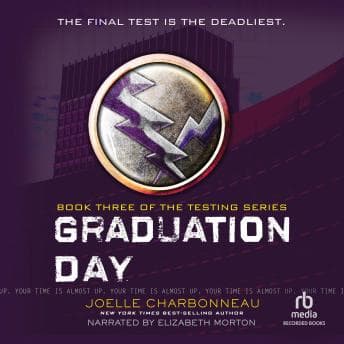

The Testing trilogy ends not with a bang, but with a narrator who voices teenagers like they're auditioning for a preschool cartoon.
Let me back up. I finished this at 1 AM, Shirley curled on my chest, the apartment dark except for my phone screen glowing with the Audible app. The story itself? Solid dystopian fare. Cia Vale navigating a government that makes the Hunger Games Capitol look like a functional democracy. The paranoia, the impossible choices, the bodies piling up as graduation approaches—Charbonneau understands that horror isn't about gore. It's about dread. About not knowing who's going to betray you next.
When Your Narrator Doesn't Match Your Protagonist
Here's my problem. Cia is a Testing survivor. She's killed people. She's watched friends die. She's making decisions that will determine whether thousands live or die in a civil war. And Elizabeth Morton voices her like she's reading a picture book to a kindergarten class.
The pacing drags—and I don't mean the story pacing, I mean the actual delivery. There's this measured, almost sing-song quality to the inflections that works against every tense moment. When Cia discovers another layer of deception (and there are many), I needed urgency. I got storytime cadence. When she's forced to gamble with the lives of people she loves, I needed raw emotion. I got pleasant narration.
Pleasant. That's the word that keeps coming up in listener reviews, and it's damning with faint praise. Horror and thriller need narrators who commit. Who understand that YA dystopia isn't YA contemporary romance. Morton's voice is technically fine—clear, consistent, no audio issues. But she voices young adult characters as if they're small children, with inflections that some listeners (myself included) found almost unbearable by the midpoint.
The Story Deserves Better
Charbonneau's plotting is genuinely clever. The rebel resistance scheming against the Commonwealth, Cia's impossible position as both pawn and potential leader, the way trust becomes currency in a world where everyone might be Testing you—it's good stuff. The final test being the deadliest isn't just marketing copy. People die. Promises get broken. The ending manages to be both satisfying and earned, which is rare for trilogy conclusions.
But I kept getting pulled out of critical moments by the delivery. There's a disconnect between what the text demands and what the performance provides. Charbonneau has a background in opera and musical theater—she understands dramatic pacing, builds tension like she's constructing a crescendo. Morton's narration flattens that curve into something too even, too safe.
I bumped the speed to 1.25x around hour three. It helped. The pacing issue becomes less noticeable when you're artificially accelerating, and the childlike inflections become slightly more tolerable. Not a fix, but a bandage.
Who Should Risk Graduation (And Who Should Read Instead)
If you've already listened to the first two books with a different narrator (which apparently happened—narrator switch between installments), you're going to notice the change. The character voicing is different, the energy is different. You might push through for plot closure. You might, like some listeners I've seen, nearly set the book aside entirely.
New to the trilogy? Consider reading this one. The story works. The audiobook experience is compromised. Skip if narrator mismatch drives you up the wall—this one will test your patience harder than the Commonwealth tests its candidates.
If you scare easily—and I mean emotionally, not jump-scare easily—this series delivers. The Testing itself is psychological horror dressed in dystopian clothing. Teenagers forced to compete, to betray, to kill. It's Shirley Jackson walked so this author could run, just in a different direction. Yearling does something similar with its coming-of-age brutality, though the horror there is quieter, more inevitable.
What I'll Tell My Listeners
They always ask about YA dystopia, especially series conclusions. And I'm going to tell them: the book is worth your time. The audiobook is worth your patience, if you have it. Adjust your speed. Accept that the narrator and the material are mismatched. Focus on Charbonneau's plotting, which genuinely respects the genre and its readers.
But if you want the full experience? If you want to feel Cia's terror, her impossible choices, the weight of a future ruled by fear or hope hanging on her decisions? Read it. Or find a narrator who commits.
Shirley (my cat) was unimpressed by my 1 AM frustration. She's heard me yell at audiobooks before. She'll hear it again. This one just happened to be less about fear and more about wasted potential.