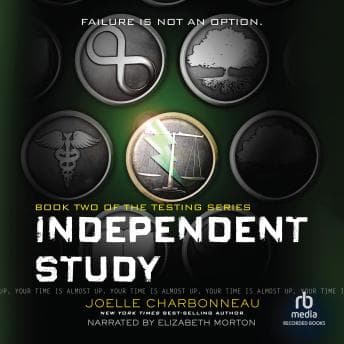

"Leaders chosen to protect us can be our greatest enemy."
That line hit me somewhere around hour seven, while I was shelving returns in the empty library after closing. Fluorescent lights buzzing overhead, nobody else in the building, and Cia Vale realizing that the people running her government are fundamentally, irreparably dangerous. I looked up from the cart of books and thought: yeah, this understands that horror isn't about gore - it's about dread. Even when it's packaged as YA dystopia.
The Memory Wipe That Can't Quite Take
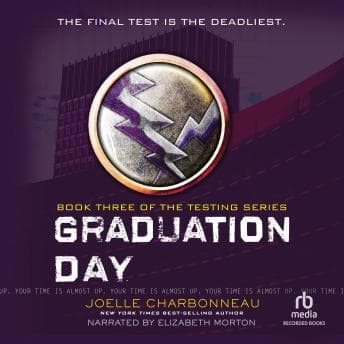
Here's what makes Independent Study genuinely unsettling in a way I wasn't expecting from the second book in a trilogy clearly marketed to the Hunger Games crowd: the central conceit isn't "survive the arena." It's "survive while knowing something is wrong but not being able to remember what." Cia had her memories of The Testing wiped by the government, but she left herself a recording - breadcrumbs from her past self to her present self. And the paranoia that generates? That slow, creeping realization that every friendly face at the University might belong to someone who watched you almost die and said nothing? That's psychological horror wearing a school uniform.
Charbonneau does something clever with the University setting. Cia's "independent study" becomes a vehicle for uncovering how deeply the Commonwealth's leadership has been compromised, but it's wrapped in the mundane anxiety of academic performance. She's trying to pass her courses AND figure out which of her classmates might literally kill her. The stakes oscillate between "will I fail this exam" and "will I survive the semester," and that whiplash works better than it should. Some readers have called Cia a know-it-all, and - okay, fair. She's competent to the point of occasional implausibility. But I'd rather follow a protagonist who's actively problem-solving than one who stumbles into revelations by accident.
The romance with Tomas is there. It's fine. It's not the engine. I respect that.
Elizabeth Morton Does the Quiet Work
I'll be honest - I went into this with almost zero expectations for the narration. Elizabeth Morton isn't a name that comes up in the circles I run in, and there's surprisingly little chatter about her performance in this series specifically. So I was listening for the cracks. What I got instead was... competence that occasionally touches something deeper.
Morton's Cia is measured and careful, which fits a character who's been trained to observe and analyze. She doesn't oversell the emotional beats, which is a choice I appreciate more in YA than most people would. When Cia discovers something terrible about a classmate's fate - the asphyxiation scene, the fatal fall that gets reported as an accident - Morton pulls back instead of pushing forward. Understated. It lets the horror of the situation do the work rather than the performance.
But - and this is where I can't fully commit - I wanted more differentiation between the University students. When you've got a cast of young people who are all trained to mask their true intentions, the narrator needs to find micro-distinctions. A slight hesitation here, a too-bright quality there. Morton keeps things a bit too even. The narrator commits to Cia, but the ensemble stays slightly flat. At nine hours and forty-six minutes, that's a lot of conversations where I'm relying on dialogue tags to remember who's speaking.
Shirley Jackson Walked, But This Author Took a Different Road
Let me calibrate expectations. This isn't literary horror. It's not trying to be. Joelle Charbonneau comes from musical theatre, and you can feel that in the pacing - there's a rhythm to the reveals, a sense of when to drop the curtain on a scene. The book moves. It's structured like a thriller wearing dystopia's clothes, with Cia pulling threads until the whole tapestry - no, wait, I refuse to use that word. Until the whole rotten infrastructure starts showing through. Fast Ice runs a similar operation - thriller mechanics doing the heavy lifting while something uglier about institutional rot slowly surfaces underneath.
What I kept thinking about, though, is how the memory wipe functions as a metaphor for growing up in a system that tells you everything is fine. You're given the approved narrative. You're told to trust your leaders. And then you find the recording you left yourself, the evidence that contradicts everything, and you have to decide: do I keep my head down, or do I look? As someone who grew up being told horror was the devil's genre only to discover it was the most honest literature I'd ever read - yeah. That landed.
The book's weaknesses are real. The middle section drags when it shifts into pure political maneuvering without enough personal stakes. Some of the "twists" about which leaders are corrupt are visible from orbit. And as a middle book in a trilogy, it does that middle-book thing where you can feel it setting up pins for book three to knock down.
Who Needs This in Their Ears
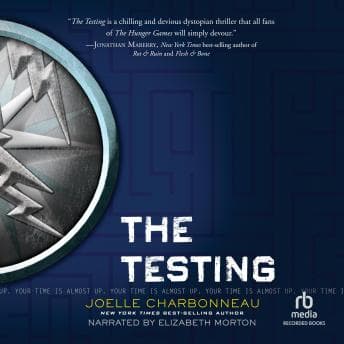
If you burned through the first Testing book and need to know what happens next, this is a solid continuation that deepens the world without retreading. If you scare easily, this isn't the one that'll get you - it's tense rather than terrifying. If you're looking for top-tier narrator work, Morton is reliable but not revelatory. My podcast listeners who've been asking for YA dystopia recs with actual teeth? This qualifies, with caveats.
I listened to the last two hours during a late shift at the library, lights dimming on the automatic timer while Cia uncovered how far the corruption goes. Shirley (my cat) was unimpressed when I got home buzzing about government conspiracies. She's heard it all before.
But that memory wipe conceit? The way it turns a survival story into a story about willful ignorance versus dangerous truth? That I'm still thinking about.