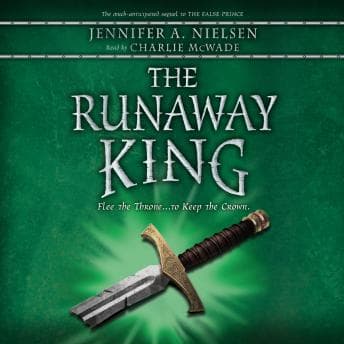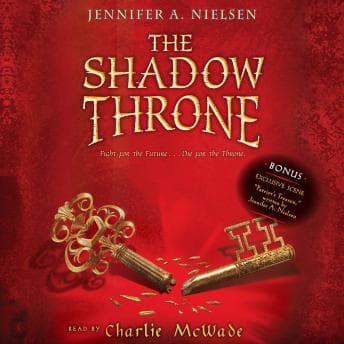

Look, I need to get something off my chest: Jaron Eckbert might be the most exhausting protagonist in middle-grade fiction. I mean that as roughly 70% compliment and 30% exasperation. This kid - this king, technically - cannot go fifteen minutes without hatching some half-baked scheme that relies entirely on everyone around him being slightly stupider than he is. And for two books, that worked. It really did. But by Shadow Throne, the third time through this particular dance, I found myself muttering "oh, come on" into the November wind along the lakefront while Denise asked if I was arguing with a podcast again.
I wasn't. I was arguing with a fictional teenager. Which, honestly, is just my day job without the paycheck.
When the Trickster Runs Out of Tricks
Here's what Jennifer Nielsen does well: she writes momentum. The Ascendance Series has always been about forward motion - Jaron schemes, things go sideways, Jaron improvises, rinse, repeat. And for a while in Shadow Throne, that engine hums. War comes to Carthya, Imogen gets kidnapped by King Vargan, and Jaron has to rally a kingdom that still half-distrusts him. The stakes are genuinely higher than the previous books. Friends get scattered. Alliances fracture. There's a sense of real consequence that the first two books only flirted with.
But - and this is where the teacher in me can't help grading the paper - the plotting starts to feel like Nielsen wrote herself into corners and then had Jaron pull solutions out of thin air. It's the literary equivalent of a student writing "and then everything worked out" in their creative writing assignment. The war scenes have weight, sure. The emotional beats around loyalty and sacrifice land when they need to. But by the final act, I'd lost count of how many times Jaron's impossible gambit just... worked. This reminds me of what Hemingway said about prose being architecture - at some point, the scaffolding needs to hold up under its own weight, and here it wobbles.
My students would probably love this. The pace never really stops. But I wanted the story to sit still for a moment and let the consequences breathe. The Tale of Despereaux actually manages that trick - it races along but still finds room to pause and sit with its sadder, stranger moments in a way that stuck with me.
Charlie McWade and the Problem of Diminishing Returns
Charlie McWade narrates Jaron with this almost conspiratorial tone - like the kid is leaning over to you, elbow on the armrest, telling you exactly how clever he's about to be. In The False Prince, that worked brilliantly. McWade made Jaron's first-person narration feel like he was breaking the fourth wall, talking directly to you, pulling you into the con. It's a specific choice - not just reading but performing a kind of ongoing wink at the audience.
The problem is that by book three, the wink has become a tic. McWade's Jaron sounds the same whether he's cracking jokes or watching friends die. That sardonic, slightly too-cool delivery that made the first book so charming starts to flatten the emotional range here, where the material genuinely calls for something darker, more strained. There are moments - the kidnapping plot, the moments where Jaron faces real loss - where I wanted to hear the performance crack. To hear the boy underneath the bravado. And McWade just... doesn't quite get there.
It's not bad narration. Let me be clear about that. His pacing is solid, the delivery is clean, and if you've listened to the first two books, there's a comfort in the consistency. But "consistent" and "great" aren't the same thing. The narrator understands that pause is punctuation, but he doesn't always use it when the story begs for silence.
Who This Is Actually For
If you've listened to The False Prince and The Runaway King with your kids - or, let's be honest, for yourself on a long commute - you're going to finish this trilogy. And you should. Nielsen wraps things up with enough satisfaction that the investment pays off. The resolution of Jaron and Imogen's story has genuine warmth. The political maneuvering, even when it strains credibility, keeps you engaged enough to push through the nearly nine hours.
But if you're coming to this cold? Don't start here. Go back to The False Prince, where McWade's performance and the material are perfectly matched, where Jaron's cleverness feels fresh instead of formulaic.
And if you're a parent trying to get a reluctant reader hooked on something with actual stakes and a protagonist who isn't boring? The series as a whole still works. Just know that this final volume is the weakest link - less the triumphant finale, more the satisfactory conclusion.
The Grade on This One
I finished it. I didn't love it. I kept listening partly out of obligation and partly because Nielsen, even at her most contrived, writes scenes that move fast enough to keep you from overthinking. Which is probably why I had to get home, sit down, and actually think about it before I realized how many plot-convenient coincidences I'd just swallowed without chewing.
The prose deserves to be savored in this series - just maybe more in the first two books than this one. Worth pausing the faculty meeting for? Honestly, only if the meeting is about standardized testing. (Principal Martinez, that's all of them.)