
"It is a curious subject of observation and inquiry, whether hatred and love be not the same thing at bottom."
That line hit me somewhere around hour six, walking the lakefront with Denise on a Sunday morning cold enough that Lake Michigan looked like it wanted to freeze just to spite us. I stopped mid-stride. She thought I'd slipped on ice. No - I was just standing there with Hawthorne's words ringing in my earbuds, thinking about Roger Chillingworth and Arthur Dimmesdale and how the most destructive relationships in literature are the ones built on obsessive intimacy disguised as something else.
I teach this book. Have taught it for fifteen of my twenty years in the classroom. I've watched hundreds of juniors groan through it, SparkNotes their way to a C+, and walk away thinking it's about a woman who cheated on her husband in colonial Boston. They're not wrong. They're just not remotely right, either.
Hawthorne Wrote a Horror Novel and Nobody Told My Students
Here's what I always try to get my kids to see: The Scarlet Letter isn't really about adultery. It's about what happens when an entire community decides it owns your identity. Hester doesn't just wear the A - she becomes it. And then, in one of the great slow-burn reversals in American fiction, she transcends it. The townspeople start whispering that the A stands for "Able." She reclaims the symbol that was supposed to destroy her. Meanwhile, Dimmesdale - the man who actually shares her sin but hides behind his pulpit - is literally rotting from the inside out. Hawthorne spends chapters describing this man's physical deterioration with the precision of a medical examiner. The real scarlet letter isn't on Hester's dress. It's on Dimmesdale's chest, and the reveal of that is still one of the most disturbing moments in 19th-century fiction.
And Chillingworth. Good lord, Chillingworth. He's not a villain in the mustache-twirling sense. He's something worse - a man who lets righteous anger curdle into something demonic. Hawthorne describes his transformation from wronged husband to something barely human with this creeping, almost clinical detachment that makes your skin crawl. This is why we still read the classics. Because Hawthorne understood that revenge doesn't satisfy; it consumes. I keep returning to that same idea whenever I encounter a story where obsession masquerades as justice — which is part of why I ended up writing about Cartel 3: The Last Chapter, a very different kind of book that nonetheless puts a character through that exact same corrosive cycle.
The Narrator Understands the Words but Not the Weather
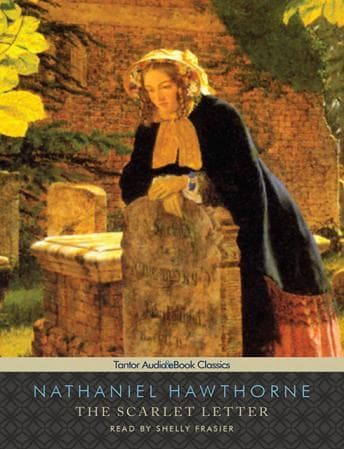
Now. Shelly Frasier.
I want to be fair here because the prose is genuinely difficult. Hawthorne wrote sentences that wind through subclauses like Boston's old cow paths wind through the city. Frasier's diction is clean - every word is crisp, every sentence is navigable. For a book this syntactically dense, that matters. If you're coming to Hawthorne for the first time through audio, you will understand what's happening. That's not nothing.
But understanding and feeling are different things, and Frasier delivers this novel like she's reading a historical document rather than performing a tragedy. The scaffold scenes - where Hester stands publicly shamed with Pearl in her arms while the whole town watches - should feel suffocating. They should make you claustrophobic with judgment. Instead they land flat, almost procedural. There's a passage where Dimmesdale is pleading with Hester to name the father (knowing full well it's him, the coward, the hypocrite) and the dramatic irony should be unbearable. Frasier reads it at the same emotional temperature as the preceding description of Boston architecture.
The pace is slow. I'm a 1.0x listener - the author chose those words and I choose to hear them properly - but even I found myself drifting during the middle chapters. Not because of Hawthorne. Because the narration doesn't shift gears. There's no difference in energy between Pearl's wild, almost feral dialogue and Chillingworth's cold interrogations. The narrator understands that pause is punctuation, but she seems to have only one kind of pause.
I'd be lying if I said I didn't briefly consider bumping to 1.25x during the Custom House preface. (I held firm. It cost me.)
Who Gets the A and Who Gets the Pass
If you've never read The Scarlet Letter and you want an accessible entry point, this audiobook will get you through the door. Frasier won't trip you up, and for dense 19th-century prose, clarity is a genuine gift.
But if you already love this novel - if you know what Hawthorne is really saying about public shame and private guilt and how America was built on both - this narration might frustrate you. You'll want more fire in the forest scene. You'll want Pearl to sound unhinged and otherworldly, not just slightly precocious. You'll want Dimmesdale's midnight confession on the scaffold to feel like the desperate act of a man coming apart at the seams.
My students would hate this. I love this - the book, I mean. The narration I can only recommend with caveats.
The Assignment I'd Give This Audiobook
Hawthorne deserves better than competent. He deserves someone who reads his prose the way he wrote it - with controlled fury, with irony that cuts, with an understanding that every beautiful sentence about New England flowers is actually about rot underneath. This production gives you the text faithfully delivered. It doesn't give you the interpretation. And great narration is performance art, not transcription.
Worth hearing for the source material alone, which remains - after 174 years - one of the most psychologically precise novels ever written in English. But maybe grab a library copy and follow along. Let your own inner voice do some of the heavy lifting Frasier leaves on the table.