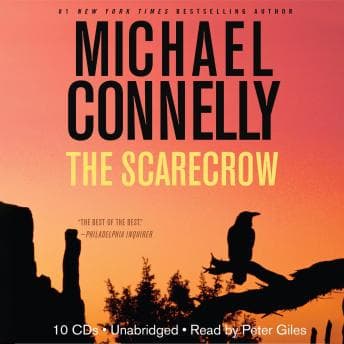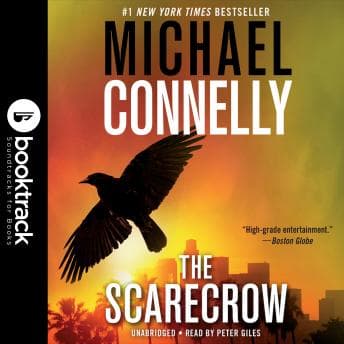

The library was dead quiet at 9 PM - just me reshelving returns in the mystery section, earbuds in, when Connelly's killer started stalking Jack McEvoy through the digital shadows. I actually stopped mid-shelf, a battered James Patterson in one hand, completely frozen. That's when I knew this Booktrack edition was doing something right.
Here's the thing about Michael Connelly: the man understands that real horror lives in the procedural. The mundane details of a newspaper investigation, the bureaucratic nightmare of budget cuts, the slow realization that you've been watched this whole time. The Scarecrow isn't supernatural horror - it's the kind that makes you want to tape over your laptop camera.
The Soundtrack Experiment (And Why It Actually Works)
I was skeptical. Musical accompaniment in audiobooks usually feels like someone decided your imagination needed training wheels. But the Booktrack edition here? It's subtle enough that I forgot it was there until the tension scenes hit. When McEvoy and FBI agent Rachel Walling are being stalked - and I mean genuinely stalked by someone who knows their every digital move - the score does this quiet, creeping thing that raised the hair on the back of my neck. Not overwhelming, not distracting. Just... present. Like ambient dread.
The production team understood something crucial: the music should feel like your own anxiety, not a separate performance. During the investigation sequences, it fades to almost nothing. During the cat-and-mouse moments? It earns its existence.
Peter Giles: The Narrator Divide
Okay, let's address the elephant. Peter Giles has a deadpan delivery that some listeners apparently find "petulant" and "annoying." I've seen the reviews. I get it. His voice has a particular quality - crisp, almost clinical - that doesn't work for everyone.
But here's my take: that deadpan tone is perfect for Jack McEvoy. This is a journalist being pushed out of his career, chasing one last story with the desperate energy of someone who knows they're already a ghost. Giles delivers the copy like a man who's been beaten down by newsroom politics but refuses to stop digging. The pace advances steadily - one reviewer compared it to "Patton through Italy" and honestly? That's apt. Relentless forward momentum.
Where it gets complicated: if you need warmth from your narrator, if you need vocal variety that signals emotional beats like a neon sign, Giles won't give you that. He's doing something more intimate and subtle. Some people will call that skilled. Others will call it monotonous. I landed on the former, but I can see the argument.
The Story Connelly Built
Sixteen-year-old Alonzo Winslow confesses to murder. Except - and McEvoy figures this out pretty quickly - the confession is garbage. The kid's innocent. And the real killer? Operating completely below police radar with perfect knowledge of every move made against him.
This is Connelly doing what Connelly does best: the procedural thriller that respects your intelligence. No cheap twists, no "the killer was inside the house all along" gotcha moments. Just methodical investigation meeting methodical evil. The Scarecrow (yes, that's what they call him) is the kind of villain who understands that the scariest thing isn't violence - it's surveillance. It's knowing someone has been watching you, reading you, anticipating you.
Shirley Jackson walked so this author could run. Different genre, same principle: dread is built, not dumped. That slow-burn approach to terror is something I appreciated in Ninth, even if the execution there didn't quite land.
Where It Stumbles
I'll be honest - this isn't peak Connelly. If you're coming from the Harry Bosch series or The Lincoln Lawyer, The Scarecrow feels like a slight step sideways. Not down, exactly, but... different. The newspaper setting dates it somewhat (budget cuts! print media dying! it's 2009 all over again), and some of the tech thriller elements feel like they're trying very hard to be cutting-edge.
Content warning time: violence, language, sexual content. The violence is thriller-standard but unflinching. Summons operates in that same thriller space with comparable content warnings, though it leans harder into legal procedural territory. The sexual content is present but not gratuitous. The language is what you'd expect from a newsroom full of cynical journalists.
Who's Going to Love This (And Who Should Skip)
If you appreciate a killer who operates through information rather than brute force, if you want 11 hours of sustained tension that doesn't insult your intelligence, this one's for you. Skip it if Giles' deadpan delivery sounds like a dealbreaker - there's no middle ground with his style.
Closing the Stacks
I listened in the dark. Mistake? Maybe. Worth it? Absolutely.
The Booktrack edition elevates what's already a solid thriller into something more atmospheric. It's not the best thriller of all time. It's not even the best Connelly. But it understands that horror isn't about gore - it's about dread. And the dread here is very, very real.
Just maybe don't listen while reshelving alone. Trust me on this.