
I was somewhere between Millbrae and San Mateo on the 6 AM southbound Caltrain when I realized this book was going to be a problem for my sleep schedule.
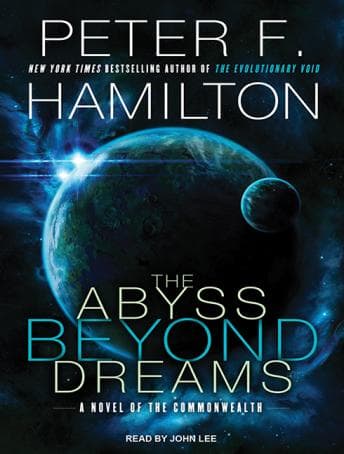
Look, I usually stick to hard optimization podcasts or The Bobiverse when I'm half-awake, but Peter F. Hamilton is my weakness. He writes space opera like I write backend code—massive, interconnected, and if you miss one variable (or character), the whole thing crashes in your brain. Guild Master has that same sprawling complexity, though it trades alien tech for dungeon mechanics.
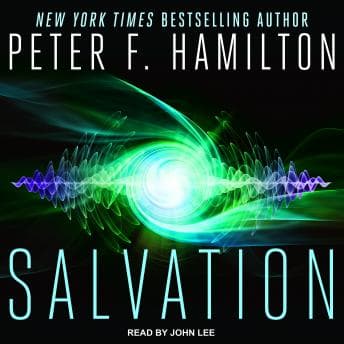
Salvation is basically a distributed system architecture diagram disguised as a novel. And I am here for it.
The Latency-Free Dream (And Its Bugs)
The premise? Humanity fixed the travel latency problem. Jump gates. Everywhere. No more starships, just walking through a door to another planet. As someone who spends half my life debugging network latency, this concept is pure dopamine.
But here's the thing—Hamilton doesn't just build a world; he over-engineers it in the best way possible. The setup feels like a post-mortem of a society that got too comfortable. It's dense. We're talking 19 hours of plotting where every subplot connects to three others.
(Yes, I listened at 1.75x speed. 1.5x wasn't cutting it for the exposition dumps. Don't judge me.)
The story jumps between timelines like a git repo with bad merge conflicts. At first, it's disorienting. You've got a team investigating an alien crash site, then flashbacks to how they all got there. But once the pattern clicks? Satisfying. Like finally finding the root cause of a memory leak.
John Lee: The Voice of God (With a Glitch)
The man is a legend. He has this gravitas—like he's reading the source code of the universe rather than a sci-fi novel. When he's describing ancient alien tech or high-stakes political maneuvering, he absolutely nails it. His pacing adds this layer of dramatic tension that kept me awake even when the train was freezing and the guy next to me was snoring.
But—and we have to be real here—his female voices are... a choice.
Every time a female character spoke, I winced a little. It's almost like he's trying too hard to pitch up, and it ends up sounding shrill or just weirdly unnatural. Didn't ruin the book for me, but it definitely pulled me out of the immersion a few times. (Kevin listened to a snippet and asked if I was watching a parody sketch. I told him to go back to his podcasts.)
Who Should Queue This Up
If you're looking for a quick dopamine hit, skip this one. Salvation is a slow burn—an investment. You have to pay attention. You can't just zone out while doing cardio and expect to know what's going on 20 minutes later. If complex timelines frustrate you or you need action every chapter, this will feel like work.
But if you love Hamilton's brand of galaxy-spanning worldbuilding, or you're the type who enjoys untangling complicated systems? The payoff is solid. The twist at the end (no spoilers) actually made me gasp out loud in the break room. My manager thought I dropped the production database.
Sarah's Final Commit
It's smart, it's huge, and despite the narration quirks, it's worth the credit. Just maybe crank the speed up during the flashbacks.