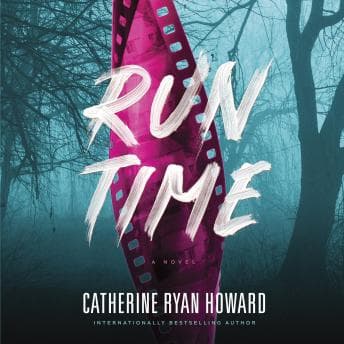

"Could this be her big break?"
That line hit me around hour two, somewhere on I-35 between Austin and San Antonio. Client meeting ran long, traffic was brutal, and Adele Rafferty was asking herself the same question every desperate person asks before walking into a situation they shouldn't.
I've seen that moment. Watched young officers take assignments they knew were bad because saying no meant the end of their career. Adele's not military—she's a fading soap actress grabbing at one last chance—but the psychology's identical. Howard gets that desperation right.
The Fog of War, Irish Edition
West Cork, Ireland. Deep winter. No cell service. Miles from anywhere.
If you've ever operated in genuinely remote terrain—and I mean genuinely, not "two hours from a Starbucks" remote—you know the specific anxiety Howard's building here. That creeping realization that if something goes wrong, help isn't coming. The film set for Final Draft might as well be a forward operating base with bad comms.
The premise runs on three levels: Adele's actual life, the horror movie she's filming, and something in between that gets increasingly hard to distinguish. It's ambitious. Maybe too ambitious. The setup requires you to accept some decisions that made me mutter "no competent person would do that" more than once. But I kept listening, which tells you something.
Howard's background in screenwriting shows in how she handles the on-set dynamics. The screenplay excerpts, the crew politics, the particular chaos of a low-budget production running behind schedule—it reads like someone who's actually been there. That authenticity matters when your whole plot depends on isolation and limited resources.
Six Voices, One Mission
Here's where the audiobook format earns its keep. Alan Smyth, Alana Kerr Collins, Alison McKenna, Gary Furlong, Gerard Doyle, Siobhan Waring—full cast rotation. Collins has an Earphones Award to her name, and the ensemble approach transforms what could've been a confusing multi-perspective nightmare into something that actually flows.
The transitions between Adele's perspective and the screenplay sections land clean because you're hearing different voices, not just reading different fonts. It's essentially a radio play version of a movie about making a movie. Meta as hell, but it works. If you're considering the print version instead, don't. This story was built for audio.
Production quality is solid throughout. Eleven hours and I never had to rewind because I lost track of who was talking. That's not nothing when you've got six narrators juggling multiple layers of reality and fiction. If you liked how 56 Days handled its dual timeline, Howard's doing something similar here but more complex.
Where The Operation Gets Messy
Now, here's where it lost me.
The ending. Look, I've seen operations go sideways in real life. I know resolutions are messy. But after building genuine dread through the middle section—and Howard does build dread, the kind that had me checking my mirrors on dark stretches of highway—the payoff felt... soft. Sentimental, even. Like watching a horror movie that pulls its punches in the final act.
Some folks expected darker twists. I get that. When you spend ten hours winding up the tension, you want the release to match. It doesn't quite. Not a dealbreaker, but worth knowing before you commit eleven hours.
The three-level reality structure is clever, maybe too clever. There were moments where I thought Howard was being smart for smart's sake rather than serving the story. That's a personal pet peeve—I prefer clean execution over complicated architecture.
Who Should Deploy (And Who Should Stand Down)
This one's for you if you enjoy meta-horror that plays with fiction bleeding into reality, you appreciate genuinely isolated settings with atmosphere you can feel, or you're a sucker for "trapped with people you can't trust" scenarios. Skip it if you need your twists brutal and your endings dark—if you're coming from harder-edged thrillers expecting that level of payoff, you'll feel shortchanged.
Ranger's Assessment
He slept through most of it, which tracks—more psychological tension than action. But I stayed engaged through three hours of Texas highway and two hours of Austin traffic, which is my personal benchmark for "worth the listen."
Howard knows how to build atmosphere and make you care about characters before putting them in danger. The full cast elevates the material. The ending doesn't stick the landing, but the journey there is solid work.
Worth your time? Yes, with managed expectations. This is a smart thriller that's more creepy than terrifying, more clever than brutal. If that's your speed, mission accomplished.