
Do you ever catch yourself holding your breath while waiting for a deployment to finish, or is that just me?
I picked this up somewhere between a frantic sprint planning meeting and a realization that my "cardio" consisted entirely of running to catch the 6:14 PM Caltrain. I expected some woo-woo yoga breathing. What I got was basically a technical manual for debugging the human respiratory system. And honestly? I'm kind of obsessed.
Debugging Your Body's O2 Latency
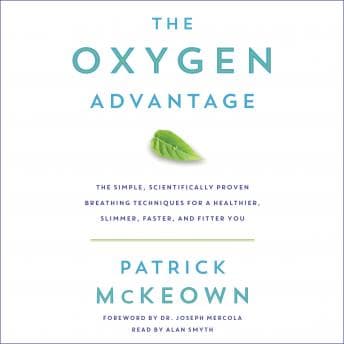
Here's the thing—most health books are fluff. They could be a blog post. (Looking at you, 90% of the "productivity" genre). Friday Night Lights had that same depth—actual substance instead of motivational platitudes. The Oxygen Advantage is different. It's dense. It's data-driven. It feels like Patrick McKeown looked at the human body, saw inefficient code, and decided to refactor it.
The core concept is the BOLT score (Body Oxygen Level Test). Think of it as a latency metric for your lungs. The higher the score, the more efficient your system. The science here is counter-intuitive—breathe less to get more oxygen into your cells. Sounds like a compression algorithm gone wrong, but once he explains the Bohr effect and CO2 tolerance, it clicks. I actually paused the audio on the train to try the breath-hold test. (Yes, I looked like I was rebooting. No, I didn't care).
Alan Smyth Keeps the Technical Stuff From Flatline
Alan Smyth narrates this, and thank god for that. Material this technical can easily turn into a snooze-fest—literally, I've fallen asleep to physics books before. Smyth has this crisp, dynamic delivery that keeps you engaged even when McKeown is deep in the weeds of blood chemistry.
He sounds confident. Authoritative. Like a senior engineer explaining why your architecture is flawed, but in a way that makes you want to fix it rather than cry.
Fair warning for my fellow multi-taskers—the beginning is heavy. There are instructions. There are tests. I usually listen at 1.75x, but I had to throttle down to 1.25x for the first few chapters just to parse the data. You might actually need to open a notes app.
The "Wait, I Have to Tape My Mouth Shut?" Factor
Is it practical? Mostly. The exercises range from "easy to do at your desk" to "you need to tape your mouth shut at night." (Kevin saw me researching mouth tape and asked if I was joining a cult. I told him it's for optimization. He rolled his eyes).
But the ROI is there. After three weeks of trying to stop mouth-breathing (which, yikes, apparently I do a lot when coding), my focus is actually sharper. The afternoon crash is less crash-y.
Who's This Build For?
If you're the type of person who tracks your sleep data and optimizes your macros, this is your book. If you want a light, inspiring listen while you walk the dog? Skip it. This is work. But it's the kind of work that pays off.