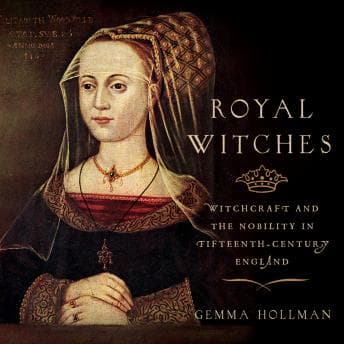

"The purpose of the accusations was purely political." That line lands about two hours in, and it's basically the thesis statement for the entire book. I was on a late-night drive back from a client site in San Antonio, Ranger snoring in the back seat, when Hollman's argument clicked into place - these witchcraft charges were fifteenth-century England's version of opposition research. Weaponized rumor. Political hit jobs dressed up in supernatural clothing.
Let me cut to the chase: this is a solid medieval history book hiding behind a misleading title. If you're expecting dark rituals, love potions, and sinister incantations, you're going to be disappointed. What you get instead is a deep dive into the political machinery of the Wars of the Roses and the decades preceding it, told through the lens of four women who got chewed up by that machine.
Four Women, One Playbook
Hollman traces the stories of Joan of Navarre, Eleanor Cobham, Jacquetta of Luxembourg, and Elizabeth Woodville - all connected by blood or court ties, all accused of witchcraft at politically convenient moments. The pattern becomes almost predictable once you see it. A woman gains influence or threatens the wrong faction, and suddenly there are whispers about necromancy and image magic. Joan of Navarre's stepson Henry V accused her of trying to kill him through sorcery - right when the crown needed her substantial dower income to fund military campaigns in France. Convenient timing, that.
Eleanor Cobham's case is probably the most dramatic of the four. She actually did consult astrologers about the king's health and future - which in the 1440s was treasonous territory. Her associates were executed, and she spent the rest of her life imprisoned in various castles. Hollman does good work showing how Eleanor's ambition made her a target, but also how the men around her husband Humphrey, Duke of Gloucester, used her downfall to neutralize him politically.
The author clearly did their homework. You can feel the medieval history Masters from York in every chapter. Primary sources get proper attention - court records, chronicle entries, the actual legal proceedings where they survive. She's careful about what we know versus what we're guessing at, which I respect. Too many popular history books present speculation as fact. Ian Mortimer sets a high bar for that same intellectual honesty in Time Traveller's Guide to Elizabethan England, and it's refreshing when any popular historian holds that line.
Where the Narration Hits a Wall
Here's the problem. Heather Wilds has a pleasant enough voice - I'll give her that. But pleasant isn't enough for ten and a half hours of dense medieval political history. There's a flatness to the delivery that turns already complex material into something you have to actively fight to follow. When you're tracking the shifting alliances between Lancaster and York, distinguishing between three different Henrys, and keeping straight who married whom and why it mattered - you need a narrator who can signal importance, who can shift tone when we move from dry genealogy to a woman being paraded through London streets in humiliation.
Widls doesn't do that. The trial of Eleanor Cobham gets roughly the same vocal energy as a passage about land grants. I bumped up to 1.25x as usual, but honestly considered going back to 1.0 just to make sure I wasn't missing connections between the political players. That's not a great sign.
No sound effects, no production frills - just straight narration. Which is fine for history. But straight narration demands a performer who can carry the weight alone, and this one struggles under it.
The Title Problem
I've seen a lot of people complain that the title is misleading, and yeah - they're right. "Royal Witches" promises something it doesn't deliver. This is really "Royal Women Accused of Witchcraft for Political Reasons in Fifteenth-Century England," which is less catchy but more accurate. The actual witchcraft content is thin because - and Hollman is upfront about this - these women mostly weren't practicing witchcraft. That's the whole point. But if you picked this up expecting an exploration of medieval occult practices, you're going to feel bait-and-switched.
What you actually get is a feminist political history of the Wars of the Roses era. And that's genuinely interesting. The way Hollman connects these four cases across decades shows a repeatable pattern of how powerful women were neutralized when they became inconvenient. I've seen this scenario play out in real life - different context, obviously, but the mechanics of using manufactured accusations to destroy someone's credibility? That's timeless. Robert Greene mapped those same mechanics into something almost surgical in 48 Laws of Power - different century, same ruthless playbook.
Who's Going to Dig This
Wars of the Roses enthusiasts, medieval history buffs, anyone interested in the intersection of gender and power in pre-modern England. If you've watched "The White Queen" and want the real history behind Jacquetta and Elizabeth Woodville, this fills in those gaps.
Who should skip: Anyone wanting actual witchcraft lore or occult history. And honestly, if you're not already somewhat familiar with fifteenth-century English politics, the audiobook format might not be your best entry point given the narration limitations. Consider the print version.
Mission Assessment
Worth your time? Here's the debrief. Hollman wrote a good book - not a great one, but a solid, well-researched piece of popular medieval history with a clear thesis and genuine insight into how gender was weaponized in English politics. The audiobook production doesn't do it any favors. The narration is adequate but never elevates the material, which means the drier genealogical and political passages become a real slog. Ranger slept through most of it, which might say more about the delivery than the content.







![Steve Jobs [unabridged audiobook] audiobook cover](/_next/image?url=https%3A%2F%2Fcovers.audiobooks.com%2Fimages%2Fcovers%2Ffull%2F9788499923406.jpg&w=1920&q=75)