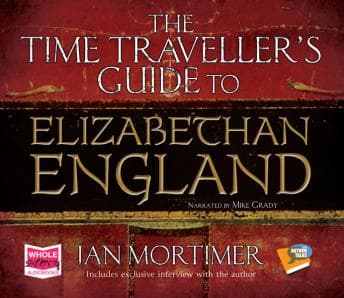

What would you actually do if you dropped into 1590s London tomorrow? Not the Shakespeare-in-the-Globe fantasy version - the real one. Where do you sleep? What do you eat without dying of food poisoning? How do you avoid getting arrested for wearing the wrong color?
I finished this one during a three-day security assessment in Houston, stuck in traffic on I-10 for what felt like the entire Elizabethan era. Ranger was back home, but I had Mike Grady keeping me company through 17 hours of gridlock and hotel room downtime. And honestly? This is the kind of history I wish they'd taught us in school.
Intelligence Briefing, Not Lecture Hall
Let me cut to the chase: Ian Mortimer treats history like a field manual. This isn't your typical "and then Elizabeth did this, and then she did that" chronological slog. It's organized by practical questions. Clothing. Food. Medicine. Law. The stuff that would actually matter if you needed to blend in and survive.
The author clearly did his homework - we're talking primary source research that goes deep into parish records, court documents, personal diaries. When he explains the sumptuary laws (basically dress codes enforced by law), you understand exactly why wearing purple when you're not nobility could land you in serious trouble. It's the kind of operational detail my security team would appreciate. Know your environment. Know the rules. Know the consequences.
Here's where it got me: Chapter 19 discusses the custom of removing your hat when someone - and I'm not making this up - urinates or defecates in public. That's the level of granular, weird, absolutely genuine detail Mortimer delivers. You can't invent stuff like that. The sanitation chapter alone is worth the listen - equal parts horrifying and genuinely funny.
Where the Formation Gets Loose
The structure - jumping between "here's how you'd experience daily life" and "here's what was happening historically" - can feel choppy. You're getting a briefing on what Elizabethans ate for breakfast, then suddenly we're covering major political events, then back to discussing the proper way to address a gentleman.
For me, listening in bursts during the commute, this worked fine. Each chapter functions almost like a standalone intel report. But if you're looking for a narrative arc - a story that builds toward something - this isn't it. It's a reference guide in audio form. That's not a criticism, just a heads-up on what you're signing up for.
The lack of big-picture connective tissue means you might finish and not quite remember how all the pieces fit together. But you'll absolutely remember that Elizabethans believed bathing opened your pores to disease, or that a laborer's wages could buy you about two pounds of beef per day.
Grady's Delivery: Steady as She Goes
Mike Grady reads this exactly how you'd want someone to read a history book - clear, measured, with just enough personality to keep the more academic sections from putting you to sleep. He's not doing voices or dramatic performances, and thank God for that. This material doesn't need theatrics. It needs someone who can make lists of Elizabethan food prices sound interesting.
And he does. There's a dry wit in his delivery that matches Mortimer's writing. When the text gets into particularly absurd historical practices, you can hear the slight amusement in Grady's voice. Subtle, but it's there.
I listened at 1.25x - my standard speed - and it worked perfectly. Grady's pacing is already deliberate, so bumping it up doesn't lose any clarity.
Who Should Deploy This One
If you want Elizabethan England the way a novelist needs it - the texture, the smell, the daily rhythm - this is your manual. Writers, especially. Historical fiction authors should consider this required reading.
If you want the political drama of Elizabeth's court, the Armada, the religious conflicts told as a sweeping narrative? Look elsewhere. This is the "how they lived" companion piece, not the "what happened" main event.
Skip it if you need a story with momentum. Grab it if you've ever wondered how people actually survived without antibiotics, refrigeration, or basic sewage systems. You'll find it fascinating. And slightly nauseating.
Mission Debrief
Worth your time? This is a solid 17-hour education in practical Elizabethan survival, delivered by a narrator who knows exactly what the material needs. It's not perfect - the choppy structure and lack of narrative momentum keep it from being a must-listen. But for what it sets out to do - drop you into the past and make you understand what daily life actually looked like - it succeeds.
I've seen plenty of history books that get the big events right but miss the human element entirely. Fire and Fury gave me that same ground-level view of power—not the sanitized version, but the messy reality of how people actually operate. Mortimer does the opposite. You'll finish this knowing more about how Elizabethans actually lived than most history majors. And you'll never complain about modern plumbing again.
Ranger approved this one. Though he fell asleep during the chapter on clothing regulations. Can't blame him.







![Steve Jobs [unabridged audiobook] audiobook cover](/_next/image?url=https%3A%2F%2Fcovers.audiobooks.com%2Fimages%2Fcovers%2Ffull%2F9788499923406.jpg&w=1920&q=75)