
"If the wind calls at night, you must not listen."
That line hit me around the twenty-minute mark, and I actually paused my work — stylus hovering over my tablet, halfway through a wedding invitation suite — because something about the way Heather Wilds delivered it felt like a lullaby tipping into a warning. Like the voice my abuela used when she'd tell me stories about La Llorona while braiding my hair before bed. That specific frequency of I love you but I need you to be afraid right now.
Abuela would have loved this one. She really would have.
The Moor Gets Under Your Skin
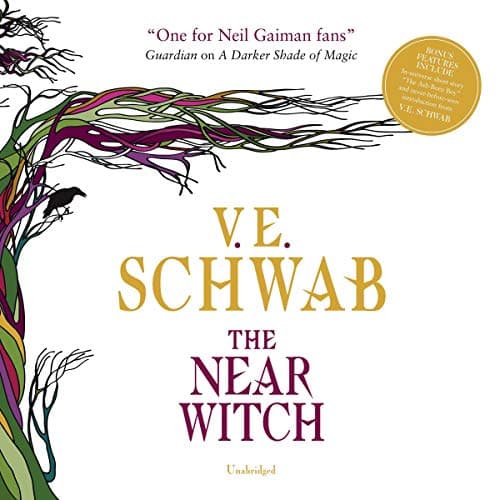
So here's the thing about The Near Witch — it's V.E. Schwab's debut, and you can feel it. The prose is reaching, stretching, trying to be gorgeous on every single page, and sometimes it lands so perfectly it aches, and sometimes it's a little too much frosting on a cake that's already sweet. The story itself is almost secondary to the atmosphere. The town of Near feels suffocating in the way only small, insular communities can — everyone watching, everyone whispering, everyone deciding a stranger must be the monster because that's easier than looking at themselves. That particular cruelty — the way fear becomes a weapon wielded by the comfortable against the convenient — cut just as deep in Blind Assassin, where women's silence is enforced not by mobs on a moor but by drawing rooms and good manners. Lexi's father is dead and the men of Near have basically decided she's a girl who needs to sit down and shut up, and the way she refuses to do that — not with big dramatic rebellion but with quiet, stubborn walks onto the moor at night — God, I felt that in my bones.
The stranger, Cole, fades like smoke. Literally. And Schwab writes him with this aching tenderness that makes the romance feel less like a plotline and more like two lonely things finding each other in the dark. Their chemistry is chef's kiss — not because it's fiery or intense, but because it's built on shared silence and the way the wind moves around them differently when they're together. This is a rainy Sunday book, absolutely. The kind you listen to while it's gray outside and you've got tea going cold on the nightstand because you forgot it existed.
Heather Wilds — Let's Talk About Her
Okay. I need to be honest here because I've seen people lose their minds over this narrator in both directions, and I get it. I genuinely get both sides.
Heather Wilds has this English accent that wraps around the moor setting like fog — atmospheric, eerie, perfect for a fairy-tale-that-bites. Her male voices are surprisingly solid; when the men of Near are hunting Cole, you can hear the mob mentality in how she pitches them rougher, angrier. That works.
But — and this is a real but — there's this cadence thing she does. It's almost staccato? Like every sentence gets broken into these deliberate, rhythmic beats, and after about three hours of designing while listening, I started noticing it the way you notice a dripping faucet. It didn't ruin the book for me, but it did pull me out of scenes where I wanted to be fully submerged. And she sounds... mature for sixteen-year-old Lexi. Not dramatically so, but enough that in the early chapters, before I was locked into the story, my brain kept snagging on it. By the second half I'd adjusted. But if narrator cadence is a dealbreaker for you — and I know for some of you it absolutely is — preview this one first.
I kept thinking about what Julia Whelan would've done with this material and had to stop myself because that's not fair to anyone.
A Debut That Feels Like a Whispered Promise
This book felt like finding a handwritten fairy tale in the back of a used bookstore — slightly imperfect, a little rough at the edges, but with this sincerity that newer, more polished books sometimes sand away. The mystery of the missing children is honestly not that mysterious (I had it figured out well before Lexi did), but that almost doesn't matter? The same thing happens in Surrender — the mystery isn't really the point, and the book dares you to stay anyway for what's underneath it. Because the real story is about what communities do to outsiders, what happens when women's knowledge gets buried under men's fear, and how the dead still shape us.
The bonus short story, "The Ash-Born Boy," is a gorgeous little companion piece. Don't skip it.
I ugly-cried once — not the four-session wreckage of Beach Read, but a real one, the kind where Diego jumped onto my desk and headbutted my chin because he thought something was wrong. Something about Lexi talking to her dead father while the wind carried his absence around her. Yeah. That got me.
Frida, for the record, was unmoved. As always.
Who This Wind Calls To (And Who Should Close the Window)
If you love Schwab's later work — Addie LaRue especially — this is her seed. Rougher, smaller, but the DNA is all there: the loneliness, the longing, the way magic costs something real. It's a quiet book disguised as a mystery, and if you meet it on its own terms, it'll stay with you like a half-remembered song.
But if you need plot to move fast and narration to disappear into the background, this isn't your book. Same goes if you're easily thrown by a narrator who sounds older than the protagonist — give the sample a listen before you commit. It demands you slow down. It demands 1.0x. It demands attention.
My heart. Not broken, but bruised in that good way. The way a fairy tale bruises you when you're old enough to understand what it's really about.