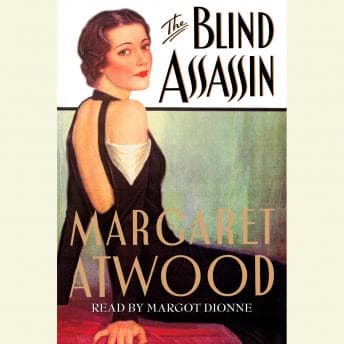

Look, I need to complain about something first. Eighteen hours. Eighteen hours and nineteen minutes of Margaret Atwood doing what she does best—making you feel simultaneously brilliant and stupid for trying to keep up with her. I started this during a particularly brutal week of grading sophomore essays on The Great Gatsby, and honestly? Atwood's nested narratives made Fitzgerald look like a children's book. My students would absolutely hate this. I love it.
The opening line—"Ten days after the war ended, my sister drove a car off the bridge"—hit me while I was walking the lakefront with Denise. I actually stopped walking. She asked if I was okay. I wasn't, really. That's the kind of sentence that reminds you why we still read the classics, why some authors earn their place in the canon while others just visit.
The Architecture of Grief
Here's the thing about The Blind Assassin: it's not one story. It's at least three, maybe four if you count the science fiction pulp nested inside the novel-within-a-novel. Iris Chase Griffen is telling us about her sister Laura's death, except she's also telling us about the decades before it, and there's this other narrative running parallel—two unnamed lovers meeting in shabby rooms, one of them spinning tales about a blind assassin on another planet.
Atwood is doing something here that I try to explain to my AP Lit students every year. She's showing us that memory isn't linear. Grief isn't linear. The way Iris circles back, drops hints, withholds information—it's not gimmicky. It's how we actually process the worst things that happen to us. We approach them sideways. We tell ourselves stories about the stories.
The 1930s and 40s Canadian industrial setting feels so specific and lived-in. The button factories, the social climbing, the way money and respectability crush everything soft underneath them. This reminds me of what Hemingway said about writing—that the dignity of movement of an iceberg is due to only one-eighth of it being above water. Atwood shows you the surface and trusts you to feel the mass beneath.
Margot Dionne Gets the Assignment
Now, the narration. Margot Dionne has a voice that sounds like old photographs look—a little faded at the edges, tinged with something you can't quite name. She understands that pause is punctuation. When Iris delivers one of her cutting observations about her husband's family or her own failures, Dionne lets it land. She doesn't rush.
Some reviewers have mentioned the pacing feels slow in places, and—okay, fair. This is not a thriller. This is not meant to be consumed at 1.5x while you're half-paying attention at the gym. (Not that I would know anything about listening to audiobooks during faculty meetings. Principal Martinez, I was definitely paying attention to the budget presentation.)
Dionne differentiates between the timelines beautifully. Old Iris has this wry exhaustion, this been-through-it quality. The younger voices in the nested narratives feel appropriately different—more urgent, more naive. The science fiction sections, which could have been jarring, actually work as a kind of relief valve. They're strange and beautiful and sad in a completely different register.
I couldn't find a ton of background on Dionne specifically, but based on this performance? She gets Atwood. She understands that the prose deserves to be savored, that you don't rush through sentences this carefully constructed.
Who Should Listen (And Who Should Skip)
Let me be honest: if you need plot to happen quickly, if you get frustrated by ambiguity, if you want to know exactly what's going on at all times—skip this one. The Blind Assassin rewards patience. It rewards re-listening. It rewards the kind of attention we used to give novels before we all got brain worms from our phones.
But if you loved Alias Grace, if you've ever gotten lost in Middlemarch and enjoyed it, if you think fiction should make you work a little—this is yours. That same kind of sweeping, emotionally complex storytelling shows up in Outlander, though with kilts and time travel instead of button factories. It's Atwood at the height of her powers, doing something formally ambitious that also manages to be emotionally devastating.
The ending. I won't spoil it, but the ending recontextualizes everything. I finished it on a Tuesday night, grading papers at 11 PM, and I just sat there for a while. Denise asked why I looked like I'd been punched. Because I had been, basically. In the best possible way.
Worth pausing the faculty meeting for. Worth the full eighteen hours. Worth listening at 1.0x because the author chose those words, and Margot Dionne chose exactly how to say them.