
"We are our own revolution."
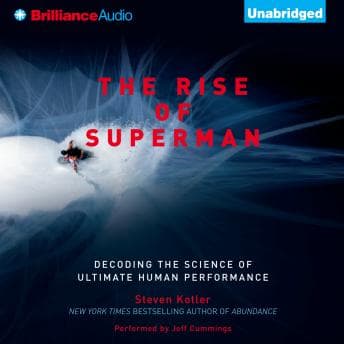
Jeff Cummings delivers that line, and for a second, I actually stopped grading the stack of Macbeth essays in front of me. (And let's be honest, stopping grading is usually just procrastination, but this felt different.)
I picked this up because one of my students—the one who skates in the parking lot instead of coming to homeroom—recommended it. Usually, my playlist is strictly 19th-century British lit. But I needed a break from the gloom of the moors, and The Rise of Superman promised to explain why humans do crazy things.
When Philosophy Meets a 100-Foot Wave
Here's the thing about most "performance" books I've tried—they're dry. They feel like a lecture in a windowless room. Kotler does the opposite. He takes the concept of "flow"—that magical state where time vanishes and you perform perfectly—and explains it through people who literally cannot afford to make a mistake.
If you've read Born to Run, you know the vibe. But instead of ultra-runners, we've got Laird Hamilton surfing waves the size of apartment buildings. Kotler argues that these adrenaline junkies aren't just reckless; they're hacking their biology. As a teacher, I see "flow" maybe once a year when a student finally connects with a text. Kotler makes me wonder if I need to raise the stakes. (Maybe not "death-defying" stakes, but something higher than a C-.)
The science is heavy, but it's wrapped in stories that keep you moving. It's the spiritual successor to those adventure magazines I used to confiscate in class, but with a PhD in neuroscience.
The Voice in the Helmets
Narrating nonfiction is a trap. Go too slow, it's a textbook. Go too fast, it's an infomercial. Cummings makes a choice here—he matches the energy of the athletes. He is on.
Some people might find it a bit much. I saw a few reviews calling it "distracting," and I get it. If you're looking for a soothing bedtime story, this ain't it. He punches the words. He leans into the intensity. But honestly? It works. You can't read a sentence about Danny Way jumping the Great Wall of China with a "library voice." Cummings understands that the text demands adrenaline. He treats the narration like a sportscast, and for this specific book, it's the right call.
Why It Stuck With Me
I usually listen to audiobooks to escape reality. This one made me want to engage with it differently.
It's not perfect. Sometimes the "bro-science" vibe gets a little strong, and if I hear the word "stoked" one more time I might scream. That same idea—getting out of your own head to perform—is what Mindful Athlete: Secrets to Pure Performance explores, though with a quieter, more meditative approach. But the core message—that we are capable of so much more if we can just get out of our own way—hit home.
It reminds me of Hemingway's obsession with bullfighting. That proximity to death making life more vivid. Kotler is saying the same thing, just with snowboards instead of capes.
Who's Going to Love This (And Who Should Skip)
If you like Into Thin Air but wished it had more neuroscience, or if you enjoyed Atomic Habits but found it too domestic, give this a shot. Skip it if you want something calm before sleep—Cummings' energy will have you planning hang-gliding lessons at midnight.
Class Dismissed
I listened to most of this while power-walking the lakefront, trying to keep up with the pacing in my ears. It made me walk faster. It made me think about how I structure my classes—how to create that "flow" without the risk of bodily harm.
(And yes, I did eventually finish grading the essays. But I was thinking about surfing the whole time.)