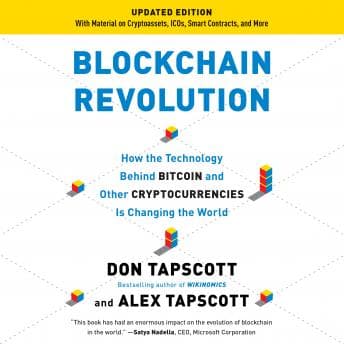

Look, I have a confession. I've been avoiding blockchain books for years. Every time someone at work starts explaining distributed ledgers to me, my eyes glaze over faster than during a 3-hour design review. But my manager kept dropping hints about "understanding the future of fintech," and I figured 16 hours of commute time was better spent learning something than listening to my fifth re-read of Project Hail Mary.
So here we are. Me, Jeff Cummings, and the Tapscotts, crawling through Caltrain tunnels together for about two weeks.
The "Could've Been a Blog Post" Problem
Okay, I need to get this out of the way: this book is from 2016. And you can feel it. The Tapscotts are breathlessly excited about use cases that either happened, didn't happen, or happened in ways nobody predicted. They talk about blockchain voting, blockchain music royalties, blockchain everything—and listening in 2024, you're constantly doing mental fact-checking. Did that consortium actually do anything? (Spoiler: some did, many didn't.)
But here's the thing—and I didn't expect to say this—the foundational explanations are actually solid. Like, really solid. If you've ever tried to explain to your parents what blockchain actually IS beyond "Bitcoin stuff," the Tapscotts do it better than most. They break down the seven design principles, walk through the mechanics, and honestly? The first five hours are worth it just for that mental model.
The ROI on this audiobook is front-loaded. Heavy front-loaded.
Jeff Cummings: Reliable But Flat
I couldn't find much about Jeff Cummings' other work online, but based on this performance, he's clearly in the "business audiobook narrator" lane. Clear articulation, professional pacing, zero drama. Which is... fine? For a 16-hour tech book, you don't want someone doing voice acting. You want someone who won't make you crash your car during the cryptography sections.
But—and this is a big but—around hour 10, I started zoning out. Not because the content got worse, but because there's no variation. No emphasis shifts when something important hits. No energy bump when the Tapscotts are clearly excited about a use case. It's just... steady. At 6 AM on a packed train, steady can become sleepy real fast.
I bumped it to 1.75x around the middle chapters. Helped a lot.
When Abstract Becomes Concrete
The best parts are when they get specific. The chapter on financial services—where they walk through how blockchain could disrupt remittances—actually made me think about my coworker who sends money to the Philippines every month and pays insane fees. That's when the abstract becomes concrete.
Same with the identity chapter. The idea of self-sovereign identity, where you control your own data instead of Facebook or Google—that's still relevant. It's the kind of structural shift that Great Influenza explores in a completely different context: how systems we take for granted can be fundamentally reimagined. Maybe more relevant now than when they wrote it.
Where it drags? The governance chapters. They spend way too long on theoretical frameworks for "blockchain-based organizations" that feel very 2016-utopian. I found myself checking how much time was left. Multiple times.
The Vintage Software Problem
I can't review this without acknowledging the elephant: this book is almost a decade old in a field that moves at startup speed. Some predictions aged well. Some aged like milk. The enthusiasm for specific projects and consortiums feels almost quaint after watching the crypto boom and bust cycles since then.
But—and I keep coming back to this—if you've never really understood blockchain beyond the buzzwords, the conceptual foundation here is still useful. It's like reading a 2005 book about social media. The specific predictions might be wrong, but understanding the underlying shift in how information moves? Still valuable.
Match Your Use Case
Queue it up if: You've got long commutes, gym sessions where you want to feel productive, or you need to speak intelligently about blockchain in meetings but have been faking it.
Skip if: You already understand the tech, you want current market analysis, or you need engaging narration to stay focused.
I finished this in about 8 commutes at 1.75x speed. Would I recommend it to Kevin? Probably not—he'd fall asleep. Would I recommend it to my manager who keeps asking about Web3? Yeah, actually. With the caveat that they should mentally timestamp everything to 2016.
Sarah's Runtime Assessment
It's a textbook that happens to be narrated. Solid textbook, though.




![Steve Jobs [unabridged audiobook] audiobook cover](/_next/image?url=https%3A%2F%2Fcovers.audiobooks.com%2Fimages%2Fcovers%2Ffull%2F9788499923406.jpg&w=1920&q=75)