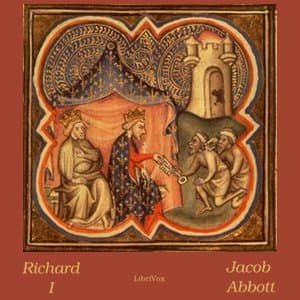

Okay, so here's my confession: I picked up a 19th-century biography about Richard the Lionheart expecting... I don't even know what I was expecting. Maybe to feel something? Maybe because Abuela used to watch those old sword-and-sandal movies on Sunday afternoons and I was feeling nostalgic? Either way, I spent six and a half hours with Jacob Abbott and a rotating cast of LibriVox volunteers, and I have thoughts.
When History Feels Like a Warm Blanket (Sort Of)
Look, this isn't the kind of book that's going to make you ugly-cry. I know, I know—coming from me, that's basically a warning label. But there's something genuinely comforting about Abbott's writing style. It's got this old-fashioned, almost grandfatherly quality to it. Like someone's sitting you down with a cup of tea and saying, "Let me tell you about this medieval king who was basically a walking contradiction." The language is plain and accessible—Abbott wrote this for young readers in the 1800s, and honestly? It holds up surprisingly well.
Richard himself is a fascinating mess of a human. Warrior king, absent ruler, his mother's favorite, terrible at actually governing. Abbott doesn't romanticize him the way modern retellings might, but he also doesn't tear him apart. It's this measured, educational approach that somehow made me care about a guy who spent maybe six months of his entire reign actually in England.
I listened to this while working on a logo redesign for a local brewery, and the pacing was perfect for that kind of focused-but-not-intense work. Nothing too jarring to pull me out of my creative zone.
The Volunteer Narration Situation
Here's the thing about LibriVox—and I genuinely appreciate what they do, making public domain books accessible for free—the quality is a mixed bag. That patchwork charm worked better for me in Lady Susan, where the epistolary bite gave the changing voices more sparkle. Some chapters? Crystal clear, well-paced, genuinely engaging. Other chapters? A little monotone, slightly uneven, the kind of delivery that made me zone out and have to rewind.
I couldn't find detailed info on the specific volunteers who narrated this one, but based on what I heard, there's definitely a range. Some narrators brought a nice warmth to Abbott's prose. Others felt like they were reading a grocery list. (No shade—they're volunteers! They're doing this for free! But still.) The transitions between narrators can be jarring too. You get used to one voice and then suddenly there's someone completely different reading about the Third Crusade.
The audio quality itself is generally clean—no weird background noise or anything—but there are no production flourishes either. No music, no sound effects. Just voices and history.
Who's Going to Vibe With This (And Who Won't)
This is a rainy Sunday book, but not in the cozy romance way I usually mean that. More like... a rainy Sunday when you want to learn something without working too hard for it. History nerds who want accessible medieval content without academic density? This delivers. I had the same low-pressure history-lesson feeling with Alaric the Goth: An Outsider's History of the Fall of Rome, though Rome brings a lot more crumbling-empire dread to the table. Students or educators looking for free supplementary material on Richard I? Solid choice.
But if you're looking for emotional depth? Drama? The kind of storytelling that makes your heart clench? Skip this one. Abbott's style is educational first, engaging second. Which is fine! That's what he was going for! But I'm not gonna pretend I got misty-eyed over crusade logistics.
My cats were supremely unimpressed. Frida literally walked across my keyboard during a chapter about Richard's imprisonment. Diego just stared at me like, "Really? This is what we're doing today?" Fair, honestly.
One Listen and Done, But No Regrets
Probably wouldn't return to this one, if I'm being honest. It was interesting enough, and I learned things I didn't know about Richard the Lionheart—like just how much of his reign he spent anywhere but England. But the variable narration quality and the somewhat dry educational tone mean it's more of a "glad I experienced it" than a "need to revisit this."
That said—it's free. It's accessible. And if you're curious about medieval history without wanting to commit to a dense academic text, you could do way worse. Just keep your expectations realistic about the volunteer narration. Some chapters will engage you, others you'll power through.
Abuela probably would've liked the battle scenes, actually. She loved a good dramatic conflict. Miss you, Abuela.






![Steve Jobs [unabridged audiobook] audiobook cover](/_next/image?url=https%3A%2F%2Fcovers.audiobooks.com%2Fimages%2Fcovers%2Ffull%2F9788499923406.jpg&w=1920&q=75)