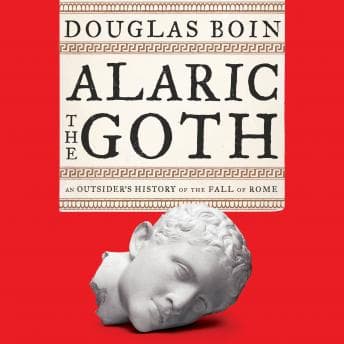

Everyone told me this was a revisionist hot take dressed up as history. That Boin had an axe to grind. That the parallels to modern immigration politics were heavy-handed. So I went in skeptical—I've sat through enough consulting presentations where the conclusion was written before the data was gathered.
They were half right. And completely wrong about what matters.
What My Parents Would Have Recognized
Here's the thing about Alaric that hit different while I was waiting for a client call that kept getting pushed back: this guy wasn't some chaos agent burning civilization for fun. He was a career military man who did everything right—served Rome, fought Rome's wars, expected the promotion and citizenship he was promised. And got stiffed. Repeatedly.
I've watched this exact story play out at three different companies. The same institutional betrayal drives the narrative in Miracles and Massacres, where Glenn Beck unpacks how America's founding promises didn't always extend to everyone who built the country. Immigrant founders, second-generation executives, people who outperform everyone in the room but somehow never make partner. My parents pressed shirts for doctors who couldn't get hospital privileges despite graduating top of their class. Alaric's frustration isn't ancient history. It's Tuesday.
Boin structures this as a biography, but he's honest that we don't have a lot of primary sources on Alaric himself. What we have is context—the policies, the prejudices, the religious upheaval of fourth-century Rome. The book jumps around chronologically, which annoyed some listeners. Didn't bother me. Business case studies do this all the time. You set up the environment, then show how the protagonist navigated it.
The Three Nights Everyone Forgets
The sack of Rome in 410 CE gets maybe twenty minutes of total airtime. With the Old Breed does something similar—Sledge spends more time on the waiting, the fear, the institutional grinding than on the famous battles themselves. Which is wild when you think about it. That's the headline event, the thing that made Augustine write City of God, the moment that echoed through Western consciousness for centuries. But Boin spends most of his time on the decades before. The border policies that separated Gothic families. The massacre at a church where Roman soldiers slaughtered Gothic women and children. The broken promises and withheld pay.
By the time Alaric's forces enter through the Salarian Gate, you understand why. Three days of controlled chaos—not the orgy of destruction Roman propagandists described, but something more like a very pointed message. Take what you're owed. Make them remember.
Chris MacDonnell narrates with the steady authority of someone who's done BBC Radio drama. No theatrical flourishes, no attempt to voice individual characters distinctly. Just clean, professional delivery that lets the material breathe. For eight hours of academic history, that's exactly what you want. I listened at 1.75x and never felt lost.
Where Boin Overplays His Hand
Look, I'm sympathetic to the thesis. But there are moments where the contemporary parallels feel less like insight and more like a TED talk desperate for relevance. We get it. Borders. Immigration. Religious intolerance. The Goths as misunderstood Christians in a Rome going through its own culture wars.
The strongest sections are when Boin just tells the story and trusts you to draw connections. The weakest are when he underlines them in red ink. My MBA professors did the same thing—couldn't resist explaining the lesson when the case study already made it obvious.
The material on late Roman Christianity, though? Genuinely fascinating. The Goths practicing a form of Arian Christianity that Roman orthodoxy considered heresy. The irony of "barbarians" being more religiously tolerant than the "civilized" empire. This is the stuff that doesn't make it into the popular imagination, and Boin digs it up well.
Who Gets Value Here (And Who Doesn't)
If you want a straight military history of Rome's fall, skip this. If you want a dense academic treatise, this is too accessible. Boin occupies a middle ground—serious history written for people who read The Economist and occasionally pick up a biography.
Perfect for: History buffs tired of the same Roman narrative. Anyone who's ever felt like an outsider in an institution they served. Consultants stuck in airport lounges with eight hours to kill.
Skip if: You want action-heavy battle sequences. You're allergic to any contemporary political framing. You need a linear timeline or you get confused.
Net-Net
Eight hours for a perspective shift on one of history's most misunderstood figures. The key takeaway—that Rome's fall was less about barbarian invasion and more about institutional failure to integrate the people defending its borders—is worth the listen. Some of the editorializing isn't. MacDonnell's narration is professional if not memorable.
Would I recommend this to a client? Depends on the client. But I finished it, which is more than I can say for seventy percent of my Audible library. Jenny would say I'm being harsh about the heavy-handed moments. Jenny is right. But I'm also right that the core story deserved better framing.
My parents didn't wait for Rome to recognize them. They built their own thing. Alaric tried to work within the system until the system made that impossible. There's a lesson in both approaches. Boin gives you the second one. The first, you'll have to learn yourself.








![Steve Jobs [unabridged audiobook] audiobook cover](/_next/image?url=https%3A%2F%2Fcovers.audiobooks.com%2Fimages%2Fcovers%2Ffull%2F9788499923406.jpg&w=1920&q=75)