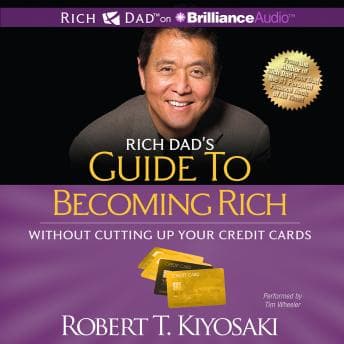

Is there anything more counterintuitive than a finance book telling you to keep your credit cards?
I'll be honest—when I saw this title pop up in my Audible recommendations, I almost scrolled past. Another Rich Dad book? I've read the original. I've heard the quadrant spiel. (Wheeler also narrates Rich Dad's Cashflow Quadrant, which goes deeper into that framework if you're curious.) But then I thought about my own relationship with debt (hello, Bay Area rent and student loans that took forever to pay off), and figured 3 hours 15 minutes is basically one round-trip commute. Worth a shot.
The Core Framework, Explained Like You're Debugging Code
Here's the quick version: Kiyosaki's argument is that debt is a tool, not inherently evil. Think of it like... okay, tech metaphor incoming. Debt is like recursion. Used correctly, it's elegant and powerful. Used incorrectly, you get a stack overflow and your whole system crashes. The book distinguishes between "good debt" (debt that puts money in your pocket—rental properties, business investments) and "bad debt" (debt that takes money out—consumer purchases, depreciating assets).
This isn't groundbreaking if you've read the original Rich Dad Poor Dad or spent any time in personal finance communities. Wheeler also narrates the original Rich Dad Poor Dad, so if you haven't hit that one yet, his voice will be consistent across both. But Kiyosaki does hammer home the mindset shift pretty effectively. The idea that cutting up your credit cards is treating the symptom, not the disease? That landed for me. It's like when junior devs want to delete all the legacy code instead of understanding why it was written that way in the first place.
The book moves fast—maybe too fast for some concepts. I found myself rewinding a few times on the train when the guy next to me started a loud phone call and I missed a key point. Some listeners apparently slow it down, but I kept it at my usual 1.5x and managed fine. The concepts aren't complex, they're just... compressed.
Tim Wheeler's Delivery: Functional, Not Flashy
I couldn't find a ton about Tim Wheeler online (he's no Ray Porter, but who is?), but based on this performance—he's solid. Clear, encouraging, doesn't put you to sleep at 6AM. His delivery has that motivational speaker energy that matches Kiyosaki's writing style. It's not going to blow you away, but it won't annoy you either.
The pacing criticism I've seen is fair. Wheeler moves through the material at a clip that assumes you're paying attention. For a packed train where you might zone out for 30 seconds, that can mean missing a key distinction. But honestly? For a 3-hour business book, I'd rather have it tight than padded. (Looking at you, every startup book that could've been a blog post.)
Where the Documentation Gets Thin
Okay, so here's my issue. The book is great at the what and the why of good debt vs bad debt. It's less great at the how. Like, yes, I understand that I should use debt to acquire assets that generate income. But the specific mechanics? The actual steps to evaluate a rental property deal or structure business debt? Those are glossed over.
This feels like a 101-level course being sold as a 201. If you've never thought about debt as anything other than "bad thing to avoid," this will genuinely shift your perspective. If you're already past that mental hurdle and want tactical advice? You might feel a little underwhelmed.
Also—and this is a personal pet peeve—there's some of that classic Kiyosaki "I'm rich and here's why you're not" energy that can grate. Kevin (my boyfriend) calls it "prosperity gospel for tech bros." He's not wrong. But if you can filter out the flex and focus on the framework, there's value here.
Who Gets Value Here (And Who Won't)
Queue it up if: You're new to the Rich Dad philosophy, still think all debt is bad debt, or need a mindset reset during your commute. Perfect for train, gym, house cleaning—any activity where you want something engaging but not so complex you need to take notes.
Skip it if: You're already past the "debt can be a tool" mental hurdle and want tactical, step-by-step implementation. This isn't a textbook, it's a mindset primer.
My Final Commit
The ROI on this audiobook is decent if you're new to the framework or need a refresher. I finished it in 2 commutes with time to spare. It's not going to revolutionize your finances overnight, but it might change how you think about your next major purchase. And sometimes that mental reframe is worth more than another spreadsheet.
Would I recommend it to my engineer friends drowning in RSUs and confused about what to do with them? Yeah, actually. It's a quick listen that might plant some useful seeds. Just don't expect it to tell you exactly which seeds to water.